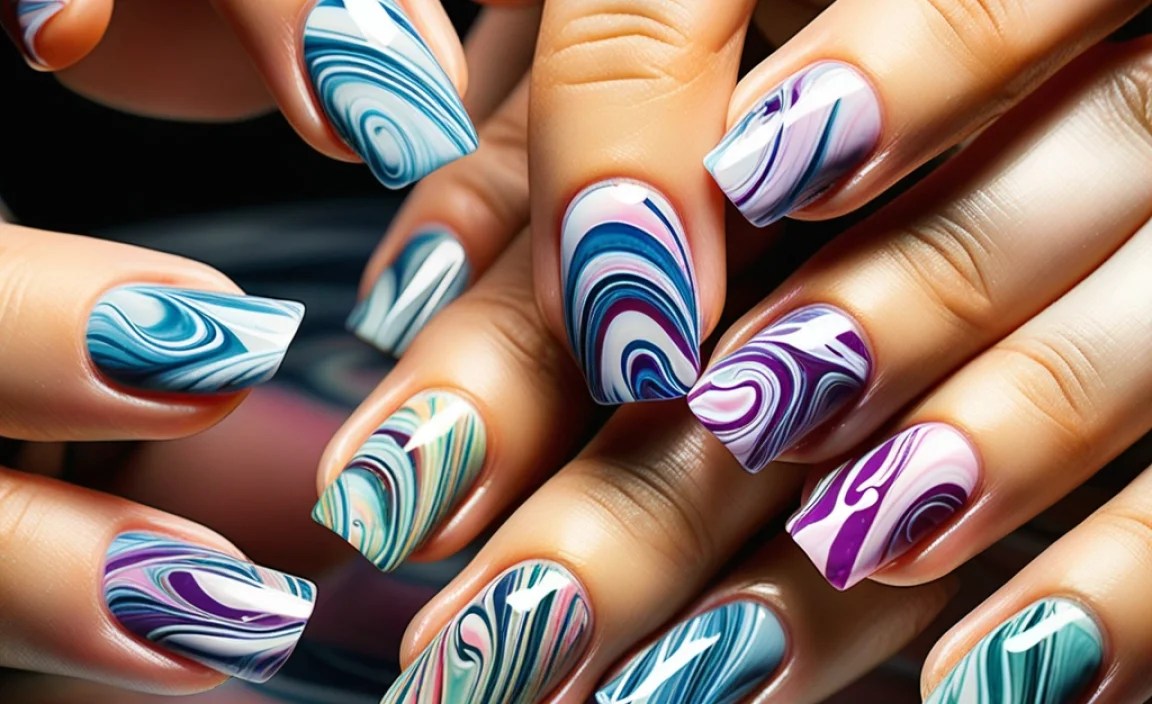
Water marble nail designs let you create stunning, swirling patterns with just polish and water! Master this technique with our beginner-friendly tips for gorgeous, unique manicures every time.
Hey nail lovers! Ever scroll through dazzling nail art and think, “Wow, I wish I could do that!”? Water marbling can look super intricate, but guess what? You totally can! It’s a fantastic way to get salon-worthy designs right at home. Sometimes, it feels tricky, like the polish just won’t swirl, or it ends up a messy blob. Don’t worry, that’s totally normal when you’re starting out. We’re going to break it all down, step-by-step, so you can unlock the magic of water marble nail designs. Get ready to impress yourself and everyone else with your amazing new skills!
What You’ll Need for Water Marble Magic

To achieve those breathtaking water marble nail designs, having the right supplies is key. Think of this as your starter kit for creative freedom!
Essential Supplies:
- Nail Polish: You’ll need a few different colors. Lighter colors tend to show up best as a base. For the marbling effect, use polishes that aren’t too old or thick.
- Tap Water: Room temperature water is best. Ice-cold or very warm water can cause the polish to dry too quickly or spread unevenly.
- Small Cups or Containers: You’ll need one for each color of polish you use, plus a larger one for the water itself. Paper or plastic cups are perfect.
- Toothpicks or a Dotted Tool: These are crucial for swirling the polish and creating mesmerizing patterns.
- Small Funnel (Optional but Recommended): A tiny funnel helps you pour the polish into the water without making a big mess.
- Cotton Swabs (Q-tips): Essential for cleaning up polish around your nails.
- Rubbing Alcohol or Nail Polish Remover: To clean up any stray polish on your skin.
- Top Coat: To seal your design and add shine.
- Base Coat: Protects your natural nails and helps the polish adhere better.
- Sticky Tape or Petroleum Jelly: To protect your skin from polish. This is a game-changer for easy cleanup!
Pro Tip for Smoother Results:
To prevent the polish from spreading too thin or drying too fast, some enthusiasts recommend adding a tiny drop of nail polish thinner to your colors before starting. However, for beginners sticking to fresh polishes is usually sufficient.
Step-by-Step Guide to Water Marble Nail Designs

Ready to dive in? Let’s create something beautiful! Follow these steps for gorgeous water marble nail designs.
Preparation is Everything:
- Prep Your Nails: Start with clean, dry nails. Apply a clear base coat and let it dry completely. This protects your nails and gives your polish something to grip onto.
- Protect Your Skin: This is where the magic happens for easy cleanup! You have two great options:
- Sticky Tape Method: Cut strips of sticky tape (masking tape or packing tape works well) and carefully line the skin around each nail. Overlap the tape slightly onto the nail edge where you don’t want polish.
- Petroleum Jelly Method: Apply a generous layer of petroleum jelly (like Vaseline) to the skin surrounding your nail. Be sure not to get any on your actual nail, or the polish won’t stick!
- Prepare Your Water: Fill your larger cup or container with room temperature tap water. Make sure there’s enough space for the polish to spread.
Creating the Swirl:
- Drop the Polish: Open your nail polish colors. Hold one bottle about an inch above the water. Let a drop of polish fall gently into the center of the water. Immediately follow with drops of your other colors, letting them fall in the center of the previous drop. Repeat this until you have a few layers of color. A funnel can help control the flow and create cleaner rings.
- Swirl Your Design: Grab a toothpick or a fine-tipped tool. Gently drag the tool from the outside edge of a color ring towards the center, then out again, creating a swirling pattern. You can do this a few times to create intricate designs. Don’t over-swirl, or your colors will get muddy! Aim for 2-3 gentle swirls.
- Dip Your Nail: Once you’re happy with your swirl, carefully dip your prepared nail into the center of the water design. Aim to dip at an angle so you capture a good portion of the pattern. Roll your finger slightly as you dip to get the best coverage.
- Remove Excess Polish: Before lifting your finger, gently push the remaining polish on the water’s surface away from your nail using your toothpick. This prevents extra polish from sticking to your nail when you lift it.
- Lift and Dry: Slowly and carefully lift your finger out of the water. Let your nail dry for a minute or two.
Cleanup and Finishing Touches:
- Clean Up: This is where your prep pays off!
- With Tape: Carefully peel away the tape. Any polish stuck to the tape will come with it, leaving clean edges.
- With Petroleum Jelly: Use a cotton swab dipped in rubbing alcohol or nail polish remover to gently wipe away the excess polish from your skin.
Both methods should leave you with a clean nail and a beautiful design.
- Apply Top Coat: Once your design is completely dry to the touch, apply a good quality top coat. This seals the design, adds incredible shine, and helps your water marble nail designs last longer.
- Repeat on Other Nails: Repeat the entire process for each nail. You can use the same color combination or change it up for a unique look on each finger!
Troubleshooting Common Water Marble Problems
Even with the best tips, sometimes things don’t go as planned. Don’t get discouraged! Here are some common issues and how to fix them.
| Problem | Cause | Solution |
| Polish Sinks Too Fast | Water too warm, or polish too thick. | Use room temperature water. Try adding a drop of nail polish thinner to your polishes. |
| Polish Doesn’t Swirl | Polish is old, thick, or not fluid. | Use fresh, good-quality nail polishes. If a polish is too thick, add a tiny bit of thinner. |
| Design is Muddy | Swirled too much, or colors too similar. | Swirl gently only 2-3 times. Use contrasting colors for better definition. Don’t let drops overlap too much. |
| Polish Sticks to Skin | Not enough protection or cleanup done. | Apply more petroleum jelly or ensure tape is fully covering the skin around the nail. Clean up more thoroughly. |
| Bubbles in Design | Dropped polish too hard or too close. | Drop polish gently from about an inch above the water. |
| Uneven Pattern | Uneven dip or lift of the nail. | Dip and lift your nail directly and steadily. Try rolling your finger slightly as you dip for even coverage. |
Tips for Amazing Water Marble Nail Designs

Ready to take your water marbling skills to the next level? Here are some expert tips to elevate your designs.
Color Combinations and Contrast:
- High Contrast is Your Friend: Pair dark colors with light colors (e.g., black and white, navy and light blue, deep red and hot pink) for designs that pop.
- Experiment with Metallics: Silver, gold, or iridescent polishes make fantastic accents or even base colors. They can add a sophisticated shimmer.
- Muted Tones Can Be Chic: Don’t be afraid to try pastels or muted tones. They create a softer, more ethereal look. Blend a lighter shade with a deeper one for a sophisticated gradient effect.
- Think Three Colors Max: For beginners, sticking to two or three colors keeps the design clear and prevents it from becoming muddy.
Nail Polish Selection Matters:
- Fresh is Best: The key to successful water marbling is polish that flows. Older, goopy polishes will clump and sink.
- Formula is Key: Opaque, pigmented polishes generally work better than sheer or jelly formulas for initial drops.
- Avoid Glitter Bombs: While a bit of shimmer is fine, polishes packed with chunky glitter can disrupt the swirling effect and make cleanup difficult.
Water Temperature and Depth:
- Room Temperature Rule: Always use room temperature water. This ensures the polish spreads evenly and gives you enough time to work. Cold water makes polish harden too fast, and warm water makes it spread too thinly.
- Water Depth: About 1-2 inches of water is usually sufficient. Too much might make it harder to get the polish to spread, and too little might not allow for good pattern formation.
Swirling Technique:
- Gentle Does It: Use a light hand when swirling with your toothpick. Aggressive or rapid movements will break up the polish rings and create a messy look.
- Create a Pattern: Think about what kind of pattern you want. Dragging from the center out, or creating concentric circles, can produce different effects.
- Work Quickly: Polish starts to dry on the water’s surface almost immediately. Have your toothpick ready and swirl efficiently.
Cleanup Hacks You Need to Know:
- The “Second Dip” Method: After dipping your nail and removing the excess polish around it, some people like to do a second, quick dip into clean water. This can help remove any remaining surface polish. Be careful not to disturb your design!
- Use a Fine-Bristled Brush: For super precise cleanup, a small, stiff-bristled artist’s brush dipped in remover can be more accurate than a cotton swab.
- Don’t Skip the Top Coat: It’s not just for shine; a good top coat acts as a barrier and can help smooth out any minor imperfections in the design.
Practicing on Other Surfaces:
If you’re nervous about diving right into your nails, practice on something else first! Try marbling a piece of paper, a plastic cup, or even a fake nail tip. This helps you get a feel for how the polish behaves without the pressure of doing it on yourself.
Water Marble Alternatives for Beginners
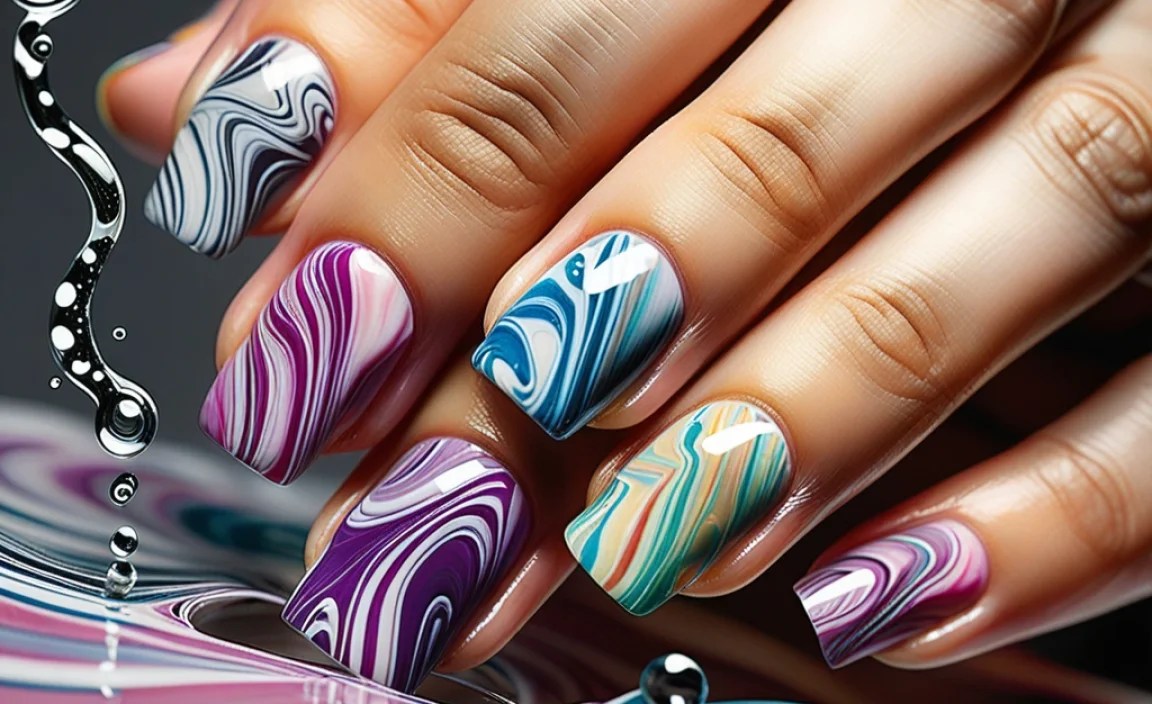
If the full water marble technique feels a bit daunting right now, don’t worry! There are some fantastic ways to achieve a similar marbled look with less fuss. These methods are perfect for getting started and building your confidence.
Marbled Effect with Tape:
This technique uses masking tape to create sharp, geometric marble-like patterns.
- Apply a base coat and let it dry.
- Apply your accent color(s) and let them dry completely.
- Cover portions of your nail with strips of tape, creating geometric shapes or lines.
- Apply a contrasting color over the taped areas.
- While the last color is still slightly wet, carefully peel off the tape. This leaves behind clean lines and a marbled effect.
- Seal with a top coat.
Using a Marbling Tool or Dotting Tool:
This method is simpler than the water technique and still yields beautiful results.
- Apply a base coat and let it dry.
- Apply two or three contrasting polish colors next to each other on your nail, without letting them touch too much.
- Immediately take a marbling tool (often a needle or fine wire attached to a handle) or a fine toothpick and gently drag it through the colors to create swirls.
- Clean the tool between each nail.
- Apply a top coat.
Water-Based Nail Stickers and Decals:
For a quick and foolproof marble effect, consider nail stickers or decals.
- Apply a base coat and let it dry.
- Apply a solid color polish for your base if desired, and let it dry completely.
- Choose your marble-patterned sticker or decal.
- Follow the package instructions, which usually involve dipping the sticker in water for a few seconds and then applying it to your nail.
- Smooth out any air bubbles.
- Apply a thick top coat to blend the edges of the decal and protect the design.
These alternatives offer a less messy and more controlled way to get that chic marble look. They are excellent starting points before you master the traditional water marbling technique.
Frequently Asked Questions About Water Marbling
Q1: How thick should my nail polish be for water marbling?
Your nail polish should be a fluid consistency – not too thick and not too thin. If it’s too thick, it might sink or not spread well. If it’s too thin, it might spread too much and become watery. Fresh polishes usually have the best consistency. If a polish is getting old, you can try revitalizing it with a drop or two of nail polish thinner.
Q2: Can I use any kind of nail polish for water marbling?
Most standard nail polishes work well. However, very old, clumpy polishes or those with large chunks of glitter can be challenging. Opaque and pigmented formulas tend to give the best results as they create clear, defined patterns. Shimmery or metallic finishes can also work beautifully.
Q3: Why does my polish dry too fast on the water?
This usually happens if the water is too warm, or if the polish is too thin. Ensure you are using room temperature water. If the polish is drying too quickly, it means it’s starting to form a skin on the surface, which prevents swirling. Working quickly and using polishes with the right consistency are key.
Q4: How do I prevent my skin from getting covered in polish?
Protecting your skin is crucial for easy cleanup! The two most effective methods are using sticky tape (like masking tape or packing tape) to create a barrier around your nail, or applying a generous layer of petroleum jelly (Vaseline) to the skin around the nail. Make sure not to get any on your actual nail surface, as the polish won’t adhere.
Q5: What if my swirls end up looking muddy?
Muddy swirls usually occur from over-swirling or using colors that are too similar. Try to swirl very gently and only a couple of times. Using highly contrasting colors (like black and white, or blue and yellow) will help keep your design clear and defined. Don’t let the polish drops overlap too much on the water’s surface either.
Q6: How long do water marble nail designs last?
With proper preparation and a good top coat, water marble nail designs can last as long as any other manicure, typically 5-7 days, or even longer. Ensuring your base and top coats are fully dry, and applying a generous amount of top coat to seal the design, will help maximize longevity. Avoid harsh chemicals or activities that can chip your polish.
