Tribal African Nail Art is a vibrant, empowering, and deeply personal way to express yourself through unique patterns and rich colors inspired by the diverse cultures of Africa. This guide offers beginner-friendly inspiration and essential tips to help you master these stunning designs.
Dreaming of nails that tell a story and turn heads? Tribal African nail art is a fantastic way to add a unique, artistic flair to your manicure. It draws from a wealth of incredible patterns and symbolism. Sometimes, diving into intricate designs can feel a bit overwhelming when you’re just starting. You might wonder where to find inspiration or how to even begin applying those bold shapes. Don’t worry! This guide is here to break down the beauty of tribal African nail art, making it super accessible and fun for everyone. We’ll explore the origins, share easy design ideas, and give you all the tips you need to create your own masterpiece.
What is Tribal African Nail Art?

Tribal African nail art is a contemporary interpretation of the rich artistic heritage found across the African continent. It’s inspired by diverse cultural aesthetics, including geometric patterns from textiles like Kente cloth, intricate beadwork, body art traditions, and symbolic motifs from various ethnic groups. This style isn’t about replicating specific sacred tribal symbols directly, but rather about embracing the spirit of their design – bold lines, vibrant colors, earthy tones, and repeating patterns that often carry deep meaning.
The genius of this art form lies in its versatility and its powerful visual impact. It can range from minimalist, elegant designs on a single accent nail to full, kaleidoscopic patterns across all ten fingers. For beginners, it’s a wonderful entry point into nail art because many core tribal patterns rely on techniques like freehand drawing with fine brushes, dotting tools, and simple stamping, all of which can be learned and mastered with practice.
Why is Tribal African Nail Art So Essential?
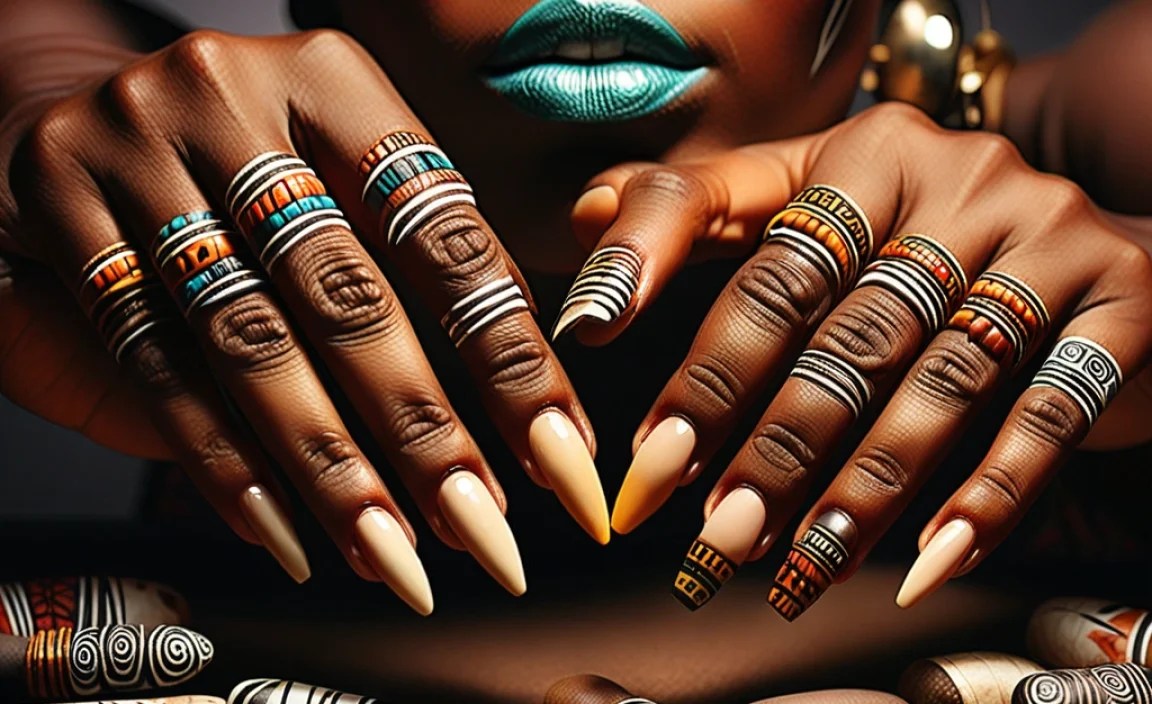
Beyond just looking stunning, tribal African nail art is essential for several reasons:
- Cultural Appreciation and Connection: It serves as a beautiful way to appreciate and draw inspiration from the world’s diverse cultures. When done respectfully, it can be a way to connect with and celebrate these artistic legacies.
- Bold Self-Expression: These designs are inherently bold and eye-catching. They offer a fantastic canvas for personal expression, allowing you to showcase your unique style and personality.
- Versatile Aesthetics: Whether you prefer a subtle nod to geometric patterns or a full-blown artistic statement, tribal designs can be adapted to suit any preference and occasion. They can be sophisticated, playful, or fierce.
- Skill Development for Beginners: The foundational elements of tribal patterns – lines, dots, chevrons, and simple shapes – are perfect for practicing basic nail art techniques. This makes it an excellent starting point for aspiring nail artists.
- Timeless Appeal: Geometric patterns and bold motifs have a timeless quality. Unlike fleeting trends, tribal-inspired designs often remain stylish and impactful for seasons to come.
Inspiration & Essential Design Elements
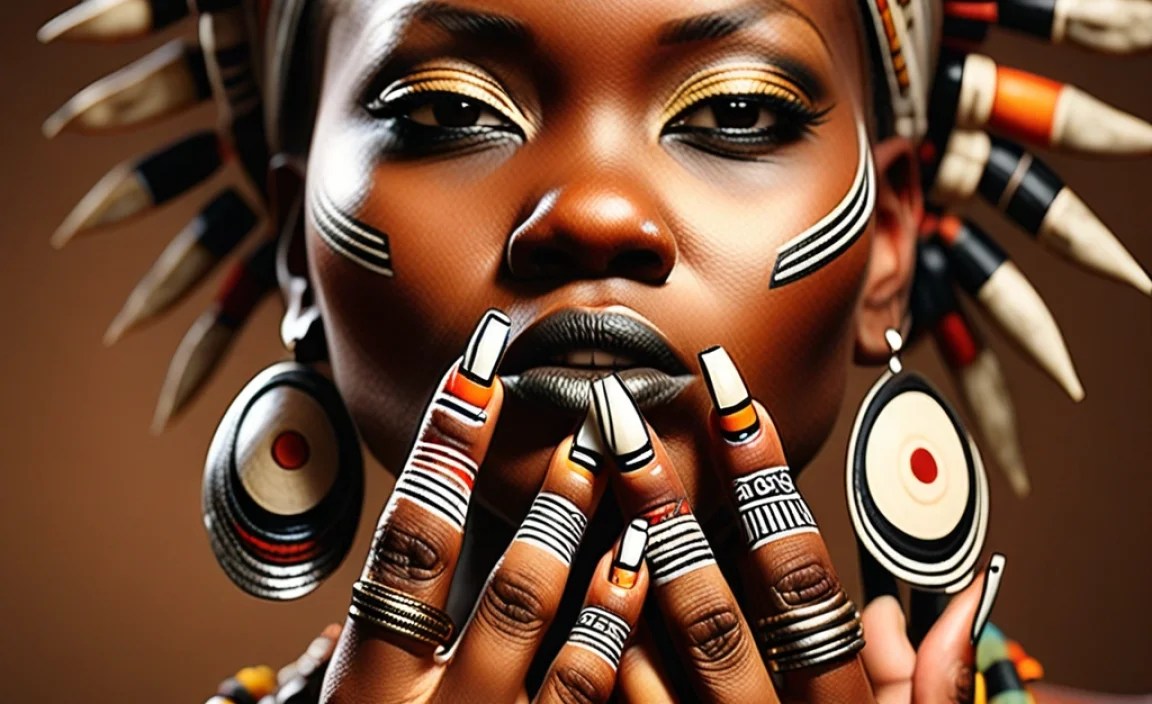
When imagining tribal African nail art, think about the incredible diversity of patterns, colors, and textures found across the continent. Here are some key elements to draw inspiration from:
Geometric Patterns
Geometry is a cornerstone of many African art forms. Look at:
- Chevrons and Zigzags: These are classic, easy-to-create lines that mimic patterns found in textiles and carvings.
- Diamonds and Triangles: Simple shapes that can be combined and repeated to create intricate-looking designs.
- Dots and Circles: Often used in traditional beadwork and pottery, dots can be used for simple patterns or to fill in larger shapes.
- Stripes: Varying widths and orientations of stripes add dynamism.
Color Palettes
The colors used in tribal African art are often vibrant and earthy, reflecting the natural environment and cultural significance. Consider:
- Earthy Tones: Terracotta, ochre, deep browns, sandy beiges, and forest greens.
- Vibrant Accents: Bright reds, sunny yellows, deep blues, and emerald greens.
- Monochromatic & Bolds: Black and white are incredibly effective for sharp, graphic tribal patterns.
- Metallic Touches: Gold or bronze can add a touch of regal elegance.
Texture and Finish
While often flat art, the idea of texture can be incorporated. Think about:
- Matte vs. Glossy: A matte finish can give an earthy, artisanal feel, while glossy finishes pop with color.
- 2D vs. 3D Elements: While this guide focuses on 2D, you could later explore adding textured elements like small beads or raised paint.
Getting Started: Essential Tools & Supplies

You don’t need a professional kit to start creating stunning tribal African nail art. Here are the essential tools and supplies:
| Tool/Supply | Description & Why It’s Essential | Beginner Tip |
|---|---|---|
| Nail Polish (Base Coat) | Protects your natural nails from staining and helps polish adhere better. | Always apply a clear base coat before your colored polish! |
| Colored Nail Polishes | Your palette for creating the designs. Choose a few complementary colors. | Start with 2-3 colors plus black and white. These are versatile for many tribal looks. |
| Nail Polish (Top Coat) | Seals your design, adds shine, and prevents chips. | A good top coat makes your art last longer and look professionally done. |
| Fine-Liner Nail Art Brush (e.g., 00 or 000 size) | For drawing thin, precise lines and intricate details. | Look for brushes specifically designed for nail art. You can find them online or at beauty supply stores. |
| Dotting Tool | For creating uniform dots, small circles, and accent marks. | Can be used on both ends for different dot sizes. If you don’t have one, the tip of a bobby pin or a ballpoint pen can work in a pinch! |
| Nail Polish Remover & Cotton Swabs/Pads | For cleaning up mistakes and sharpening lines. | Dip a cotton swab in remover and twist it to a fine point for precise clean-ups. |
| Template or Inspiration Image | To guide your design process. | Save images to your phone or find printable templates online. |
| Clean Up Brush (Optional but Recommended) | A flat, firm brush used with remover to clean polish off cuticles. | Makes your manicure look incredibly neat and professional. |
Easy Tribal African Nail Art Designs for Beginners
Let’s dive into some simple, yet impactful tribal African nail art ideas you can try at home. The key is to start with basic shapes and build from there.
Design 1: Simple Chevron and Dot Accent
This design uses simple lines and dots for a chic, modern look.
Steps:
- Prep: Apply your base coat and let it dry. Apply 1-2 coats of your base color (e.g., a deep red, earthy brown, or black) and let it dry completely until it’s not tacky.
- Base Color: Apply a contrasting color (e.g., black on red, white on brown) to the tips of your nails, creating a diagonal line. This forms your first chevron. Let it dry.
- Second Chevron: Apply another diagonal line with your base color over the first one, using a different polish color (e.g., white on black over red). You should now have a V-shape.
- Outline (Optional): Use a fine-liner brush and black or white polish to carefully outline the chevron shape for added definition.
- Dotting Accent: Use a dotting tool and a contrasting color (e.g., gold or white) to place a few dots along the base of the chevron or clustered near the cuticle.
- Top Coat: Once everything is dry, apply a generous top coat to seal your design.
Design 2: Geometric Block & Line Art
This design plays with blocks of color and sharp lines, reminiscent of woven patterns.
Steps:
- Prep: Apply base coat and let dry. Apply your main base color (e.g., a sandy beige or deep teal) and let it dry thoroughly.
- Create a Block: Using a fine-liner brush or a striping tape (if you have it), create a solid rectangular or square block of a contrasting color (e.g., black, deep blue, or terracotta) on one side of your nail. Make sure the block has clean edges. Let it dry.
- Add Lines: With a fine-liner brush and a complementary color (e.g., white, gold, or a brighter hue), draw thin lines radiating from or connecting to the block. You can create a radiating sunburst effect, a grid, or simple parallel lines.
- Detailing: Add a few small dots at the intersections of lines or along the edge of the block for extra visual interest.
- Top Coat: Apply your top coat to protect the design.
Design 3: Tribal Dot Pattern
This is incredibly simple and effective, mimicking traditional beadwork.
Steps:
- Prep: Apply base coat and let dry. Apply 1-2 coats of your chosen base color (e.g., a rich brown, charcoal grey, or vibrant orange). Let it dry completely.
- Start Dotting: Using a dotting tool and a contrasting color (e.g., white, black, or metallic gold), start placing dots in a pattern. Think about creating rows, clusters, or a simple line of dots.
- Vary Dot Size: You can use the same end of the dotting tool for consistency, or switch to the other end to create a mix of larger and smaller dots for more visual depth.
- Repeat: Continue the pattern across the nail or on accent nails. You could create a single thick vertical line of dots, a diagonal row, or a geometric shape made of dots.
- Top Coat: Seal the dots with a clear top coat.
Design 4: Minimalist “Kente” Inspired Lines
This design takes cues from the iconic Kente cloth with its bold stripes and geometric shapes.
Steps:
- Prep: Base coat, then apply your primary color (e.g., yellow, green, red). Let it dry.
- First Stripe: Using a fine-liner brush and a contrasting color (e.g., black), paint a thick, vertical stripe down the center or off to one side of the nail. Let it dry.
- Second Stripe: Add another stripe next to it with a different color (e.g., blue or white), leaving a small gap.
- Accent Shapes: In the gaps between the stripes, or on the edges, use your fine-liner brush to add small geometric shapes like squares, diamonds, or triangles in black or another accent color.
- Detailing: You can add tiny dots within the shapes or at the ends of lines for an extra touch.
- Top Coat: Finish with a protective top coat.
Tips for Achieving Perfect Lines and Shapes
Crisp lines and clean shapes are key to great tribal nail art. Here are some pro tips:
- Thin Coats are Best: Don’t try to get opaque coverage with one thick layer of polish. Thin, even coats dry faster and are less likely to smudge when you start adding designs.
- Steady Your Hand: Rest your wrists on a flat surface or prop your elbow on the table to keep your hand as still as possible.
- Use the Right Brush for the Job: Fine-liner brushes with very thin bristles are ideal for detail work. Tools with thicker filaments might be better for blocking out areas.
- Wipe Off Excess Polish: Before dipping your brush or dotting tool into polish, wipe off any excess on the rim of the bottle or a paper towel. This prevents blobs and allows for more controlled application.
- Clean As You Go: Keep nail polish remover and a pointed cotton swab handy. Immediately clean up any stray marks or smudges around your cuticles or nail edges for a professional finish. Remember to twist the swab to a fine point!
- Practice on Nail Art Sticks: Before committing to your nails, practice your lines and patterns on nail art practice sticks or even paper. This helps you get a feel for the tools and polish consistency.
- Patience is Key: Don’t rush the drying process between layers. If your base is still wet, your design will smudge.
Understanding the Deeper Significance (Respectful Appreciation)
It’s essential to approach tribal art, including tribal African nail art, with respect and an understanding of its origins. While this nail art style is inspired by traditional motifs, it’s important to remember that many patterns and symbols hold deep cultural and spiritual significance within their original contexts. This nail art is a modern fusion, interpreting these aesthetics rather than directly copying sacred designs.
When creating your designs, focus on the beautiful geometric forms, the rich color combinations, and the artistic feel. It’s about celebrating the artistry and heritage in a positive, appreciative way. For those interested in learning more about the incredible diversity of African art and its history, resources like the Metropolitan Museum of Art’s Heilbrunn Timeline of Art History section on African Art offer invaluable insights into the cultural contexts and evolution of these expressive traditions.
FAQ: Your Tribal Nail Art Questions Answered
Q1: How do I clean up my nail art mistakes easily?
A: Keep nail polish remover and a small brush (like a clean makeup brush or a specialized cleanup brush) or pointed cotton swabs handy. Dip the brush/swab in remover and carefully trace around your nail line to remove any polish that landed on your skin or cuticles. It makes a huge difference!
Q2: What colors are best for tribal African nail art?
A: You can’t go wrong starting with earthy tones like terracotta, beige, deep browns, and greens. Pair these with bold accents like black, white, red, yellow, or even metallic gold. High contrast usually works best for these graphic designs.
Q3: My lines are wobbly. What can I do?
A: Ensure your nail polish isn’t too thick (“juicy”). Wipe off excess polish from your brush. Rest your hand and wrist for stability. For super-fine lines, a brush that’s almost too fine to see is your best friend! Practice makes these lines straighter.
Q4: Can I do tribal nail art with regular polish, or do I need special supplies?
A: You can absolutely do tribal nail art with regular nail polish! While special nail art brushes and dotting tools make it easier, you can achieve great results with a fine-tipped brush (even one from an old eyeliner) and a toothpick or the tip of a pin.
Q5: How long should I let my polish dry between steps?
A: Give each layer at least 5-10 minutes to dry to a tacky, not wet, state. If you’re impatient, you might smudge your hard work! A quick-dry top coat applied after the design is fully dry can help speed up the overall process.
Q6: What’s the easiest tribal pattern for a complete beginner?
A: Simple dots in a repeating pattern or single, clean geometric shapes like triangles and squares are very beginner-friendly. You can also try bold, straight lines using tape as a guide if freehand is too tricky at first.
| Design Element | Beginner-Friendly Execution | Pro-Tip for Impact |
|---|---|---|
| Lines (Straight, Chevron, Zigzag) | Use a fine-liner brush with thin coats. Rest your hand for stability. | Outline lines in black or white for extra definition. Use striping tape (carefully removed while polish is still wet) for perfect straight lines. |
| Dots | Use a dotting tool or toothpick. Create simple rows or clusters. | Play with varying dot sizes for depth. Use metallic dots over a matte base for a rich effect. |
| Geometric Shapes (Squares, Triangles, Diamonds) | Draw simple outlines with a fine brush. Fill in slowly. |
