Stamping nail design inspiration is easier than you think! With a few key tools and these genius ideas, even beginners can create stunning, salon-quality nail art at home. Get ready to unlock your creativity and impress with unique, eye-catching looks!
Ever look at those intricate designs on social media and think, “There’s no way I could ever do that!”? If you love a beautiful manicure but feel intimidated by nail art, you’re not alone! Learning to stamp nails can seem a little tricky at first. But guess what? It opens up a world of amazing designs that are surprisingly achievable, even for beginners. We’re going to dive into some super fun and clever ways to use nail stamping to totally transform your nails. Get ready to discover how simple techniques can lead to big style wins!
Why Nail Stamping is Your New BFF for Creative Nails

Nail stamping is a game-changer! It’s an affordable way to get complex nail art without needing a steady hand for freehand drawing. Imagine having access to thousands of patterns – from delicate florals to bold geometrics – all ready to be transferred onto your nails. This technique uses a stamper and a metal plate engraved with designs. You apply special polish to the plate, scrape off the excess, and then “stamp” the design onto your nail. It sounds simple, and with a little practice, it truly is!
Think of it like using a stencil for your nails. The stampers pick up the polish from the etched plate, and then you press that onto your nail. It’s a fantastic method for busy individuals who want gorgeous, trend-setting nails without spending hours at a salon or mastering advanced art skills. Plus, the variety of plates available means your design options are practically endless!
Must-Have Tools for Stamping Nail Design Success

Before we jump into the fun design ideas, let’s make sure you have the right gear. Don’t worry, you don’t need a whole professional kit to get started. These are the essentials that will set you up for stamping success:
- Stamping Plates: These are the metal discs or squares with etched designs. They come in all sorts of themes and patterns!
- Stamper and Scraper: The stamper is a silicone head that picks up the design from the plate. The scraper is usually a plastic or metal card used to remove excess polish. Look for stamper heads that are clear or have a large surface area for easy design placement. Many stamper sets come with both.
- Stamping Polish/Nail Polish: You’ll need a polish specifically designed for stamping, which is typically more pigmented and opaque than regular polish. However, many regular polishes, especially darker or neon shades, can work well too!
- Cotton Pads and Purified Water/Nail Polish Remover: For cleaning your plates and stamper between designs. Acetone can damage certain stamper heads, so be mindful!
- Sticky Tape or Lint Roller: Excellent for cleaning excess polish off your stamping plates without using remover, which is gentler on the plates.
- Base Coat and Top Coat: Essential for nail health and to make your stamped designs last longer.
Genius Stamping Nail Design Inspiration for Every Style

Ready to get creative? Here are some brilliant stamping nail design ideas to inspire your next manicure. We’ll cover different styles, from simple and chic to bold and playful, with tips on how to achieve them.
1. Effortless Elegance: Simple Single Motifs
The easiest way to start with stamping is by using single, elegant motifs. Think small, delicate patterns that cover just a part of your nail. This is perfect for beginners because it requires less precision in placing the design.
- Idea: Single Floral Accent. Paint your nails a solid color (pastels, nudes, or even a deep jewel tone work wonderfully). Then, carefully stamp a single small flower, leaf, or vine design onto one or two accent nails (like your ring finger).
- Idea: Delicate Geometric Dot. Use a plate with tiny dots or small shapes. Stamp a single dot or a tiny star on the cuticle area or the tip of each nail for a subtle yet sophisticated look.
- Idea: Minimalist Lines. A plate with fine lines or tiny arrows can be used to create a minimalist accent. Stamp just one or two lines near the cuticle for a modern vibe.
Pro-Tip: For these simple designs, try using a sheer base coat and then stamping a metallic or contrasting color. This gives a sophisticated, subtle shimmer.
2. Full Coverage Fun: All-Over Patterns
Once you’re comfortable picking up designs, try full-coverage patterns. These can look incredibly intricate, but stamping makes them easier than you’d imagine!
- Idea: Elegant Lace. Lace patterns are incredibly popular. Choose a lace design plate and stamp it over a contrasting nail color. You can do a full nail of lace for a dramatic effect or stamp it on an accent nail.
- Idea: Geometric Overload. Many plates feature repeating geometric patterns. These are fantastic for covering the entire nail and giving it a modern, almost tiled look. Think hexagons, chevrons, or abstract shapes.
- Idea: Whimsical Animals or Symbols. Find plates with repeating small animals, celestial bodies (moons, stars), or cute symbols. Stamping these all over can create a playful and unique manicure.
How-To Tip: When doing a full-coverage design, ensure you pick up the polish cleanly from the plate. You might need to do a “practice stamp” on paper first to get the pressure and angle right before applying it to your nail.
3. Gradient & Stamping: A Match Made in Heaven
Combine two popular nail art techniques for stunning results! Gradients (or ombré nails) are beautiful on their own, but adding a stamped layer elevates them to another level.
- Idea: Subtle Stamped Texture. Create a beautiful nail gradient with your favorite colors. Once dry, use a very fine, delicate pattern stamp (like subtle dots, tiny floral outlines, or fine mesh) in a complementary or metallic color over the gradient. This adds texture without overpowering the colors.
- Idea: Bold Pattern Overlay. For a more dramatic look, use a bolder stamped design over your gradient. A large floral, a tribal pattern, or even a contrasting geometric shape can add a stunning focal point.
Step-by-Step for Gradient & Stamp:
- Apply your base coat.
- Create your gradient (using a sponge is a common method).
- Let the gradient dry completely.
- Apply your stamped design over the dry gradient.
- Finish with a good top coat to seal everything in.
4. The French Twist: Beyond the Basic White Line
The French manicure is a classic, but stamping lets you jazz it up in so many creative ways!
- Idea: Stamped French Tips. Instead of a plain white tip, stamp a pattern onto the tips of your nails. Think tiny hearts, stars, floral outlines, or even a lace pattern.
- Idea: Stamped Cuticle Art. Apply your French manicure as usual. Then, add a small stamped design near your cuticle line. This creates a balanced, elegant look.
- Idea: Opposite French. Apply your nail color to the whole nail, then use a French tip style stamping plate to apply a design ONLY to the free edge of your nail.
Beginner Tip: Use a stamper that allows you to pick up the design and then place it precisely. Some stampers have a slightly sticky surface that helps you see where the design will land before you transfer it to your nail.
5. Layering Powerhouses: Creating Depth with Multiple Stamps
This technique might sound advanced, but it’s a fantastic way to add dimension and complexity. It involves stamping one design, letting it dry, and then stamping another design on top or next to it.
- Idea: Floral Bouquet. Stamp a few leaves on your nail, let them dry, then stamp a flower design overlapping them.
- Idea: Pattern Collision. Stamp a geometric pattern and then overlay a smaller, delicate pattern on top – think fine dots on top of bold stripes.
- Idea: Scene Building. Create a mini scene by stamping a moon, then some stars around it, or perhaps a silhouette of a tree against a patterned sky.
Key to Success: Make sure each layer of stamping is completely dry before adding the next. This prevents smudging and keeps your layers crisp and defined.
6. Easy Holiday & Seasonal Designs
Nail stamping is perfect for celebrating holidays and seasons without a lot of fuss.
- Idea: Halloween Spooktacular. Use plates with pumpkins, ghosts, bats, or spiderwebs. Stamp them in classic Halloween colors like orange, black, and purple.
- Idea: Festive Winter Wonderland. Snowflakes are a stamping staple! Combine them with wintery blues and silvers. You can also find plates with pine trees, reindeer, or festive patterns.
- Idea: Spring Florals & Easter Fun. Stamp dainty flowers, buds, or even little Easter eggs for a cheerful spring look.
- Idea: Summer Vibes. Look for plates with palm trees, beaches, waves, or fun tropical fruits for your summer nail art.
Quick Tip: For holidays, try stamping small motifs in a pattern all over your nail or use a single, larger holiday image as an accent on one or two nails. This is quick, effective, and festive!
7. Color Play: Beyond Black and White
Don’t limit yourself to just black or white stamping polish! Experimenting with colors is where the real fun begins.
- Idea: Metallic Magic. Gold, silver, rose gold, or holographic stamping polishes are incredibly versatile and add instant glam. They work beautifully over dark or light bases alike.
- Idea: Neon Pop. For a vibrant, statement look, use neon stamping polishes, especially in the summer. They pop against neutral or darker nail colors.
- Idea: Color Blocking with Stamps. Stamp a pattern in one color, then use a different color stamping polish to fill in parts of that pattern, or stamp a secondary, smaller pattern over the first using a contrasting shade.
- Idea: White Polish for a “Chalkboard” Effect. White stamping polish often gives a matte, chalkboard-like finish that looks amazing over darker, glossy nails.
DIY Color Blending: Some advanced artists even mix colors directly on the stamping plate before scraping to achieve unique color transitions within a single stamped image! Start simple by stamping one color, then adding another with a smaller stamp over it.
8. Textured & 3D Effects
Believe it or not, stamping can even create textural illusions!
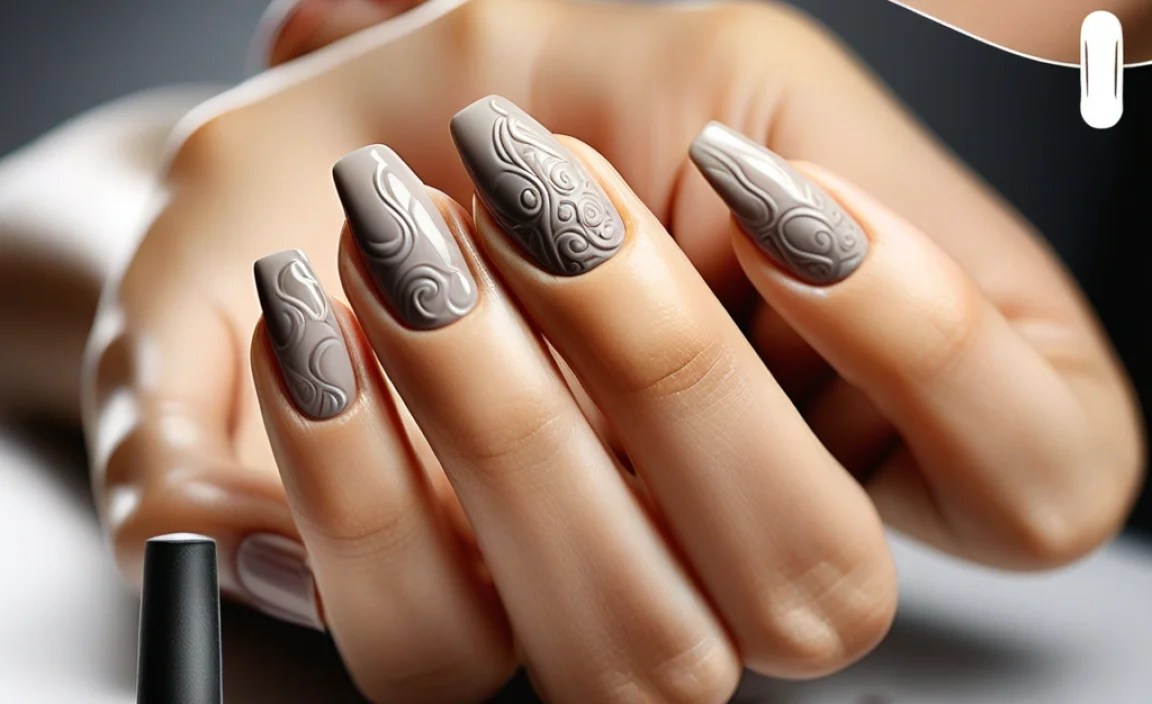
- Idea: Faux Embossing. Use a very detailed, fine-line pattern on a light colored nail with a slightly darker stamping polish. The contrast can create a subtle embossed look.
- Idea: Matte Finish Magic. Stamp a design on a glossy base, then apply a matte top coat. The contrast between the glossy base and matte stamped design can create a unique textural feel.
Advanced Technique (for later!): Some crafters use stamping to “decal” designs. You stamp onto a silicone mat, let it dry, peel it off, and then adhere the flexible sticker-like design to your nail. This gives a smooth, almost 3D look.
Troubleshooting Common Stamping Nail Design Issues
Even with genius ideas, sometimes stamping can be a little fussy. Here are some common problems and how to solve them:
Problem: My stamper isn’t picking up the design.
Solution: Make sure you’re using a polish that’s opaque and pigmented, ideally a stamping polish. Also, try to work quickly! You want to scrape and pick up the design before the polish dries on the plate.
Problem: The design is smudgy when I transfer it to my nail.
Solution: This can happen if your base polish isn’t dry enough, or if you press too hard. Let your base color dry thoroughly until it’s not tacky. When stamping, use a gentle rolling motion rather than pressing straight down.
Problem: My stamping plate is not holding the polish.
Solution: Ensure your plate is clean and free of oils or old polish residue. Sometimes a quick clean with pure acetone (carefully!) can help. Also, make sure you’re applying a good amount of polish to the plate before scraping.
Problem: I can’t line up the design perfectly.
Solution: Practice makes perfect! Clear stampers are great for visualizing placement. For intricate patterns, use smaller, single motifs or focus on designs that don’t require perfect alignment. Many stamper heads have a slight give, allowing you to adjust placement with a gentle roll.
Problem: The stamper head is getting dirty and I can’t see through it.
Solution: For sticky residue on the stamper head, use lint roller tape or sticky tape. Never use nail polish remover or acetone on silicone stampers, as it can damage them. Gently roll the stamper over the tape to pick up excess polish.
Beginner FAQs About Stamping Nail Designs
Frequently Asked Questions about Stamping Nail Designs
What are the best stamping polishes for beginners?
For beginners, look for highly pigmented, opaque stamping polishes specifically designed for the purpose. Brands like Born Pretty, Pueen, and Moyra offer great beginner-friendly options. Darker colors like black, white, deep blue, and red are often the easiest to work with on various base colors.
How do I clean my stamping plates and stamper?
Stamping plates can be cleaned with nail polish remover and a cotton pad or lint-free wipe. For tougher residue, a bit of gentle scrubbing with a nail brush can help. Stampers, especially those with silicone heads, should NEVER be cleaned with acetone or harsh removers as this can damage them. Instead, use a lint roller, sticky tape, or gently dab them on a lint-free cloth to remove polish residue.
Can I use regular nail polish for stamping?
Yes, you can! While dedicated stamping polishes are more opaque and pigmented, many regular nail polishes work. Thicker, creamier formulas tend to be best (think darker shades, neons, or metallic finishes). You might need to experiment to see which of your favorite polishes work well. Avoid very sheer or fast-drying formulas.
How long does a stamped manicure usually last?
With a good base coat and top coat, a stamped manicure can last as long as any other well-applied manicure, typically 7 to 14 days. Ensuring the top coat fully seals the stamped design is key to preventing chipping and wear.
Is nail stamping hard to learn?
Nail stamping can have a slight learning curve, but it’s generally considered one of the easiest forms of nail art for beginners. The key is practice. Start with simple designs, use the right tools, and don’t get discouraged if your first few attempts aren’t perfect. You’ll get the hang of scraping, picking up, and placing the design quickly!
What kind of nail shapes are best for stamping?
Nail stamping works well on almost any nail shape! Whether you have short, round nails, long stiletto nails, or square shapes, you can adapt stamping designs. For beginners, slightly squarer or rounded-square shapes can make it easier to place full-coverage patterns without distortion at the edges.
Where can I find good stamping plates and tools?
You can find stamping plates and tools from a variety of online retailers. Popular choices include Amazon, Etsy, and specialized nail art supply websites. Many beauty supply stores also carry a selection. Looking at reviews can help you find quality products.
Your Stamped Nail Art Journey Begins Now!
As you can see, nail stamping is an incredibly versatile and rewarding way to express your personal style through your manicure. From the most understated elegance to the most vibrant and eye-catching designs, there’s a stamping technique and a design idea that’s perfect for you. Don’t be afraid to experiment with different color combinations, pattern layering, and various stamping plates. Every artist starts somewhere, and the beauty of nail stamping is that it’s so accessible. You already have the inspiration and the basic knowledge; now it’s time to grab your tools!
Remember to always start with a clean nail and a good quality base coat to protect your nails and ensure a smooth canvas. Once your design is complete, a solid top coat will not only seal your artwork but also add that beautiful glossy finish that makes your manicure look professionally done. Have fun with it, let your creativity flow, and enjoy the process of transforming your nails into tiny works of art. Happy stamping!
