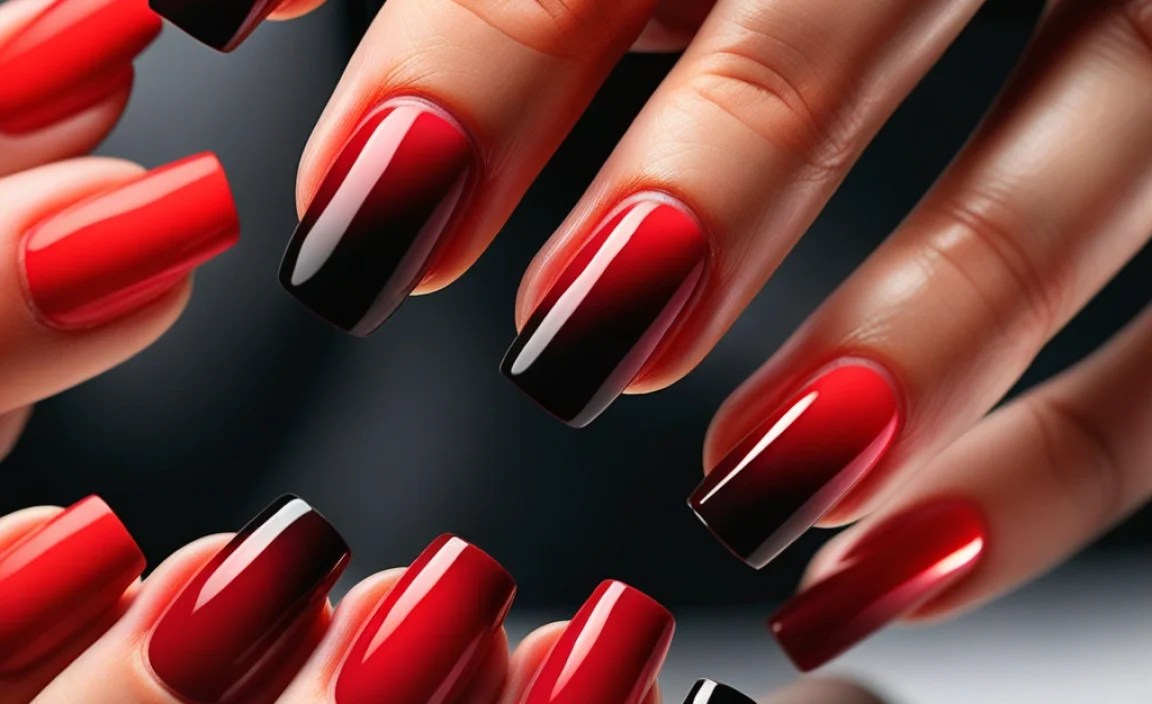
Get a stunning ombre red to black nail design with these easy tips! Learn how to blend fiery red into deep black for a dramatic, salon-worthy look at home. Perfect for beginners, this guide covers tools, techniques, and tricks for a flawless gradient effect.
Want to try a gorgeous ombre red to black nail design but feel a little intimidated? You’re not alone! Many of us admire these fiery, sophisticated nail looks. The good news is, creating this captivating blend of deep black and vibrant red isn’t as hard as it seems. With a few simple tools and clear steps, you can achieve a professional-looking gradient right at your fingertips. Get ready to impress with a manicure that’s both edgy and elegant!
Ombre Red to Black Nail Design: Your Ultimate Beginner’s Guide

The ombre red to black nail design is a showstopper for a reason. It combines the passion of red with the mystery of black, creating a look that’s both bold and chic. This versatile design can suit any occasion, from a night out to adding a touch of drama to your everyday style. As Lisa Drew from Nailerguy, I’m here to break down exactly how to achieve this stunning gradient, no salon appointment needed!
We’ll cover everything you need to get started, from the essential tools to the step-by-step process. You’ll learn techniques to ensure a smooth blend, tips to avoid common mistakes, and even how to make your design last longer. So, grab your polish, and let’s dive into creating your dream red to black ombre nails!
Why Choose Ombre Red to Black?

This particular ombre combination is incredibly popular, and for good reason. Red is often associated with passion, energy, and confidence, while black signifies sophistication, power, and mystery. When blended, they create a dynamic contrast that is visually striking and endlessly fashionable. It’s a way to express a strong, yet stylish personality through your nails.
- Dramatic Contrast: The stark difference between red and black creates an immediate visual impact.
- Versatile Style: It can be adapted to be subtle or bold, depending on the shades and blend you choose.
- Trend-Forward: Ombre nails are a timeless trend that never goes out of style.
- Self-Expression: It’s a fantastic canvas for showcasing creativity and personal flair.
Essential Tools for Your Ombre Masterpiece
Before we get our hands (or nails!) dirty, let’s gather the essential tools. Having the right supplies makes the process much smoother and the results much better. Don’t worry, most of these are easily found at your local drugstore or beauty supply store.
Nail Polish Essentials:
- Base Coat: Crucial for protecting your natural nails and helping polish adhere.
- Red Nail Polish: Choose a shade of red you love! A vibrant or deep red works well.
- Black Nail Polish: A classic black is perfect for the darker end of the ombre.
- Top Coat: To seal your design, add shine, and protect against chips.
- (Optional) Glitter Polish: A black or red glitter can add an extra sparkle to your ombre.
Blending Tools:
- Cosmetic Sponge: A clean makeup sponge is your best friend for blending. You can use a regular cosmetic sponge or a specific nail art sponge. Cut it into smaller pieces for easier application.
- Nail Art Brush or Toothpick: For cleaning up any mistakes around the cuticle area.
- Alcohol Wipes or Cotton Pad with Nail Polish Remover: Essential for cleaning your brush or sponge.
Preparation and Cleanup:
- Nail File & Buffer: To shape and smooth your nails.
- Cuticle Pusher: To gently push back cuticles.
- Lint-Free Wipes: For cleaning your nails.
- Liquid Latex or Petroleum Jelly: To protect your skin around the nail (optional but highly recommended for beginners!).
Step-by-Step: Creating Your Ombre Red to Black Nail Design

Ready to create that gorgeous gradient? Follow these steps, and you’ll be amazed at what you can achieve. Remember, practice makes perfect!
Step 1: Prep Your Nails
Proper nail preparation is key to a long-lasting and beautiful manicure. Start by cleaning off any old polish. Then, gently push back your cuticles using a cuticle pusher. Shape your nails with a file to your desired length and form. Finally, buff your nails lightly to create a smooth surface for the polish. Wash your hands to remove any dust.
Step 2: Apply Base Coat
Apply a thin, even layer of your base coat to each nail. Let it dry completely. This step protects your natural nails from staining and helps the subsequent layers of polish adhere better, ensuring your ombre design stays put!
Step 3: Prepare Your Sponge
Cut your cosmetic sponge into a few smaller pieces. You’ll want a size that fits comfortably on your nail. Some experts recommend using a slightly damp sponge; you can lightly press a clean sponge onto a paper towel to remove excess moisture. This can help create a softer blend.
Step 4: Apply Your First Colors to the Sponge
This is where the magic begins! You’ll apply the two main colors directly onto your sponge. It’s best to do this on a flat, disposable surface like a piece of foil or a paper plate. To create the red-to-black ombre, apply a stripe of your chosen red polish and right next to it, apply a stripe of black polish. You can experiment with the thickness of the stripes. For a red-to-black gradient, place the red stripe on one side and the black stripe on the other, allowing them to touch in the middle.
Pro Tip: Work quickly! Nail polish can start to dry on the sponge, making blending harder. Have everything ready before you start. You might need to reapply polish to the sponge for each nail or even for each layer of gradient.
Step 5: Start Blending the Gradient
Now, carefully dab the sponge onto your nail. Start by pressing the sponge gently onto the nail where the two colors meet. Then, gradually roll or dab the sponge down the nail. The idea is to transfer the polish from the sponge to your nail, allowing the colors to blend. You’ll likely need to reapply polish to the sponge and repeat this dabbing motion several times. Don’t worry if it looks messy at first; subsequent applications will refine the blend. For a red-to-black effect, start dabbing from the cuticle area towards the tip, or vice versa, depending on where you want the dominant color to be.
Beginner’s Secret: For a smoother transition, apply the polish to the sponge and do a few light dabs on a piece of scrap paper first to distribute the color evenly, then transfer to your nail. This helps prevent harsh lines.
Step 6: Layer for Intensity
To achieve a rich, opaque ombre effect, you’ll probably need to apply multiple layers. Let each layer of dabbing dry slightly before applying the next. The more you dab and layer, the smoother and more intense your gradient will become. You might find that applying the red at the cuticle and blending towards the tip, or vice versa, creates the effect you desire. Experiment to see which direction you prefer!
Step 7: Clean Up the Edges
This is where your cleanup brush or toothpick comes in handy. Dip your brush in nail polish remover (or use an alcohol wipe) and carefully clean up any polish that got onto your skin around the nail. This step makes a huge difference in the finished look, making it appear polished and professional. Using liquid latex or petroleum jelly around your cuticles before you start sponging can make this cleanup step much easier!
Step 8: Apply Top Coat
Once you are happy with the ombre blend and have cleaned up the edges, apply a generous layer of top coat. This is crucial! It seals the gradient, prevents chipping, and gives your nails that beautiful, high-gloss finish. Make sure to cap the free edge of your nails by running the brush along the tip to prevent premature chipping. Two layers of top coat can offer extra protection.
Tips for a Flawless Red to Black Ombre

Even with the best instructions, a few extra tips can elevate your ombre game from good to absolutely breathtaking. These are the little secrets that make a big difference!
- Color Choice Matters: The specific shades of red and black you choose will impact the final look. A true red with black will be very bold, while a deeper burgundy or wine red with black can be more sultry and sophisticated.
- Sponge Density: Different sponges have different densities. A firmer sponge might create a more defined blend, while a softer one might be better for a subtle fade. Experiment to see what works best for you.
- Dabbing Technique Precision: Imagine you are gently pressing and lifting. Avoid sliding the sponge, as this can smudge the colors rather than blend them.
- Patience is a Virtue: Don’t rush the drying time between layers. Letting each layer set slightly ensures the colors blend rather than mix into a muddy mess.
- Practice on Artificial Nails: If you’re really nervous about messing up your own nails, use artificial nail tips or even a piece of paper to practice the sponging technique first.
- Consider a Shimmer or Glitter: For an extra touch of glam, you can add a fine glitter polish over the top, or even create a glitter ombre effect by applying glitter polish to the tips. A holographic top coat can also add a magical dimension.
- Vertical vs. Horizontal Ombre: While most ombre designs go from cuticle to tip (vertical), you can also achieve a horizontal ombre by blending across the nail, which can create a unique look.
Troubleshooting Common Ombre Nail Issues
Even the most skilled nail artists encounter hiccups! Here are some common problems and how to fix them.
| Problem | Solution |
|---|---|
| Harsh Lines/Uneven Blend | Apply more polish to the sponge and dab gently and repeatedly. A slightly thicker top coat can sometimes help smooth out minor unevenness. You can also try a fine nail art brush dipped in remover to gently feather the edges. |
| Polish Drying Too Fast on Sponge | Work more quickly, or try applying polish to the sponge in smaller amounts as needed. Some nail artists find using a tiny drop of nail polish thinner in their polish can slightly extend the working time, but use sparingly. |
| Sponging Creates Texture | Ensure you are using a fine-pored sponge. Light, repeated dabbing is better than heavy pressing. A good, thick top coat is essential to smooth out any subtle texture. |
| Color Mixing into Mud | This often happens if the polishes are too wet when you try to blend them. Let each layer of sponged color set for a moment before applying the next. Ensure your red and black are distinct colors and not too similar in viscosity. |
| Skin Staining | Always use a base coat! For future attempts, apply liquid latex or petroleum jelly around your cuticles before sponging. This creates a barrier that is easily peeled away after cleanup. |
Adding Your Personal Touch: Variations and Embellishments
Once you’ve mastered the basic red to black ombre, you can start playing with variations! The beauty of nail art is its potential for personalization.
- Reverse Ombre: Instead of red to black, try black to red, with the black being the dominant color at the tip.
- Color Block Ombre: Combine a classic red to black ombre on some nails with a solid red or black on others for a more graphic look.
- Subtle Red Undertones: Use a deep, almost black-red polish and blend it with a slightly lighter, brighter red for a more subtle, yet still impactful, ombre.
- Glitter Accents: Apply a fine black or red glitter polish to the tip of the nail, blending it slightly into the ombre for a glamorous finish.
- Geometric Accents: After your ombre is dry and sealed with a top coat, use nail tape or a fine brush to add geometric lines or shapes in a contrasting color (like gold or silver) over the ombre.
- Stamping: Use a stamping plate with a pattern and apply a contrasting polish (like silver, gold, or even white) over your finished ombre design for intricate detail.
For more in-depth information on nail art techniques and tools, you can explore resources from reputable beauty industry sites or even educational materials from nail care professionals. For example, understanding proper nail health is crucial for any nail art, and resources like those from government health organizations can provide valuable insights, such as those on maintaining healthy nails from the NHS.
FAQ: Your Ombre Red to Black Nail Design Questions Answered
We’ve put together answers to some of the most common questions beginners have about creating ombre designs like the red to black effect.
Q1: How many coats of polish do I need for the ombre effect?
A1: For the ombre itself, you’ll likely need 2-3 applications of dabbing with the sponge to build opacity and blend the colors smoothly onto the nail. Always finish with a good top coat.
Q2: Can I use regular nail polish for ombre, or do I need special products?
A2: You can absolutely use regular nail polish! The key is having a cosmetic sponge and a patient hand. Special ombre sponges exist, but a regular makeup sponge works wonderfully for beginners.
Q3: My ombre looks streaky. What am I doing wrong?
A3: Streaks usually mean the polish on the sponge is too dry, or you’re not applying enough layers. Try reapplying polish to the sponge more frequently and dabbing more gently and repeatedly. Ensure each layer is slightly set before the next.
Q4: How long should I wait between dabbing layers?
A4: Wait about 30 seconds to a minute. You want the polish to be tacky, not fully dry, so the next layer can meld with it, but not so wet that it becomes a muddy mess.
Q5: How do I get a smooth gradient instead of obvious lines?
A5: The secret is in the dabbing! Gently press and lift the sponge multiple times, allowing the colors to transfer and blend naturally. Don’t press too hard or slide the sponge. Focusing on building up layers slowly is more effective than trying to get it perfect in one go.
Q6: Can I do ombre nails on short nails?
A6: Yes! Ombre can actually make short nails look longer. For short nails, use a smaller piece of sponge and focus just on the gradient over the nail bed. You might want to use less black or red to avoid overwhelming the nail.
Essential Nail Polish Formulas for Ombre:
When choosing your polishes, consider the formula. Creams are excellent for opaque color and blending. Shimmers can sometimes add unwanted texture if not applied carefully. Holo or metallic polishes can be stunning but might be trickier to blend smoothly for an ombre effect compared to standard cremes.
Conclusion: Rock Your Red to Black Ombre Nails!
There you have it! Creating a beautiful ombre red to black nail design is totally achievable with a little patience and the right approach. We’ve walked through gathering your tools, prepping your nails, the essential sponging technique, and even how to fix those common blips. This striking manicure is a fantastic way to boost your confidence and showcase your personal style.
Remember, nail art is a journey of creativity. Don’t be discouraged if your first attempt isn’t absolutely perfect. Every practice session will make you more adept at blending and achieving that seamless gradient. So go ahead, experiment with your shades of red and black, try out different sponge textures, and most importantly, have fun with it! You’ve got this, and your nails are going to look absolutely stunning.
