Dreaming of chic, minimalist nails? Dainty line work nail art is the perfect way to add a touch of sophistication. This style uses fine, delicate lines to create beautiful patterns, from simple geometric shapes to intricate floral designs. Best of all, it’s surprisingly achievable for beginners with a few key tools and techniques. Get ready to elevate your manicure game with these genius dainty line work nail art ideas!
Getting your nails to look salon-perfect at home can feel tricky, especially with intricate designs. Many of us have tried delicate nail art and ended up with wobbly lines or a messy finish. It’s frustrating when you want that elegant, understated look but can’t quite achieve it. But don’t worry! Dainty line work is all about precision and a little bit of practice. We’re going to break down exactly how to create these beautiful designs with simple steps. You’ll be amazed at what you can create with just a few tools and some creative inspiration. Let’s dive into the world of fine lines and fabulous nails!
What is Dainty Line Work Nail Art?

Dainty line work nail art is a minimalist and elegant approach to nail design. It focuses on creating designs using thin, precise lines, rather than bold colors or chunky embellishments. Think of it as drawing on your nails with a very fine-tipped pen! These lines can form geometric patterns, abstract strokes, delicate florals, or even tiny celestial motifs. The beauty of this style lies in its subtlety and sophistication. It’s perfect for adding a touch of personality without being overpowering, making it a versatile choice for any occasion, from a casual day out to a formal event.
Why Choose Dainty Line Work?
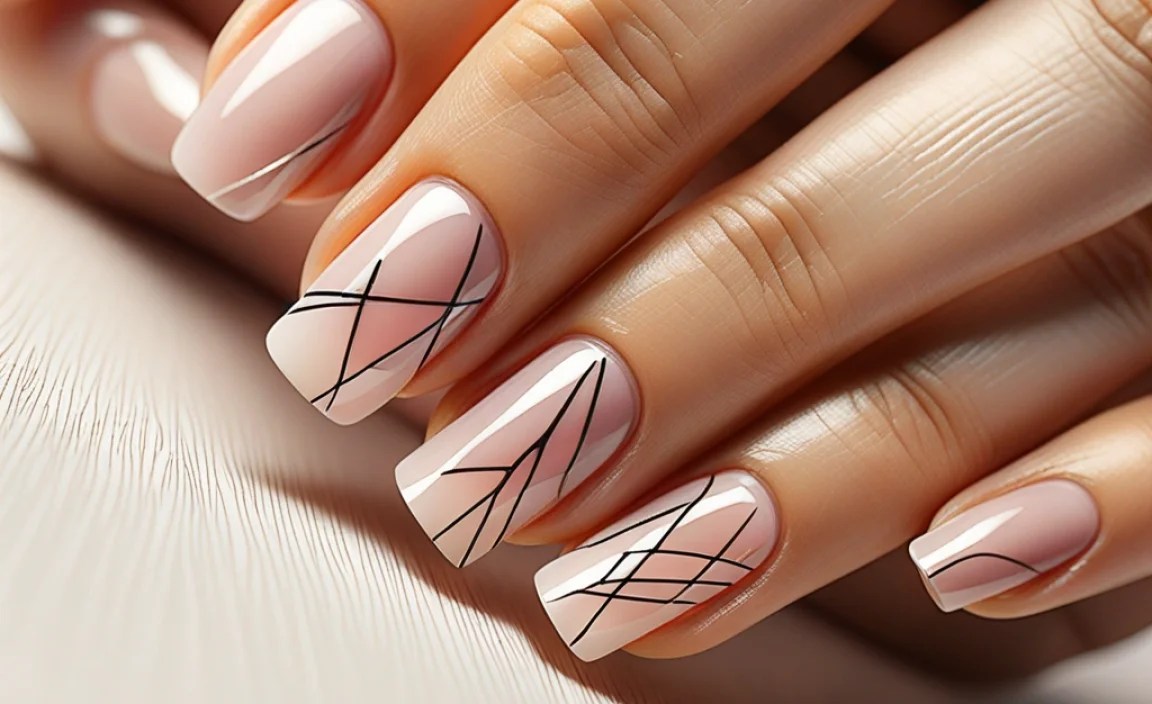
There are so many reasons why dainty line work nail art has become a go-to for nail enthusiasts everywhere:
Elegance and Sophistication: It instantly elevates your manicure, giving it a polished and refined look.
Versatility: It pairs beautifully with any outfit and suits all sorts of occasions.
Minimalist Appeal: It’s perfect for those who prefer understated beauty.
Achievable for Beginners: With the right tools and a little patience, you can create stunning designs at home.
Customizable: You can adapt these designs to your personal style, colors, and personality.
Timeless Trend: Unlike some flashier trends, fine line art remains consistently chic and stylish.
Essential Tools for Dainty Line Work
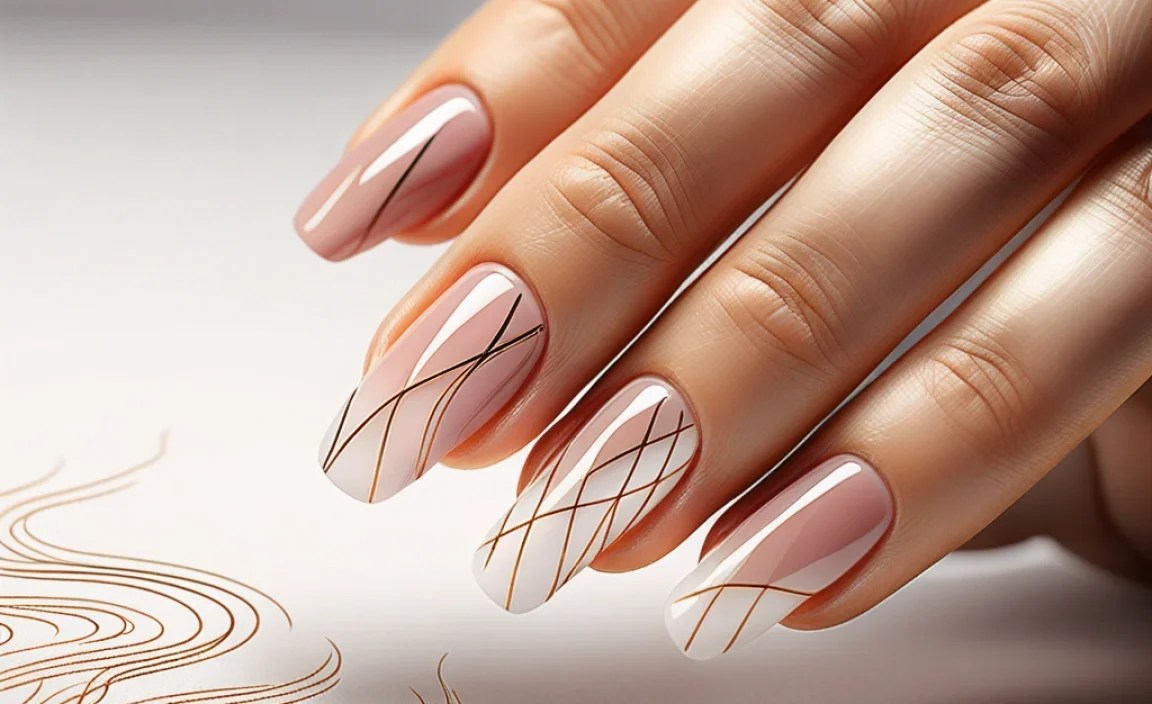
Before we jump into the designs, let’s talk about the tools that will make your dainty line work journey a breeze. Having the right supplies is key to achieving crisp, clean lines.
Here are the essentials you’ll need:
- Base Coat: To protect your natural nails and provide a smooth canvas.
- Top Coat: To seal your design and add a glossy finish.
- Nail Polish Colors:
- A neutral base color (nude, white, sheer pink, or black are popular choices).
- A contrasting color for your lines (black, white, gold, silver, or even a subtle metallic work well).
- Fine-Tipped Brushes: This is your most important tool!
- Detail Brushes/Liner Brushes: These have very long, thin bristles for drawing fine lines. Look for ones labeled “000” or “00” for the thinnest lines.
- Dotting Tools: Useful for adding small dots that can complement line work.
- Dotting Tool (Optional): For small dots and accents.
- Nail Art Pen (Optional): These have a built-in fine tip and can be easier for some beginners than brushes.
- Rubbing Alcohol or Nail Polish Remover: For cleaning your brushes.
- Paper Towel or Lint-Free Wipes: For removing excess polish from your brush.
- Practice Surface: A piece of paper, a nail art practice sheet, or even an old tip is great for practicing your strokes before hitting your actual nails.
Choosing the Right Brushes
The quality and type of brush you use can make a huge difference. When selecting fine-tipped brushes, look for:
Bristle Length: Longer bristles generally allow for smoother, more continuous strokes.
Bristle Stiffness: Brushes that are too soft can splay out, making it hard to control the line. Brushes that are too stiff might not hold enough polish.
Tip Precision: Ensure the tip comes to a very fine, sharp point.
You can find great nail art brushes online from beauty supply stores or dedicated nail art brands. Many artists recommend synthetic bristles for better polish control.
Understanding Nail Polish Consistency
For line work, you want a nail polish that isn’t too thick or too watery. Gel polishes are often preferred for line work due to their smooth, consistent texture and the ability to control their spread before curing. However, traditional nail polish can also work well if it’s not too old or gooey. If your polish is a bit thick, you can try adding a drop of nail polish thinner, but be cautious not to overdo it. Properly thinned polish will glide smoothly without being streaky or clumpy.
Getting Started: Preparing Your Nails

A flawless design starts with a flawless base! Proper nail preparation ensures your dainty line art stays beautiful and lasts longer.
- Clean and Shape: Start by removing any old polish. Then, file your nails to your desired shape. Smooth any ridges with a fine-grit buffer.
- Cuticle Care: Gently push back your cuticles. This creates a clean edge for your nail art and makes the design look more professional. You can use a cuticle pusher or an orange stick. For very stubborn cuticles, a tiny amount of cuticle remover can help.
- Apply Base Coat: Apply a thin, even layer of your favorite base coat. This protects your nails from staining and helps polish adhere better. Let it dry completely.
- Apply Color Coat(s): Apply 1-2 thin coats of your chosen base color. Ensure each coat is fully dry before applying the next. A smooth, opaque base is essential for making your line work pop.
Dainty Line Work Nail Art: Genius Designs for Beginners
Now for the fun part! These designs are perfect for those new to line work. They require minimal strokes and are easy to replicate.
1. Minimalist Straight Lines
This is the absolute classic. Simple, clean lines are incredibly chic.
How-To:
1. After your base color is dry, dip your fine-tipped brush into your line art polish.
2. Wipe off any excess polish on a paper towel so you have a good amount of product but not so much that it will blob.
3. Gently draw one or more straight lines across your nail. You can go horizontally, vertically, or diagonally.
4. For a more complex look, layer lines of different lengths or thicknesses. Try a single thick line across half the nail, or a series of thin parallel lines.
5. Let dry completely before applying top coat.
Design Ideas:
A single vertical line down the center of the nail.
Two diagonal lines forming a “V” or “X” shape.
A cluster of thin, parallel vertical lines.
A horizontal line just above the free edge (like a French tip, but a line).
2. Geometric Grids and Squares
Creating simple geometric shapes using fine lines adds a modern touch.
How-To:
1. Start with your dry base color.
2. Using your liner brush, draw the outline of a square or rectangle on your nail.
3. From one side, draw a parallel line to create the illusion of depth or simply draw it in the center.
4. You can then add dividing lines to create a grid effect. For a checkerboard, draw two intersecting lines to make a plus sign, then draw lines to complete four squares within that.
5. Experiment with negative space (leaving parts of the nail unpainted) within the shapes.
Design Ideas:
A single, simple square outlined on one corner of the nail.
An overlapping grid of 2-3 squares.
A small square placed centrally on the nail.
3. Delicate Dots and Dashes
Dots and dashes are the building blocks of many simple yet effective nail art designs.
How-To:
1. Use a dotting tool or the tip of your fine brush for dots. Dip the tool into polish and gently press onto the nail.
2. For dashes, use your liner brush to create small, clean strokes.
3. Arrange them in patterns – lines of dots, scattered dots, dashed lines, or a combination.
Design Ideas:
A trail of tiny dots leading from the cuticle to the tip.
A simple dashed line border around the edge of the nail.
A constellation of dots across the nail.
Combining a few dots with a couple of short, straight lines.
4. Abstract Swirls and C’s
Abstract shapes are forgiving and look incredibly chic.
How-To:
1. Load your brush with polish.
2. Gently swirl the brush in a C-shape, an S-shape, or a loose spiral on your nail.
3. The key is to keep the lines thin and fluid. Don’t aim for perfection; embrace the organic flow.
Design Ideas:
A single, elegant C-shape near the cuticle.
A few scattered, wispy swirls across the nail.
A subtle S-curve as an accent.
5. Dainty Floral Accents
Even simple floral elements can be created with fine lines!
How-To:
1. Use your liner brush to paint a few small, simple petal shapes. Think U-shapes or teardrops.
2. Alternatively, create a simple flower by painting a few dots in a circular pattern and then connecting them with tiny strokes.
3. A single line can even represent a flower stem or a leaf.
Design Ideas:
A tiny, simple flower on the accent nail.
A few delicate leaves scattered on the nail.
A single stem with a leaf or two.
Dainty Line Work Nail Art: Designs for the Intermediate Level
Once you’re comfortable with the basics, you can try these designs that add a bit more complexity and layering.
1. Layered Geometric Patterns
Build upon the simple geometric shapes by layering them or creating more intricate arrangements.
How-To:
1. Start with your base colored nail.
2. Draw a primary geometric shape (e.g., a square).
3. Once dry, add an overlapping or intersecting shape. For example, draw a triangle that partially covers the square, or add diagonal lines within the square to create smaller triangles.
4. Consider using two different colors for your lines to add depth and contrast.
Design Ideas:
Overlapping chevrons.
A combination of squares and diamonds.
A lattice or trellis pattern created by intersecting horizontal and vertical fine lines.
2. Fine-Lined French Tips and Half-Moons
A refined take on classic nail shapes.
How-To:
1. With a steady hand, use your liner brush to draw a crisp line following the natural curve of your nail tip (for French tips) or the base of your nail (for half-moons).
2. Ensure the line is thin and even. You can also extend the line down the side of the nail for a more modern look.
3. Alternatively, paint a thick French tip or half-moon in your base color and then use a fine line of contrast color to outline it. A popular variation is to leave the tip or half-moon clear or in a sheer color and outline it with a fine black or gold line.
Design Ideas:
A classic French tip done with a super fine line.
A reverse French tip (half-moon at the base) with a delicate line.
An angled French tip with a fine line accent at the corner.
3. Abstract Faces and Figures
This trend is super popular and looks amazing with fine lines.
How-To:
1. Think simple shapes: circles for eyes, small lines for noses or mouths, and curved lines for facial contours.
2. Start with one or two key features. For example, two tiny dots for eyes, or a single curved line for lips.
3. Experiment with different placements on the nail.
4. It’s abstract, so perfect symmetry isn’t necessary – in fact, a slightly imperfect look can add to its charm.
Design Ideas:
Two simple dots for eyes.
A single minimalist mouth line.
A profile outline using a curved line.
A small, abstract eye using a circle and a dot.
4. Celestial and Constellation Designs
Stars, moons, and abstract cosmic patterns look beautiful in fine line art.
How-To:
1. Use a dotting tool or the tip of your brush to create small dots representing stars.
2. Connect these dots with thin lines to form constellations.
3. Draw a small crescent moon shape with your liner brush.
4. You can also create abstract starbursts with fine lines radiating from a central dot.
Design Ideas:
A cluster of dots connected by thin lines.
A minimalist crescent moon.
A small starburst design.
The Big Dipper constellation recreated with dots and lines.
5. Fine-Lined Florals and Botanicals
More intricate than the beginner florals, these designs involve more detailed petal shapes and leaf structures.
How-To:
1. Use your fine brush to create more defined petal shapes, layering them around a central point.
2. Paint thin, delicate lines to represent the veins of leaves or the structures of stems.
3. Consider using a darker shade for the main lines and a lighter shade for subtle accents or highlights.
Design Ideas:
A single, detailed wildflower with multiple petals.
A sprig of leaves with fine vein details.
A delicate vine wrapping around the nail.
Pro Tips for Flawless Line Work
Mastering dainty line work is all about technique and practice. Here are some professional tips to help you achieve beautiful results every time:
Steady Your Hand: Rest your wrists or forearms on a stable surface. You can also use your non-dominant hand to steady the finger you are painting.
Control Polish Amount: Load your brush with polish, then blot off the excess on a paper towel. You want enough polish for a smooth stroke, but not so much that it’s gloppy and hard to control.
Use Light Pressure: Let the brush do the work. Apply gentle, consistent pressure for thin, even lines. Too much pressure will cause the bristles to splay.
Work from Back to Front: When drawing lines, start at the point furthest away from you on the nail and gently drag the brush towards you. This usually leads to smoother lines.
Practice Makes Perfect: Don’t get discouraged if your first few attempts aren’t perfect. Practice on paper or a practice tip until you feel more comfortable. The more you do it, the better your hand will become.
Know When to Stop: Sometimes, less is more. A single, well-placed line can be more impactful than an overly busy design.
Clean as You Go: If you make a mistake, clean it up immediately with a small brush dipped in clean nail polish remover or alcohol before it dries.
Gel Polish Advantage: For stunningly sharp lines that don’t smudge before you’re ready, consider using gel polishes. They stay put until cured under a UV/LED lamp, giving you more time for precision. The FDA notes that UV lamps used for curing gel polish emit UV radiation, so it’s wise to use sunscreen or UV-protective gloves during application.
Maintaining Your Dainty Line Work Manicure
A beautiful design deserves to last! Here’s how to keep your dainty line work nails looking fresh:
Seal with Top Coat: After your line art is completely dry, apply a generous layer of high-quality top coat. This protects the delicate lines from chipping and adds shine. For gel line art, ensure proper curing of the top coat.
Avoid Harsh Chemicals: Wear gloves when doing household chores, especially when using cleaning supplies, as these can break down polish.
Moisturize: Keep your cuticles and hands hydrated with cuticle oil and hand lotion. Healthy nails are less prone to chipping.
Be Gentle: Avoid using your nails as tools (e.g., to open cans or scrape surfaces).
Touch-Ups:** If a small chip or worn line occurs, you can often touch it up with your liner brush and a small amount of polish before reapplying a thin layer of top coat.
