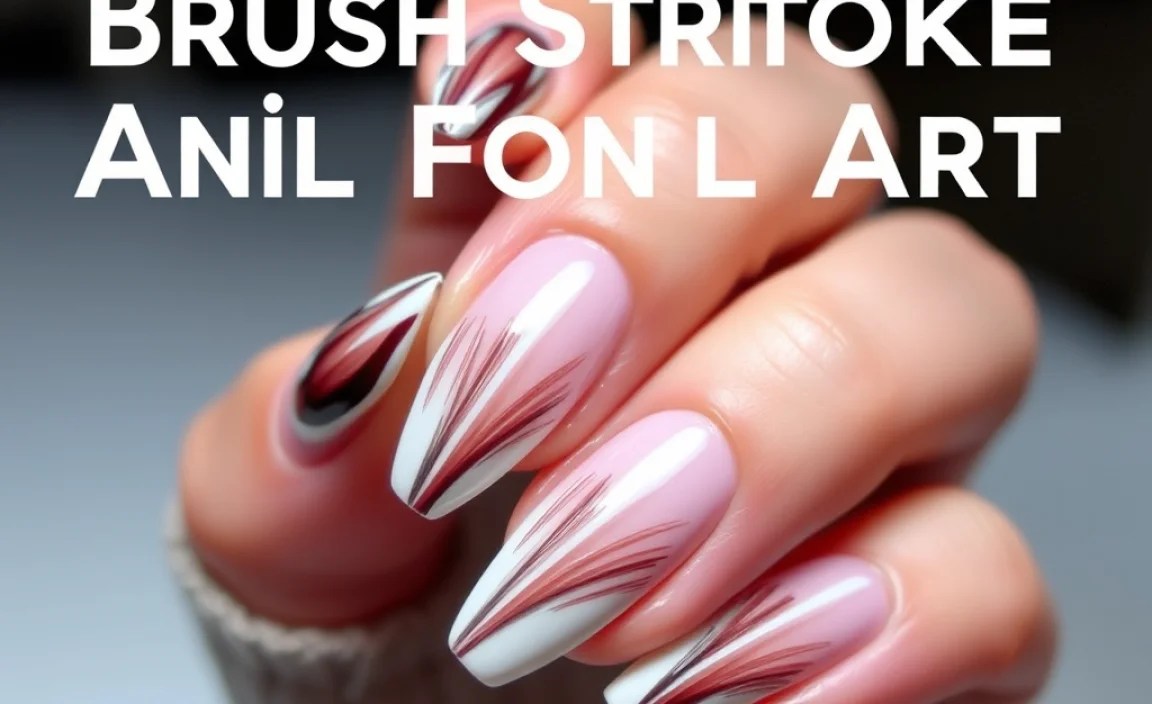
Brush stroke nail art for long nails offers a creative, artistic flair that’s surprisingly achievable, even for beginners. With simple techniques and the right tools, you can transform your long nails into mini canvases for unique, expressive designs that are sure to turn heads and showcase your personal style.
Dreaming of stunning nail art that looks like it belongs in a gallery? You’ve come to the right place! Long nails provide the perfect canvas for intricate designs, and brush stroke nail art is a fantastic way to tap into your inner artist. It might sound intimidating, but trust me, it’s simpler than you think! This technique is all about embracing a free-spirited, painterly effect that’s both chic and personal. We’ll walk you through everything you need to know to create gorgeous brush stroke designs on your lovely long nails, proving that beautiful nail art is totally within your reach.
Why Brush Stroke Nail Art Loves Long Nails

Long nails give you more surface area to play with, making brush stroke designs even more impactful. The extra length allows for more detailed strokes and a better overall composition. Think of it like a larger canvas – more room to spread your artistic wings! Plus, the elegant shape of long nails naturally complements the flowing nature of brush strokes, creating a visually harmonious and sophisticated look.
Essential Tools for Your At-Home Studio
Before we dive into designs, let’s gather our supplies. Having the right tools makes all the difference in achieving those professional-looking results. Don’t worry, you probably have most of these already!
The Must-Haves:
- Base Coat: To protect your natural nail and ensure smooth polish application.
- Top Coat: For shine and to seal your masterpiece.
- Nail Polish Colors: Choose a few complementary colors to start.
- A Thin Nail Art Brush or Detail Brush: This is key for creating those fine strokes. Look for brushes with fine, flexible bristles.
- A Sturdy Surface or Palette: A clean tile, a piece of paper, or a dedicated nail art palette to mix colors or use as a “wipe-off” station for your brush.
- Nail Polish Remover and Cotton Swabs: For inevitable little oopsies!
- Optional: Dotting Tools: Can add extra dimension or tiny accents.
Getting Started: The Prep Work

Just like any great artist, preparation is crucial. Taking a few moments to prep your nails will ensure your brush stroke art stays beautiful and lasts longer. Clean nails are happy nails!
- Cleanse Your Nails: Make sure your nails are free of any old polish, lotion, or oils. A quick wipe with nail polish remover works wonders.
- Shape Your Nails: Ensure your nails are filed to your desired shape. For brush stroke art, any classic shape like oval, squoval, or almond works beautifully with long nails.
- Apply Base Coat: This protects your nails from staining and gives your polish something to grip onto for better longevity. Let it dry completely.
Brush Stroke Techniques for Beginners
These techniques are designed to be super easy to learn. The beauty of brush stroke art is that imperfections often add to the charm! It’s all about embracing a fluid, imperfect style.
Technique 1: The “One-Dip” Stroke
This is the simplest way to get started. It creates a clean, single-color stroke that looks like a spontaneous brush mark.
- Dip your thin nail art brush into your chosen polish color.
- Gently wipe off excess polish on the side of the bottle or your palette. You want a good amount of polish, but not so much that it’s gloopy.
- Start at one edge of your nail and drag the brush across in a fluid motion. You can make this a straight line, a gentle curve, or a bolder sweep.
- Don’t overwork it! One confident stroke is often best.
- Let it dry completely before adding another stroke or a top coat.
Technique 2: The “Two-Tone” Blend
This technique adds a little more depth by using two colors at once, creating a beautiful gradient effect within a single stroke.
- Dip one side of your thin brush into your first polish color.
- Dip the other side of the brush into your second polish color.
- Gently swirl the tip of the brush on your palette or a clean surface to blend the two colors slightly. This creates a beautiful marbling or gradient effect on your brush.
- Apply to your nail in a single, fluid stroke, similar to the one-dip method. You’ll see both colors appear with a blended look.
- Experiment with different color combinations! Pastels blended together, or a vibrant color with white, can look stunning.
Technique 3: Layered Strokes
This is where you build dimension and complexity. By layering strokes, you can create a more intricate, painterly effect, much like traditional painting.
- Start with your base color (this could be a solid color, or even a nude for a subtle look). Let it dry fully.
- Using your thin brush and your first accent color, create a bold stroke across the nail.
- Let the first stroke dry (or get slightly tacky).
- Now, with a second color (or even the same color but slightly different placement), add another stroke that overlaps or sits next to the first.
- Think about how real paint strokes layer – you can create highlights, shadows, or just interesting textures.
- You can use the two-tone blending technique within layers for even more depth!
Genius Brush Stroke Designs for Long Nails
Now for the fun part! Let’s apply these techniques to create some gorgeous designs specifically suited for the elegance of long nails.
1. The Abstract Gradient Swirl
This design uses gentle, flowing strokes to create a serene, artistic vibe.
- Start with a neutral or light base color on all nails.
- Once dry, use the “two-tone” blend technique. Pick colors that are soothing, like soft blues and whites, or pinks and peaches.
- Start near the cuticle and with a gentle flick of your wrist, sweep the brush in a curved line towards the tip of the nail.
- Don’t aim for perfection; let the colors blend naturally where they meet.
- Add one or two more strokes, letting them slightly overlap or flow alongside the first.
- Seal with a top coat.
2. The Bold Monet Impression
Inspired by the Impressionist masters, this design uses vibrant, choppy strokes to create a lively, artistic effect.
- Choose a dark or solid base color (black, navy, or a deep burgundy look great). Let it dry.
- Using the “one-dip” or “two-tone” technique, pick bright, contrasting colors (think fuchsia, electric blue, or bright yellow).
- Apply short, energetic strokes across the nail. Don’t try to make smooth lines; think of dabs and quick flicks of the brush.
- Layer different colors over each other, allowing some of the base color to peek through.
- This design thrives on a slightly messy, dynamic look.
3. The Minimalist Line Art
Sometimes less is more! This design focuses on clean, elegant lines that highlight the length of your nails.
- Apply a solid base color to all nails. A classic nude, white, or black works well.
- Using a very fine nail art brush and a contrasting color (often white, black, or gold/silver foil polish), create simple, thin lines.
- These lines can be straight, slightly wavy, or even form abstract shapes and patterns.
- Think of delicate single lines that run vertically, horizontally, or diagonally. You can even create a small “x” shape or a few parallel lines.
- The key is to keep the lines delicate and sparse, letting the base color shine through.
4. The Feathered Effect
This technique mimics the delicate texture of a feather, perfect for a soft yet artistic look.
- Start with a light, neutral base color.
- Take your thin brush loaded with a contrasting color.
- Start at the tip of your nail and gently feather the brush downwards, creating a series of fine, parallel strokes that get slightly thinner as they go.
- Alternatively, you can use a slightly damp brush (with nail polish remover!) to gently feather out a stroke you’ve just made, creating a softer edge.
- This is a great technique for creating subtle accents or full-nail designs.
5. The Tropical Sunset Blend
Capture the magic of a sunset with vibrant, blended brush strokes.
- Paint your nails with a deep blue or purple base, representing the night sky.
- While the base is still slightly wet (or use a top coat to help blend), use a slightly drier brush with vibrant oranges, pinks, and yellows.
- Gently dab and swirl these colors onto the base color. The wet base will help them meld together.
- You can also use the “two-tone” blend technique with these sunset colors first, then apply them in curved strokes, mimicking rays of light.
- Let it all blend organically.
Tips for Perfecting Your Brush Strokes
Even with simple techniques, a few pro tips can elevate your brush stroke nail art.
- Practice Makes Perfect: Don’t get discouraged if your first few attempts aren’t exactly what you envisioned. Practice on paper or nail tips first!
- Control Your Polish Load: The amount of polish on your brush is crucial. Too much leads to blobs; too little leads to scratchy lines. Wipe off excess on the bottle neck or your palette.
- Brush Control: Experiment with the pressure you apply. Light pressure creates fine lines, while firmer pressure creates broader strokes.
- Work Quickly (But Not Too Quickly): Nail polish dries fast. Work one nail at a time. However, for blending techniques, you need to work while the polish is still wet.
- Embrace Imperfection: Remember, this art form thrives on spontaneity. A slightly uneven stroke or a unique color blend is part of its charm.
- Don’t Forget the Top Coat: A good quality top coat will seal your design, add shine, and protect it from chipping. Apply it carefully, ensuring it captures all the textured strokes.
Long Nail Care for Artful Adventures
Healthy, strong long nails are the best foundation for any nail art. Here’s how to keep them looking and feeling their best:
Daily Habits:
- Moisturize: Use cuticle oil and hand cream regularly to keep your nails and skin hydrated.
- Protect: Wear gloves when cleaning or doing manual tasks to avoid damage.
- Gentle Filing: Always file in one direction to prevent splitting. Refer to the NHS guidance on nail care and infection prevention for best practices.
Weekly Maintenance:
- Cuticle Care: Gently push back your cuticles after a shower using an orangewood stick.
- Buffing: Use a mild buffer to smooth ridges and add shine.
- Strengtheners: Consider using a nail strengthener if your nails are prone to breaking.
Troubleshooting Common Brush Stroke Issues
Even the most experienced nail artists run into little hiccups. Here’s how to tackle them:
| Problem | Solution |
|---|---|
| Polish is too thick or gloopy. | Wipe more excess polish off your brush onto the bottle neck or palette. For very thick polish, try adding a drop of nail polish thinner. |
| Lines are too thin or scratchy. | You might be using too little polish on the brush, or applying too much pressure. Try loading your brush with a bit more polish and using a lighter touch. |
| Colors are muddy instead of blended. | You might be over-blending or mixing too many colors together at once. Try using the two-tone blend technique with just two colors and fewer brush swipes. Let layers dry slightly between applications. Great resources for understanding color theory, which can help with polish combinations, can be found at educational institutions like The National Gallery of Art’s Teacher Resources. |
| Brush strokes are uneven. | This is often part of the artistic charm! If you want more uniformity, practice consistent pressure and speed. For a more controlled look, sketch your design lightly with a pencil first (though this is less common for brush strokes). |
| Design smudged. | This usually happens when applying the top coat too roughly or too soon after the polish has dried. Ensure each layer of polish is completely dry before moving on or applying a top coat. When applying the top coat, use smooth, light strokes. |
Frequently Asked Questions About Brush Stroke Nail Art
Q1: Can I do brush stroke nail art on short nails?
Absolutely! While long nails offer more space, brush stroke art can be adapted for shorter nails. Focus on smaller, more concise strokes or simple line details to avoid overcrowding the nail.
Q2: What kind of brush is best for this type of nail art?
A fine detail brush or a liner brush with synthetic bristles is ideal. The finer the bristles, the more control you’ll have over delicate strokes. You want a brush that holds enough polish but isn’t too stiff.
Q3: How do I clean my nail art brush?
Clean your brush immediately after use with nail polish remover. Gently swish the bristles in remover, then wipe on a lint-free cloth or paper towel. Once all the polish is gone, rinse with soap and water and reshape the bristles. Store it flat or upright with bristles up.
Q4: Can I use regular acrylic paints instead of nail polish for brush strokes?
While some artists do use acrylic paints (which are water-based and dry quickly), it’s generally recommended to stick with nail polish for at-home manicures. Nail polish is designed for application on nails, is less likely to chip aggressively, and you can seal it effectively with a nail top coat. If you do use acrylics, ensure they are non-toxic and always use a protective base and top coat designed for nails.
Q5: How long should I let each layer of polish dry?
This depends on the polish formula, but a good rule of thumb is to let each layer dry for at least 1–2 minutes before adding another layer or proceeding. For blending techniques, you’ll want some layers to be wet, while others (like the base color) should be fully dry before you start adding accent strokes.
Q6: My brush strokes look heavy. How can I make them lighter and more delicate?
To achieve lighter, more delicate strokes, use less polish on your brush and apply very light pressure. You can also experiment with the “feathering” technique, where you gently drag the brush with minimal polish towards the nail tip, creating thinner, wispy lines.
Conclusion: Your Canvas Awaits!
There you have it – your beginner-friendly guide to mastering brush stroke nail art on your beautiful long nails! We’ve covered the essential tools, easy-to-follow techniques, and some genius design ideas to get you started. Remember, the most important elements are to have fun, be creative, and not be afraid to let your personal style shine through. Every stroke is a chance for expression, and with a little practice, you’ll be creating stunning, artistic manicures that are uniquely yours. So grab your polishes, pick up your brush, and let your inner artist flourish on your fabulous long nails!
