Broken glass foil nail art is a dazzling and surprisingly easy way to add a unique, shimmering effect to your nails. This beginner-friendly technique uses special foil pieces to mimic the look of shattered glass for a stunning, eye-catching manicure that requires minimal skill. You’ll be amazed at how simple it is to achieve professional-looking results right at home!
Are you looking for a nail art trend that’s both incredibly chic and surprisingly simple to do yourself? If you’ve ever admired those mesmerizing, iridescent manicures that catch the light like a disco ball, you’re probably thinking about broken glass foil nail art. It looks complex, right? Like you need a professional artist’s steady hand. But what if I told you this stunning effect is totally achievable for beginners? Forget complicated techniques! We’re diving into a method that’s all about effortless sparkle and dazzling results. Get ready to transform your nails into miniature works of art with this guide!
What is Broken Glass Foil Nail Art?

Broken glass foil nail art is a nail design technique that uses special holographic or iridescent foils cut into small, irregular pieces. These pieces are then carefully applied to the nail to create a shimmering, fragmented, or mosaic-like effect that resembles shattered glass. It’s a versatile trend that can be adapted to various colors and styles, from subtle shimmers to bold, eye-catching statements.
Why You’ll Love Broken Glass Foil Nail Art
This nail art trend is a fan favorite for a reason! It offers a fantastic blend of visual appeal and ease of execution, making it perfect for everyone, from seasoned nail art enthusiasts to absolute beginners. Here’s why it’s a must-try:
- Stunning Visuals: The holographic or iridescent nature of the foils creates a dazzling, multi-dimensional effect that changes with light and angle. It’s truly mesmerizing!
- Beginner-Friendly: Unlike intricate hand-painting, this technique relies on applying pre-cut or easily cut foil pieces, making it accessible even if you have zero drawing or painting skills.
- Customizable: You have complete control over the amount, size, and placement of the “glass” pieces. Want a subtle shimmer or a full-on mosaic? You decide!
- Quick Results: Compared to other detailed nail art, broken glass foil designs can often be completed relatively quickly, saving you time.
- Affordable: The materials are generally inexpensive, and you can achieve salon-worthy looks without the salon price tag.
- Versatile: It can be applied over any nail polish color (or even clear polish!), allowing you to create endless variations.
Essential Tools and Materials
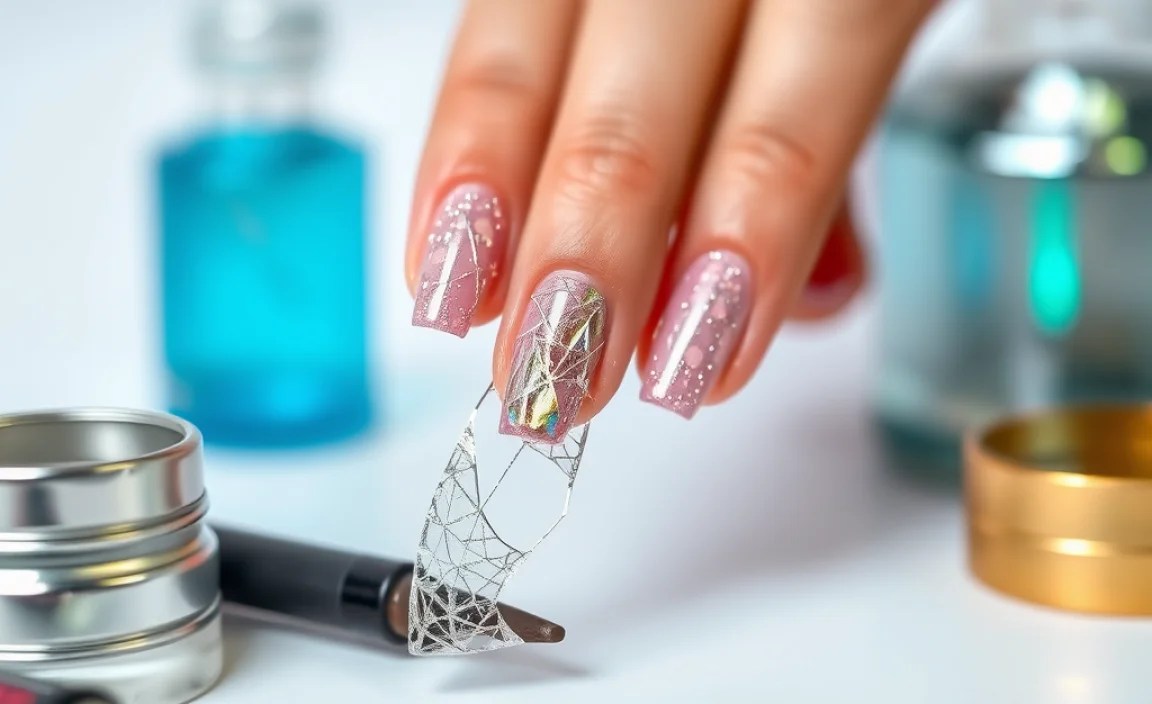
Before we get our hands ‘crafty,’ let’s gather the goods! You don’t need a professional nail kit to achieve this look. Most of these items are easily found online or at your local beauty supply store. Having the right tools makes the whole process smoother and more enjoyable.
The Must-Haves:
- Nail Polish or Gel Polish: This will be your base color. Choose any shade you love! Black or dark colors often make the foil pop more dramatically, but lighter colors offer a softer, ethereal glow.
- Top Coat: A good quality top coat is crucial for sealing your design and adding that glossy finish. A gel top coat is recommended if you’re using gel polish for a durable, long-lasting finish.
- Broken Glass Foil Sheets/Stickers: These are the stars of the show! They come in various colors and holographic finishes. You can buy pre-cut squares or larger sheets you cut yourself. Look for holographic or iridescent foils specifically designed for nail art.
- Clear Gel Glue or Foil Transfer Gel: This specialized adhesive is designed to create a sticky surface for the foil to adhere to. Regular nail polish can sometimes work as a base for the foil, but a dedicated gel glue or transfer gel provides the best hold and tackiness, especially for gel manicures.
- Tweezers: Fine-tipped tweezers are essential for picking up and precisely placing the small foil pieces.
- Scissors or Nail Art Cutters: If you’re using larger foil sheets, you’ll need small, sharp scissors or specialized cutters to create your irregular shapes.
- Cuticle Pusher or Orangewood Stick: To gently press down the foil pieces and smooth them onto your nail.
- Alcohol Wipe or Cleanser: For cleaning the nail surface before application and removing any sticky residue after curing with gel.
- UV/LED Nail Lamp: Absolutely necessary if you are using gel polish and gel glue/transfer gel. This cures (hardens) the gel layers.
Optional but Helpful:
- Base Coat: If using regular nail polish to prevent staining and help polish adherence.
- Buffer: To gently smooth the nail surface before applying polish.
- Dotting Tool: For picking up and placing very tiny foil pieces if tweezers are too cumbersome.
Step-by-Step Guide to Stunning Broken Glass Foil Nails

Ready to create your own dazzling broken glass manicure? Don’t worry, it’s much simpler than it looks! Follow these easy steps, and you’ll have a show-stopping design in no time.
Step 1: Prepare Your Nails
Just like any manicure, a clean canvas is key for a flawless finish. Start by ensuring your nails are prepped:
- Shape and File: File your nails to your desired shape.
- Push Cuticles: Gently push back your cuticles with a cuticle pusher.
- Buff (Optional): Lightly buff the surface of your nails to create a smooth base for polish.
- Cleanse: Wipe each nail with an alcohol wipe or nail cleanser to remove any oils or dust. This is super important for polish and gel adherence!
Step 2: Apply Your Base Color
Now it’s time for your chosen base color. This is the foundation upon which your broken glass effect will shine.
- Regular Polish: Apply 1-2 thin, even coats of your regular nail polish. Allow each coat to dry completely before applying the next.
- Gel Polish: Apply 1-2 thin, even coats of your gel polish. After each coat, cure your nails under your UV/LED lamp according to the lamp’s instructions (usually 30-60 seconds).
Step 3: Apply the Adhesive for the Foil
This is where we create the sticky surface for our foil pieces.
- Using Transfer Gel (Recommended for Gel Manis): Apply a thin, even layer of the foil transfer gel or clear gel glue over the entire nail or the areas where you want the foil to adhere. Be sure to cap the free edge if you want full coverage. Understanding how to properly use foil transfer gel is key to achieving a good stick.
- Using Regular Top Coat (Less Durable): If you don’t have transfer gel, you can apply a thin layer of your regular top coat. You’ll need to watch this very closely and wait for it to become very tacky, but not fully dry. This method is riskier and the foil may not adhere as well or last as long.
Important Note for Gel: If you’re using gel, you will likely not cure the transfer gel immediately. You’ll apply the foil directly onto the wet, uncured gel (or cured gel if your specific transfer product requires it – always check product instructions!). If using a specific foil glue that needs curing, cure it now under your lamp as directed.
Step 4: Cut and Arrange Your Foil Pieces
It’s time to get creative with your foil!
- If using pre-cut squares: You can use them as is or cut them into smaller, irregular shapes.
- If using sheets: Lay out your favorite foil sheets. Using small, sharp scissors or nail art cutters, carefully cut the sheets into various random shapes and sizes. Think triangles, diamonds, and jagged shards – like tiny pieces of broken glass! The more irregular, the more realistic the effect.
Set aside your cut pieces. You might want to prepare a few extra in case some don’t transfer perfectly.
Step 5: Apply the Foil
This is the fun, satisfying part!
If using uncured gel glue/transfer gel:
- Working one nail at a time, gently pick up a foil piece with your tweezers.
- Place the foil piece onto the tacky gel surface on your nail. Don’t worry about perfect alignment; the randomness is what makes it look like broken glass.
- Use the flat side of your cuticle pusher or orangewood stick to gently press down each foil piece, ensuring it adheres smoothly to the nail and has no air bubbles underneath.
- Continue placing pieces until you achieve your desired look. You can pack them closely together for a mosaic effect or space them out for a subtler shimmer.
- Once you’re happy with the arrangement, cure your nails under your UV/LED lamp for the recommended time. Proper curing is essential for gel longevity.
If using dried regular top coat (temporary method):
Gently press your foil pieces onto the very tacky top coat (don’t wait until it’s fully dry or it won’t stick!). Smooth them down. Once covered, you’ll need to apply a thick top coat to seal it. This method is not as durable.
Step 6: Clean Up and Seal the Deal
Almost there! Let’s finalize the look.
- Remove Excess Foil: If any foil pieces are sticking out over your free edge or cuticle area, gently file them away or use a fine-grit buffer block.
- Remove Sticky Residue (Gel Only): After curing the gel glue with foil, you might notice a sticky layer (inhibition layer). Wipe it away with an alcohol wipe or nail cleanser.
- Apply Top Coat: Apply a generous, smooth layer of your top coat over the entire nail. Ensure you cover all the foil-adhered areas and seal the edges to prevent lifting. Pay special attention to the tips and sides.
- Final Cure (Gel Only): Cure your nails one last time under the UV/LED lamp.
Step 7: Admire Your Work!
All done! Let your nails cool if they’re warm from the lamp, and marvel at your stunning, homemade broken glass foil nail art. You did it!
Tips for a Pro-Level Finish

Want to elevate your broken glass foil nails from good to absolutely phenomenal? Here are a few insider tips to ensure your manicure looks salon-perfect:
- Work in Sections: If you’re doing a full mosaic, try working on one nail at a time, or even half a nail, especially if using regular polish. This prevents the adhesive from drying out before you can place the foil.
- Vary Foil Sizes: Don’t use all one size of foil pieces. A mix of tiny shards and slightly larger fragments creates a more realistic and dynamic “broken glass” effect.
- Layering for Depth: For an even more dramatic 3D effect, you can try applying a second, very thin layer of transfer gel and adding a few more foil pieces over the first application before the final top coat.
- Smoothness is Key: Before applying the top coat, gently run your finger (gloved, if it’s gel product!) over the foil. If you feel any sharp edges or lifting, gently file them down or use a fine buffer. A smooth surface ensures your top coat lays evenly.
- Cap Those Edges: Always remember to “cap” the free edge of your nail with your base polish, adhesive, and top coat. This is crucial for preventing chips and peel-offs, especially with regular polish.
- Cleanliness Matters: Always start with clean, oil-free nails. Any dust or oils will hinder adhesion and affect the final look.
- Experiment with Bases: While dark colors provide high contrast, try broken glass foil over pastels, neons, or even clear polish for different vibes. White is also a fantastic base for a soft, pearlescent look.
Comparing Broken Glass Foil Application Methods
The way you apply the foil can significantly impact the durability and appearance of your manicure. Here’s a quick comparison of the most common methods:
| Method | Adhesive Used | Curing Required? | Pros | Cons |
|---|---|---|---|---|
| Gel Application | Foil Transfer Gel / Clear Gel Glue | Yes (UV/LED Lamp) | Most durable, long-lasting results. Excellent adhesion. Professional finish. Versatile (can be used with regular polish base or gel polish base). | Requires UV/LED lamp. Can be slightly more expensive upfront. |
| Regular Polish Application | Wet Base Polish / Regular Top Coat | No UV/LED lamp required. Air dry only. | Accessible – no special lamp needed. Can achieve a temporary effect. Affordable. | Least durable, prone to lifting and peeling quickly. Foil may not adhere evenly. Can be tricky to get the “tackiness” just right. |
| Dedicated Nail Glue | Specific Nail Art Glue (often brush-on) | Air dry (glue) / UV light (if using gel polish base) | Good adhesion for art pieces. Can be quicker than gel for some. | May require careful application to avoid clumps. Durability varies. Can sometimes look less integrated with the nail surface than gel. |
For beginners and those seeking a long-lasting, professional finish, the gel application method is highly recommended. It’s the most reliable way to ensure your beautiful broken glass design stays put!
Troubleshooting Common Issues
Even the most experienced nail enthusiasts run into a bump or two. If your broken glass foil art isn’t turning out quite right, don’t despair! Most common problems have simple solutions.
- Foil Not Sticking:
- Problem: The foil pieces just won’t adhere.
- Solution: Your adhesive layer (gel glue, transfer gel, or sticky top coat) wasn’t tacky enough. For gel, ensure you cured it correctly if required, or that it remained wet/tacky if not. For regular polish, try waiting a bit longer for it to get “sticky-tacky.” Ensure you pressed the foil down firmly.
- Foil Lifting or Peeling Prematurely:
- Problem: Your beautiful design is already peeling off after a day or two.
- Solution: You likely didn’t seal the edges properly with your top coat. Always cap the free edge of your nails. Also, ensure the foil pieces were pressed down smoothly without air bubbles, as these can create weak points.
- Uneven or Bubbly Top Coat:
- Problem: The top coat looks bumpy over the foil pieces.
- Solution: This can happen if the foil pieces weren’t smoothed down completely. Before applying the top coat, gently press everything down. If you feel any edges, lightly buff them. For gel, ensure your top coat is applied in even, smooth strokes. Sometimes a slightly thicker top coat can help fill minor imperfections.
- Foil Tears During Application:
- Problem: The foil tears into unwanted bits when you’re trying to place it.
- Solution: Be gentle with your tweezers. Try smaller pieces initially. If a piece tears awkwardly, it might add to the “broken glass” look, or you can try placing another piece over it for a layered effect.
- “Cracked” or “Scratched” Look Instead of Shimmer:
- Problem: The foil doesn’t have that beautiful holographic shimmer; it looks dull or scratched.
- Solution: Make sure you are using actual nail art foil designed for this purpose. Some craft foils or very cheap foils may not have the correct finish. Also, ensure you applied them with the shiny side up (usually the colored/patterned side faces outwards onto the nail).
