Baroque style nail art brings opulent, ornate designs to your fingertips! Discover simple ways to recreate dramatic scrolls, swirls, and floral motifs using basic tools and techniques, perfect for adding timeless elegance to any manicure.
Feeling a bit bored with plain nails? Dreaming of something truly dramatic and elegant, but think intricate nail art is too hard to do yourself? You’re not alone! Many of us admire those stunning, detailed manicures and wish we could achieve them at home. The good news is, you absolutely can! Baroque style nail art, with its rich patterns and luxurious feel, is more accessible than you might think.
Imagine swirls that mimic gilded frames and floral details that echo grand tapestries, all conveniently placed on your nails. This art form, inspired by a historical period known for its drama and grandeur, can be simplified for a beginner to create breathtaking results. We’ll break down everything you need to know, from essential tools to must-try designs, making baroque nail art your new favorite way to express yourself. Get ready to transform your nails into miniature masterpieces!
What is Baroque Style Nail Art?
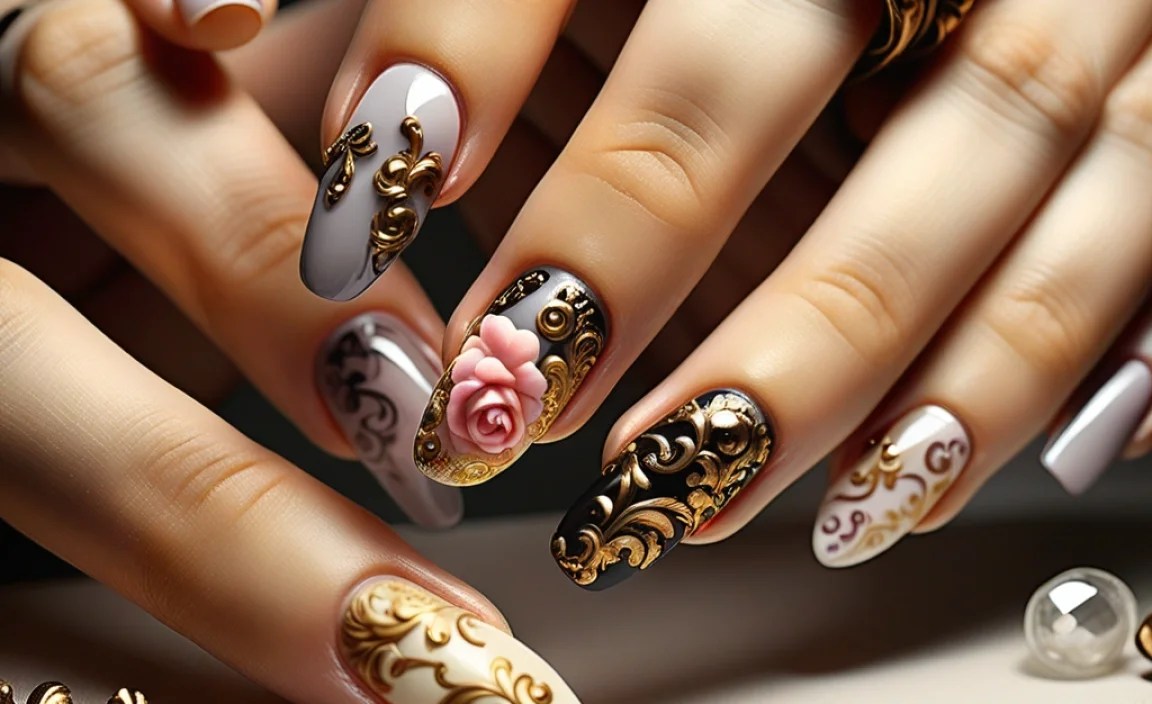
Baroque style nail art captures the essence of a bygone era known for its extravagance, drama, and ornate details. Think rich colors, complex patterns, and a sense of opulent beauty. This style draws inspiration directly from the art, architecture, and fashion of the Baroque period (roughly 1600 to 1750), which was characterized by grandeur, dynamism, and emotion.
Key elements you’ll often see in baroque-inspired designs include:
Intricate Scrolls and Swirls: These are the hallmarks of Baroque art, resembling elaborate filigree or curling vines.
Floral Motifs: Rich, blooming flowers, often detailed and layered, are common.
Gilded Accents: Gold or metallic elements are frequently used to mimic the luxurious embellishments of the period.
Jewel Tones and Deep Hues: Think deep reds, emerald greens, sapphire blues, and opulent purples, often paired with black, white, or gold.
Dimensionality: While harder to achieve at home, the original Baroque art emphasized depth and drama, which can be hinted at with shading and layering in nail art.
For beginners, the beauty of translating this style to nails lies in simplifying these elements. You can recreate the feeling of baroque luxury with achievable techniques!
Why Try Baroque Style Nail Art?
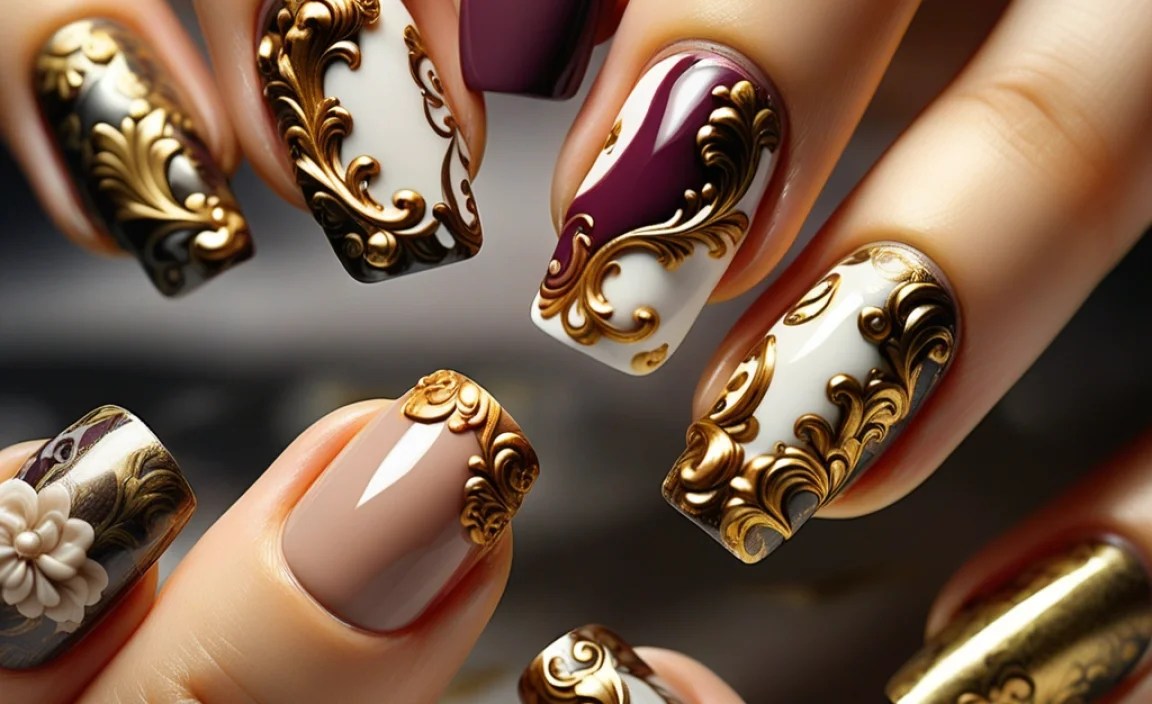
It’s more than just a trend; it’s a way to elevate your style and embrace a touch of timeless sophistication. If you’re looking for a way to make your nails stand out, baroque art offers a unique and eye-catching avenue.
Here’s why it’s a fantastic choice for nail art enthusiasts, especially beginners:
Timeless Elegance: Unlike fleeting trends, baroque designs have a classic appeal that never goes out of style. They add a touch of vintage glamour and refined taste.
Versatile Aesthetics: Whether you love dramatic flair or subtle hints of luxury, baroque nail art can be adapted. It can be bold and statement-making or soft and elegantly understated.
Creative Expression: The intricate nature of baroque designs allows for immense creativity. You can experiment with different color palettes, patterns, and embellishments to create a look that’s uniquely yours.
Achievable DIY: With a few basic tools and some practice, you can recreate stunning baroque-inspired looks right at home, saving time and money on salon visits.
Conversation Starter: Unique nail art always garners attention! Baroque designs are intricate and visually interesting, making them a great way to showcase your personality and creativity.
Essential Tools for Baroque Nail Art Beginners

You don’t need a professional arsenal to start creating beautiful baroque nail art. A few key, affordable tools can set you up for success.
Here’s what you’ll want to have on hand:
Fine-Tipped Nail Art Brushes: These are essential for creating delicate lines, swirls, and small details. Look for brushes with synthetic bristles that hold their shape. A set with various fine tips (e.g., liner brushes, detail brushes) is ideal.
Dotting Tools: These come with various ball-shaped tips in different sizes. They are perfect for creating uniform dots, which can be used as building blocks for more complex patterns, or as decorative elements themselves.
Nail Polish in Key Colors:
Base Coat: Crucial for protecting your natural nails and ensuring polish longevity.
Top Coat: Seals your design and adds a glossy finish.
Classic Colors: Black, white, deep reds, emerald greens, navy blues, and metallic gold or silver are perfect starting points for the baroque palette.
Gel Polish System (Optional but Recommended): While not strictly necessary, gel polish offers a more durable, high-gloss finish that truly enhances the luxurious feel of baroque designs. It also allows for more control as it doesn’t dry until cured under a UV/LED lamp.
UV/LED Nail Lamp: If you opt for gel polish, this is a must-have for curing the gel layers.
Nail Polish Remover and Cotton Pads: For cleaning up mistakes and removing polish.
Tweezers: Useful for picking up small embellishments like rhinestones or glitter.
Small Palette or Piece of Foil: To hold small amounts of polish you plan to use for detailing, preventing your main bottles from getting messy.
Tool Spotlight: The Almighty Dotting Tool
The humble dotting tool is an unsung hero for beginner nail artists. Its simple design belies its versatility. You can use it to:
Create perfect circles and dots.
Stamp small floral elements.
Connect dots to form lines and patterns.
Apply tiny embellishments.
You can find affordable dotting tool sets online or at most beauty supply stores. A set with 5 different ball sizes is a great starter pack! For more information on nail art tools and their uses, check out this helpful guide from the Nailpro magazine.
Essential Baroque Nail Art Design Ideas for Beginners
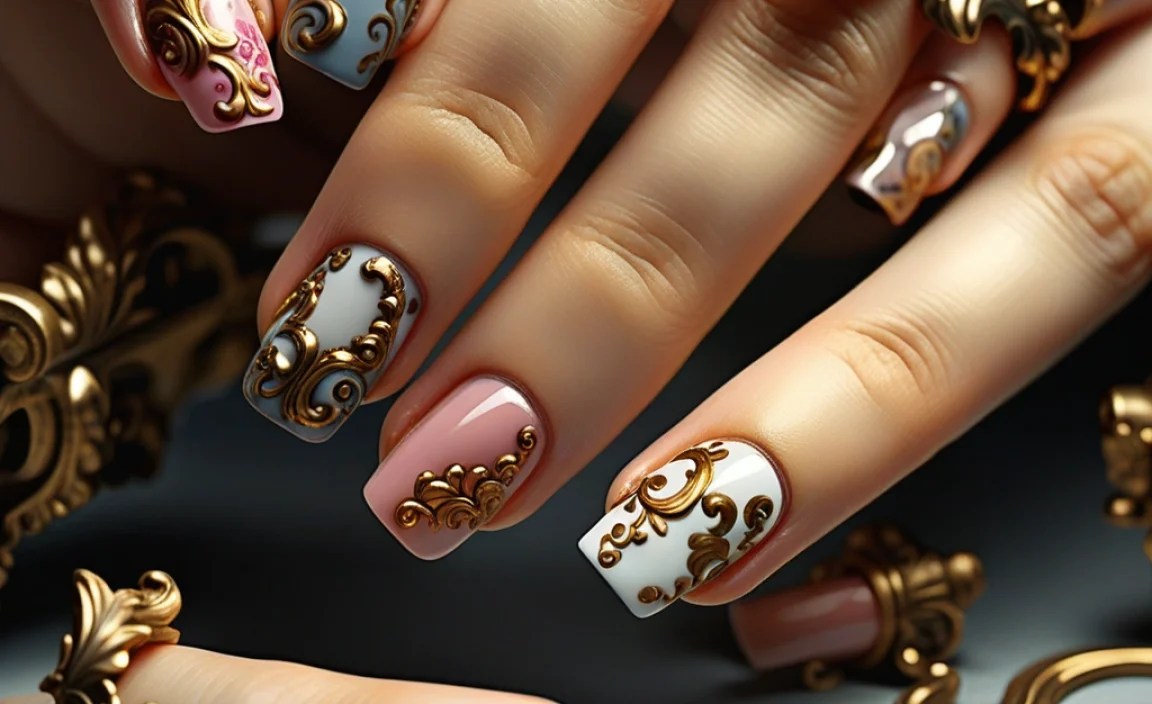
Ready to dive in? Let’s explore some designs that capture the baroque spirit without overwhelming you. Remember, practice makes perfect, so don’t be afraid to experiment!
1. The Elegant Scroll Accent Nail
This design focuses on one or two nails to make a statement, leaving the others simpler. It’s perfect for beginners because it uses one core technique: drawing lines.
How to Create:
1. Prep Your Nails: Ensure your nails are clean, dry, and shaped. Apply a base coat and let it dry completely.
2. Apply Base Color: Paint your accent nail(s) with a rich color like deep red, navy, or black. Apply a second coat if needed. Let it dry thoroughly. You can paint your other nails in a complementary color (e.g., nude, gold, or white).
3. Draw the Scroll: Using a fine-tipped nail art brush and a contrasting color (gold or white often pop beautifully on dark bases), lightly sketch out a scroll shape. Imagine a backward ‘S’ or a loose swirl.
4. Add Detail: Once you have the basic scroll shape down, go back with the same brush and color to add smaller swirls branching off the main one, or tiny dots along the curve. You can also add a small leaf shape or two.
5. Refine and Embellish (Optional): If you want to add more flair, use a dotting tool to add tiny dots at the beginning and end of your scroll, or at intervals along its path. A single small rhinestone strategically placed can also enhance the baroque feel.
6. Seal It: Once completely dry, apply a clear top coat to protect your design and add shine.
2. The Opulent Floral Swirl
This design combines simple floral elements with flowing lines, reminiscent of baroque wallpapers or tapestries.
How to Create:
1. Prep and Base: Apply your base coat and then your chosen base polish. For this design, a classic black, deep emerald, or rich burgundy works wonderfully. Let it dry.
2. Create the Swirl: With a liner brush and a metallic gold or white polish, paint a sweeping, elegant scroll across the nail. Don’t worry if it’s not perfectly symmetrical; fluidity is key.
3. Add Floral Touches:
Using a Dotting Tool: Use a small ball dotting tool to create a few small dots where the scroll starts or ends, or along its curve, to suggest buds or petals.
Using a Fine Brush: With the same brush or a slightly smaller one, carefully add tiny, delicate leaf shapes connecting to or sprouting from the scroll. You can draw simple elongated teardrops for leaves.
4. Consider Layers: For a slightly more advanced touch, you could add another layer of smaller scrolls or dots in a slightly different shade (e.g., a lighter gold over dark gold) for depth.
5. Finish: Apply a good quality top coat to seal the design and give it a high-gloss finish.
3. The Gilded Lace Effect
This design mimics ornate lace patterns with fine lines. It looks incredibly complex but can be simplified using a dotting tool and a steady hand.
How to Create:
1. Base Color: Choose a sophisticated base color like off-white, cream, peach, or a pale nude. Apply two thin coats and let them dry completely.
2. Outline the Pattern: With a very fine liner brush and metallic gold or silver polish, start by creating a few strategically placed dots near the cuticle or along the free edge.
3. Connect the Dots: Use the liner brush to draw thin, delicate lines connecting these dots in flowing, organic patterns. Think of a spiderweb crossed with floral vines. Alternatively, you can simply create delicate, curved lines reminiscent of lace.
4. Add Flourishes: Add tiny teardrop shapes or leaf-like strokes at the ends of lines, or small loops to make it look more like traditional lace.
5. Small Dots: Use a small dotting tool to add tiny dots within the open spaces or along the connecting lines for added detail.
6. Top Coat: Carefully apply a thin layer of clear top coat. Be gentle so you don’t smudge your delicate lines!
4. Baroque Jewel Accents
This is less about intricate patterns and more about using rich colors and embellishments to evoke the feeling of baroque luxury.
How to Create:
1. Choose Your Base: Select a rich, deep color like sapphire blue, emerald green, ruby red, or even a dramatic black. Apply two coats and let them dry.
2. Apply a Gem Motif (Optional): On one or two accent nails, you can paint a simple “gem” shape. Use white or a lighter shade of your base color to paint an oval or teardrop shape. Then, outline it with gold or silver.
3. Add Rhinestones: This is where the magic happens. Use a dotting tool or tweezers to pick up small rhinestones or “jewels” in colors that complement your base polish (e.g., gold, clear, deep red, green). Place them at the base of the nail, along the cuticle line, or strategically on your accent nail.
4. Consider Metallic Accents: A thin gold stripe along the free edge or a simple gold dot at the base of each nail can elevate the look.
5. Seal: Apply a generous top coat, making sure to encapsulate any raised embellishments to keep them secure.
Simplified Baroque Nail Art Techniques
Mastering a few core techniques will unlock tons of baroque nail art possibilities.
Line Work and Swirls
This is the backbone of many baroque designs.
The “S” Curve: Practice drawing smooth, elongated ‘S’ shapes with your liner brush. Vary the thickness of the line by pressing down lightly for thinner strokes and more firmly for thicker ones.
Loops and Curls: Combine your ‘S’ curves with simple loops at the ends. Think of them as unfurling fern fronds or decorative curls.
Connecting Dots: Use a dotting tool to place a few dots, then connect them with your liner brush to create flowing lines.
Dotting Techniques
Dots are surprisingly versatile!
Uniform Dots: Use your dotting tool to create perfectly round dots of varying sizes.
“Pearls” or “Beads”: Place a line of small, uniformly sized dots along the cuticle or tip for a subtle ornate effect.
Floral Buds: Group 3-5 dots together to create the illusion of a small flower or bud.
Using Metallic Polishes
Gold, silver, and bronze polishes are your best friends for achieving that baroque opulence.
Accents: Use metallics for your main swirls and scrolls.
Outline: Outline shapes, gems, or French tips with metallic polish.
Full Nail: A full metallic accent nail can add a touch of glamour.
Glitter: Fine glitter polishes can mimic the sparkle of precious metals.
Putting It All Together: A Step-by-Step Visual Guide (Conceptual)
Let’s imagine creating the Elegant Scroll Accent Nail on one finger, with a complementary color on the others.
Step 1: Base Prep
Start with clean, shaped nails. Apply your favorite base coat. Once dry, apply two thin coats of your chosen base color to all nails. For our example, let’s use a deep emerald green on the accent nail and a soft cream on the others. Let the cream polish dry completely.
Step 2: Apply Accent Color
Apply two thin coats of the deep emerald green polish to your accent nail (e.g., your ring finger). Allow it to dry thoroughly.
Step 3: Sketch the Scroll
Dip your fine-tipped liner brush into a metallic gold polish. Lightly sketch a loose, elegant ‘S’ shape that starts near the cuticle and sweeps upwards towards the tip of the accent nail.
[Imagine: A single flowing gold ‘S’ curve on an emerald green nail.]
Step 4: Add Swirls and Dots
Go back with the gold polish. Add smaller, delicate swirls branching off the main ‘S’. You can also use the tip of your brush to add tiny dots at the start and end of the main scroll, or along its curves.
[Imagine: The gold ‘S’ now has smaller curlicues and tiny dots attached.]
Step 5: Refine and Embellish (Optional)
Use a tiny dotting tool to add a few more small gold dots here and there for extra texture, or place a single, small gold rhinestone at the base of the scroll where it begins.
[Imagine: The design is now complete with subtle extra dots for depth.]
Step 6: Top Coat
Once all the polish is completely dry, carefully apply a generous, smooth layer of clear top coat over all your nails. This seals the art and provides a beautiful, lasting shine.
[Imagine: The finished accent nail, gleaming with its intricate gold scroll over the deep emerald, with soft cream nails beside it.]
Color Palettes for Baroque Nail Art
The rich colors of the Baroque era are perfect for creating dramatic and luxurious nail art. Don’t be afraid to experiment with these classic combinations!
Here are some winning color palettes to inspire your baroque nail art:
| Palette Name | Primary Colors | Accent Colors | Vibe |
| Royal Jewel Box | Deep Emerald Green, Sapphire Blue, Amethyst Purple | Metallic Gold, White | Luxurious, Regal |
| Crimson Velvet | Deep Burgundy, Black, Gold | Cream, Rose Gold | Dramatic, Romantic |
| Monochromatic Drama| Black, White, Shades of Gray | Silver, Deep Red (as an accent) | Sophisticated, Bold|
| Gilded Garden | Muted Green/Olive, Dusty Rose, Ivory | Antique Gold, Bronze | Elegant, Vintage |
| Midnight Opulence | Deep Navy Blue, Black, Charcoal | Iridescent Silver, Dark Purple | Mysterious, Chic |
Tips for Choosing Colors:
Contrast is Key: Baroque designs often rely on the contrast between a dark base and lighter, metallic details (like gold or white).
Jewel Tones are Your Friend: Deep, saturated colors evoke richness and luxury.
Metallics Add Glamour: Gold is the quintessential baroque accent, but silver, bronze, and rose gold also work beautifully.
Don’t Forget Neutrals: Cream, ivory, or soft nude can provide a sophisticated base for intricate gold or dark line work.
Elevating Your Baroque Designs with Embellishments
While intricate painting techniques are rewarding, sometimes a little extra sparkle is all you need to truly capture the baroque spirit.
Rhinestones and Gems: Small rhinestones in clear, gold, or jewel tones can be strategically placed to mimic precious stones. Think of them clustered at the cuticle or forming a delicate vine.
Pearls: Tiny pearl beads or flat-back pearls can be applied to resemble a string of pearls along the cuticle line.
Metallic Studs: Small metallic studs can add a subtle architectural element.
* Glitter: Use fine glitter polishes or loose glitter applied over wet polish for a subtle shimmering effect, especially in gold or silver.
Important Note on Embellishments: When using 3D embellishments like rhinestones or pearls, ensure you use a strong nail glue if they aren’t flat-back, and then generously seal them with your top coat. Encapsulating them well will prevent them from catching on things and falling off. You can learn more about proper nail art application and sealing techniques.
