3D Nail Art Techniques For Acrylics: **Create stunning sculpted designs on your acrylic nails with our easy-to-follow guide. Master essential techniques like flower sculpting and detailed embellishments. Get ready to elevate your nail game!
Ready to take your acrylic nails from beautiful to breathtaking? 3D nail art can seem super intricate, but it’s more achievable than you think! Imagine delicate sculpted flowers, intricate lace patterns, or stunning geometric shapes blooming right from your fingertips. It’s a fantastic way to express your unique style and turn heads. Don’t worry if “3D” sounds intimidating; we’re breaking down the most popular and beginner-friendly techniques for acrylics right here. You’ll be creating your own little works of art in no time! Let’s dive into the magic of 3D nail art!
What is 3D Nail Art for Acrylics?

3D nail art for acrylics involves building designs with acrylic products that stand out from the nail’s surface, creating a sculpted, dimensional effect. Unlike flat nail art, which is painted or applied onto the nail, 3D art is formed as a raised design. This can range from subtle textures to bold, elaborate sculptures. It’s the ultimate way to add depth, drama, and artistic flair to your manicure, making your nails a true statement piece.
Essential Tools and Supplies for 3D Acrylic Nail Art

Before we start sculpting, let’s gather our supplies! Having the right tools makes all the difference when you’re learning new 3D nail art techniques. Think of these as your artist’s palette and brushes. Don’t feel overwhelmed; you can build your collection as you explore different designs.
Acrylic Products
- Acrylic Powder (Opaque and Translucent Colors): This is your building material! Having a variety of colors, including white and pink for extensions and specific shades for your designs, is key.
- Liquid Monomer: This is mixed with the acrylic powder to create a workable dough-like consistency (a bead).
- Dappen Dish: A small dish to hold your liquid monomer.
- Primer: Helps the acrylic adhere better to the natural nail.
Brushes and Tools
- 3D Acrylic Brushes: These are specialized brushes with a fine tip and a larger body, perfect for picking up beads of acrylic and shaping them. Look for brushes made from Kolinsky sable for the best performance.
- Tweezers: For precise placement of embellishments like rhinestones or glitter.
- Non-stick Mat or Palette: A silicone mat or any non-porous surface to practice shaping your acrylic beads without them sticking.
- Metal Tools (Optional): Various metal tools can be used for texturing, scribing lines, or fine detailing.
Prep and Finishing
- Nail Forms or Tips: To sculpt your base acrylic overlay or extensions.
- Nail File and Buffer: To shape and smooth the acrylic.
- Cuticle Pusher and Oil: For nail preparation.
- Top Coat: A good quality top coat seals your design and adds shine. For some 3D elements, a no-wipe top coat is preferred to avoid blurring intricate details.
- Rubbing Alcohol or Cleanser: To clean your brush between mixing beads and to remove any tackiness.
Popular 3D Acrylic Nail Art Techniques for Beginners

Let’s get hands-on! These techniques are foundational for creating beautiful 3D designs. Remember, practice is your best friend. The more you play with the acrylic, the better you’ll understand how it moves and how to control it.
Technique 1: Sculpting Basic Flowers
Flowers are a classic 3D nail art motif! They can be as simple or as complex as you like. We’ll start with a simple, elegant petal.
Materials Needed:
- Your chosen acrylic color powder
- Liquid monomer
- Dappen dish
- 3D acrylic brush
- Non-stick mat
Step-by-Step Guide:
- Prepare Your Brush: Dip your 3D brush into the liquid monomer, then lightly wipe off the excess on a paper towel. You want it damp, not soaking wet.
- Pick Up a Bead: Gently tap the tip of your damp brush into your acrylic powder. Roll the brush slightly to create a small, smooth bead of acrylic. The ratio of liquid to powder is crucial – too much liquid, and it will be runny; too much powder, and it will be stiff. Aim for a consistency that’s pliable but holds its shape.
- Place the Bead: Lightly press the bead onto your non-stick mat (or directly onto a nail if you’re feeling brave!).
- Shape the Petal: Using the tip of your brush, gently press and flatten the bead into a petal shape. You can use the side of the brush to pull and elongate the edges. Think of pushing the acrylic outwards from the center.
- Create Multiple Petals: Pick up more beads and repeat the shaping process. Place each new petal next to the previous one, slightly overlapping it, to form a flower. You can vary the size of the beads to create different-sized petals.
- Add a Center: For a simple center, pick up a tiny bead of a contrasting color (like yellow for a wildflower) and place it in the middle of your flower. Flatten it down with your brush.
- Let it Cure: Allow the acrylic to harden completely. Acrylic hardens as it air dries.
- Remove and Apply: Once fully cured, gently lift the flower from the mat with tweezers or a spatula tool. You can then adhere it to the nail using a strong nail glue or a bead of clear acrylic.
Pro Tip:
For smoother petals, use the belly of your brush to press and spread the bead, then use the tip to refine the edges. Less is more when it comes to liquid monomer!
Technique 2: Creating Textured Leaves
Leaves add a beautiful organic touch to any floral or nature-inspired design. This technique focuses on creating depth and vein details.
Materials Needed:
- Acrylic powder (your desired leaf color, e.g., green)
- Liquid monomer
- Dappen dish
- 3D acrylic brush
- Non-stick mat or palette
- Optional: A fine-tipped metal tool for veining
Step-by-Step Guide:
- Prepare Your Brush and Bead: As with the flowers, prepare your brush with monomer and pick up a bead of acrylic. For a leaf, you might want a slightly smaller bead than for a full flower petal, depending on the desired leaf size.
- Shape the Leaf Base: Place the bead on your mat. Use your brush to gently press and shape it into an oval or teardrop shape, tapering at one end to form the leaf point.
- Create the Vein: Dip the tip of your brush in monomer again. Lightly touch the center of the leaf shape where you want the main vein to be. Then, use the fine tip of your brush or a metal tool to gently drag a line from the base of the leaf to the tip. This creates a subtle indented vein.
- Add Texture (Optional): You can use the side of your brush or a metal tool to create smaller, finer lines radiating from the central vein to mimic leaf texture.
- Shape Edges: Refine the edges of the leaf, making them sharp or slightly wavy as desired.
- Cure and Apply: Allow the leaf to harden completely. Once cured, carefully remove it and adhere it to the nail.
Pro Tip:
To make leaves look more realistic, you can use two slightly different shades of green acrylic. Create one bead from each and gently meld them together before shaping to achieve a variegated look.
Technique 3: Gemstone and Crystal Effects
Mimic the sparkle of precious gems or the facets of crystals directly with acrylic! This technique requires precision and layering.
Materials Needed:
- Clear acrylic powder
- Your desired colored acrylic powders (for the gem color)
- Liquid monomer
- Dappen dish
- 3D acrylic brush
- Non-stick mat or palette
- Optional: Fine glitter or iridescent powders for extra sparkle
Step-by-Step Guide:
- Create the Gem Core: Pick up a bead of your colored acrylic powder. Shape it into a rounded or geometric form depending on the gem you want to mimic (e.g., round for a ruby, triangular for a diamond). Place it on your mat.
- Add Facets: This is where the magic happens! Dip your brush tip in monomer and use it to lightly press and indent flat planes onto the colored bead. Think of cutting a real gem. You’re creating small, subtle facets. Work carefully around the bead, leaving some of the original shape intact.
- Layer with Clear Acrylic: Pick up a slightly larger bead of clear acrylic. Gently place it over your faceted colored bead. Use your brush to smooth the clear acrylic over the colored part, encasing it. This clear layer will give the gem its depth and shine, much like a real stone.
- Add Sparkle (Optional): Before the clear acrylic fully hardens, you can gently press tiny amounts of fine glitter or iridescent powder onto the surface to enhance the gem’s sparkle.
- Cure and Apply: Once completely hardened, carefully lift your sculpted gem and adhere it to the nail. You can also use this technique to create 3D “crystals” by making more angular, pointed facets.
Pro Tip:
For a “cracked crystal” effect, create a clear bead, indent it with your metal tool for crack-like lines, then carefully fill these lines with a tiny bit of colored acrylic before sealing with more clear acrylic.
Technique 4: Sculpting Ribbons and Bows
Add a touch of playful elegance with sculpted ribbons and bows. This requires a bit more control over your acrylic bead.
Materials Needed:
- Your chosen acrylic color(s)
- Liquid monomer
- Dappen dish
- 3D acrylic brush
- Non-stick mat or palette
Step-by-Step Guide:
- Prepare a Flatter Bead: Pick up a bead of acrylic. Instead of a round bead, aim for a slightly flatter, more elongated shape.
- Shape the Ribbon Loop: Place the bead on your mat. Use the belly of your brush to press and spread it into a ribbon shape. Then, using the tip of your brush, gently curve and tuck the ends to create a loop. You’re essentially manipulating the acrylic into a flowing shape.
- Create Multiple Loops: Pick up more beads and repeat the process to create one or two more ribbon loops, overlapping them slightly to give the impression of a realistic bow.
- Add the Center Knot: Pick up a very small bead of acrylic. Place it where the ribbon loops meet and gently press and shape it into a knot or a puffed center.
- Cure and Apply: Allow all components to harden. Once cured, assemble your ribbon and bow pieces onto the nail or create the entire design directly on the nail.
Pro Tip:
To make your ribbon look thinner and more delicate, use smaller beads and work more slowly, stretching the acrylic out thinly with light pressure from your brush.
Planning Your 3D Acrylic Nail Art Designs

Before you even pick up a brush, a little planning goes a long way. Thinking about your design upfront can save you time and frustration. Here’s how to get started:
Sketch It Out:
Grab a piece of paper and draw your idea. How large will the elements be? Where will they be placed on the nail? This helps you visualize the final look and the steps involved.
Color Combinations:
Think about how your colors will work together. What base color will your nail have? What colors will your 3D elements be? Consider contrast and harmony.
Design Placement:
Will your 3D art be a focal point on one or two nails, or subtly accent each nail? Will it be a full 3D sculptured nail (like a flower sculpted directly on the nail extension) or smaller embellishments adhered later?
Complexity Level:
For beginners, start simple! A single sculpted flower or a few textured leaves are great starting points. As you gain confidence, you can move on to more intricate designs.
Applying 3D Elements to Acrylic Nails
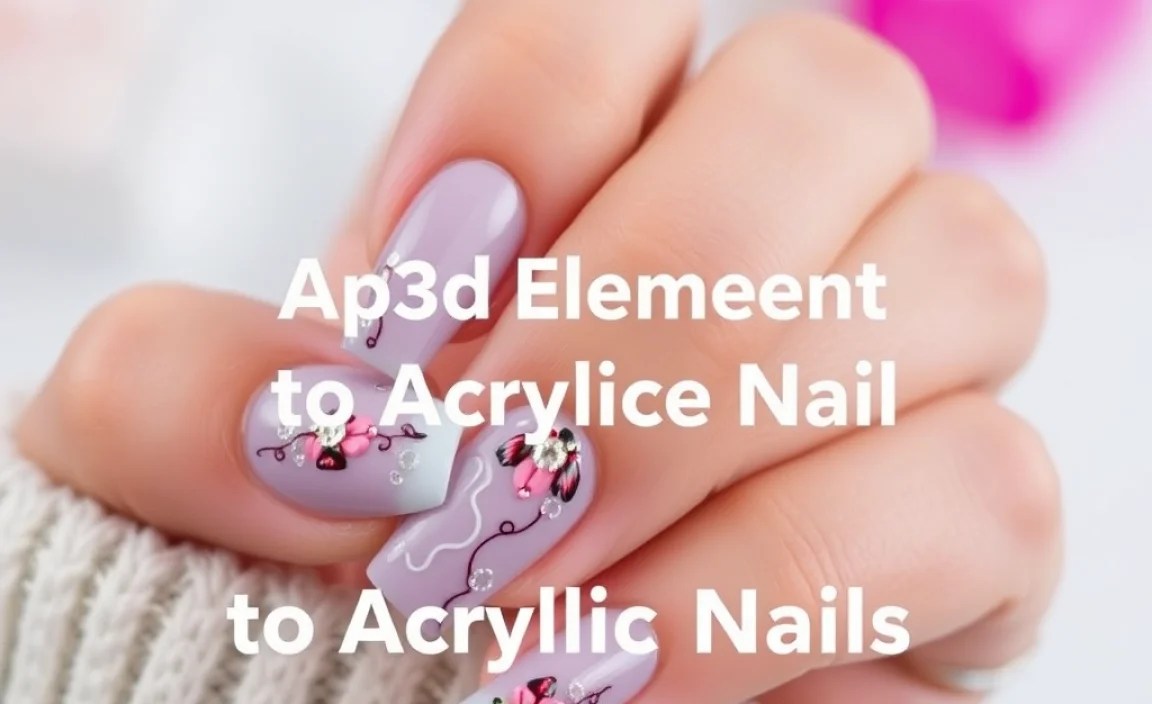
You’ve sculpted your beautiful 3D elements. Now, how do you get them onto the nail perfectly? There are two main approaches:
- Sculpting Directly on the Nail: For techniques like sculpted flowers or extensions, you’ll build the 3D design directly onto the nail enhancement as you create it. This is common for full sculpted nails.
- Adhering Pre-Sculpted Elements: After your 3D pieces have fully cured on a non-stick surface, you can adhere them to a finished acrylic nail. This is perfect for adding smaller embellishments like gems, bows, or pre-made flowers.
Adhering Pre-Sculpted Elements:
To adhere a cured 3D piece:
- Clean the Nail: Ensure the nail surface is clean and free from oils.
- Apply Adhesive: Use a strong nail glue or a bead of clear acrylic as your adhesive. If using acrylic, place a small bead on the nail where the element will go and gently press the 3D piece into it while it’s still pliable.
- Position Carefully: Use tweezers to carefully place the 3D element onto the adhesive.
- Press and Hold: Gently press the element down and hold it in place until the adhesive sets. If using acrylic, use your brush to blend the edges of the 3D element with the nail slightly for a seamless look.
Tips for Long-Lasting 3D Acrylic Nail Art
You’ve put in the effort to create stunning 3D nail art; let’s make sure it lasts!
- Proper Application: Ensure your base acrylic overlay is applied smoothly and cured properly. Loose or improperly applied acrylic can cause 3D embellishments to lift.
- Thorough Curing: Always ensure your sculpted 3D pieces are completely hardened before adhering them or applying top coat. Incomplete curing can lead to breakage.
- Seal with a Good Top Coat: A high-quality top coat is essential. Apply it carefully around your 3D elements, avoiding getting too much into intricate details where it might pool and lose definition. For extremely raised elements, you might opt to only topcoat the base nail and leave the highest parts of the 3D design matte or seal them individually with a gel topcoat if specified. Some artists use a flexible gel top coat for added durability.
- Gentle Handling: 3D elements, especially delicate ones, can be prone to snagging or breaking. Advise clients to be mindful of their hands, especially when doing activities like gardening or handling rough materials.
