3D Acrylic Flower Nails: Get Gorgeous, Easy-to-Create Blooms for Stunning Manicures! Learn the essentials and tips for effortless beauty right at your fingertips.
Dreaming of beautiful, eye-catching nails that bloom with personality? 3D acrylic flower nails are a fantastic way to add a touch of elegance and artistry to your look. They might seem intricate, but with the right guidance, you can absolutely create these stunning designs yourself! Whether you’re new to nail art or looking to add a new skill to your repertoire, this guide is here to help. We’ll break down everything you need to know to achieve beautiful, effortless 3D acrylic flowers that will surely turn heads.
Get ready to discover the magic of 3D acrylic flowers, from the essential tools to the simple steps. Let’s get your nails looking absolutely fabulous!
What Are 3D Acrylic Flower Nails?

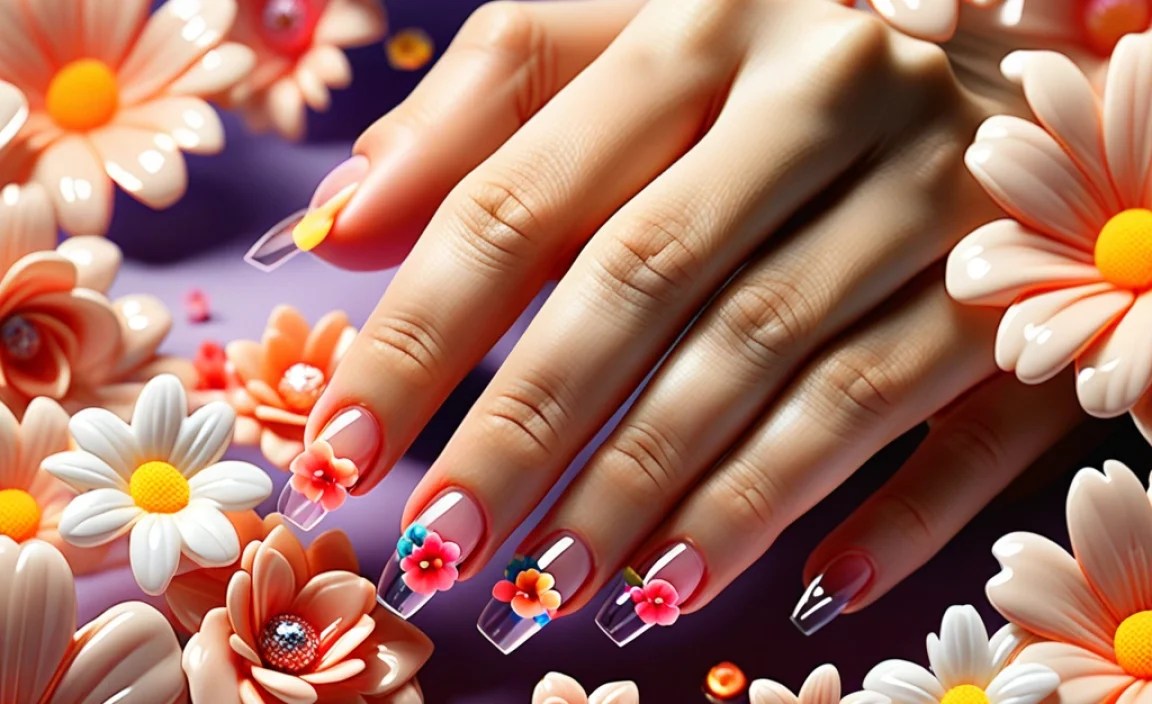
3D acrylic flower nails are a nail art technique where sculpted acrylic or gel is used to create raised, dimensional flower designs on top of a natural or artificial nail. Unlike flat nail art stickers or painted designs, these flowers have depth and texture, making them truly stand out. They can range from delicate, simple petals to elaborate, multi-layered blossoms, offering endless creative possibilities.
Why Are They So Popular?
The popularity of 3D acrylic flower nails stems from several factors:
- Unique Dimension: They provide a tactile and visual appeal that flat art just can’t match.
- Statement Piece: A few well-placed 3D flowers can elevate any manicure from simple to spectacular.
- Customization: You can tailor colors, sizes, and flower types to perfectly match your style, outfit, or occasion.
- Durability: When applied correctly, acrylic flowers are quite durable and can last throughout your manicure.
- Versatility: They can be applied to natural nails, acrylic nails, gel nails, and even press-ons.
Are They Hard To Do?
For beginners, 3D acrylic flower nails might seem intimidating. However, like any skill, they become much easier with practice. The core technique involves manipulating acrylic (or gel) to form petal shapes. Starting with simpler designs and essential tools will build your confidence. Think of it as learning to sculpt with a very fine brush!
The Essential Toolkit: What You’ll Need
Before we dive into the fun part—creating the flowers—let’s gather your supplies. Having the right tools makes the process smoother and the results much better. Don’t worry if you don’t have everything at once; you can build your collection over time.
Acrylic Products
- Acrylic Powder: This is the base material. You’ll want a clear acrylic to sculpt the flowers, and colored acrylic powders for vibrant petals. A good quality, medium-setting acrylic powder is ideal for beginners.
- Liquid Monomer: This is the ‘activator’ that mixes with the acrylic powder to create a workable bead. Choose an EMA (ethyl methacrylate)-based monomer for strong, durable nails. Look for one with a low odor if you’re sensitive to smells.
- Dappen Dishes: Small glass or ceramic containers to hold your liquid monomer and sometimes your acrylic product.
Brushes and Tools
- Acrylic Brush: This is your most important tool! For 3D flowers, a size 6, 8, or 10 oval or flat brush is usually recommended. The bristles should be made of Kolinsky sable for the best control and flexibility.
- Tweezers: Useful for picking up small embellishments or positioning delicate acrylic pieces.
- Cuticle Pusher/Orange Wood Stick: For prepping the nail surface and cleaning up edges.
- Nail File and Buffer: To shape the nail and smooth the surface before and after applying the acrylic flower.
- Top Coat: A good quality, non-wipe top coat is essential to seal your design and give it a glossy finish.
- Alcohol Wipes or Lint-Free Wipes: For cleaning your brush and surfaces.
Optional Embellishments
- Rhinestones/Crystals: To add sparkle to the center of flowers (like stamens) or as accents.
- Glitter: Can be incorporated into the acrylic or added as a finishing touch.
- 3D Effect Gel or Chrome Powder: For unique finishes and effects.
Safety and Prep
- Nail Dehydrator/Primer: Helps the acrylic adhere better to the natural nail.
- Dust Mask: Acrylic dust can be harmful if inhaled. Always use a mask when working with acrylic powders. A good quality mask is crucial for protecting your respiratory health. You can find recommendations from organizations like the Occupational Safety and Health Administration (OSHA) on safe handling of nail products.
- Ventilation: Work in a well-ventilated area, or use a nail dust extractor.
Preparing Your Nails for 3D Acrylic Flowers

Proper nail preparation is key to a long-lasting and beautiful 3D acrylic flower application. This step ensures the acrylic adheres well and the design looks its best. Think of it as laying the perfect foundation for your art!
Clean and Shape
- Remove Old Polish: Gently file off any old nail polish or gel.
- Push Back Cuticles: Carefully push back your cuticles using a cuticle pusher or an orangewood stick. Avoid cutting them unless you are trained to do so, as this can lead to infection.
- File and Buff: Shape your natural nails to your desired length and style using a nail file. Then, lightly buff the surface of the nail to remove shine. This creates a slightly rough surface for the acrylic to grip onto.
Dehydrate and Prime
Apply a nail dehydrator to remove oils and moisture from the nail plate. Follow this with a nail primer (acid-free primers are gentler on the natural nail) on the natural nail to ensure optimal adhesion of the acrylic. Allow these products to air dry completely.
Apply Base Coat and Color (Optional)
If you’re not applying the 3D flowers directly onto the acrylic overlay, you can apply a base coat followed by your desired nail polish or gel color. Ensure the color coat is fully cured (if using gel) or dried (if using polish) before you start sculpting your flowers. A smooth, even base is easier to work on.
Sculpting Simple 3D Acrylic Flowers: Step-by-Step

Let’s get to the fun part! We’ll start with a basic, beautiful flower design. Remember, practice makes perfect, so don’t worry if your first attempt isn’t flawless. This method focuses on creating petals individually, which is great for beginners.
Step 1: Prepare Your Acrylic Bead
Dip your clean acrylic brush into the liquid monomer, then gently wipe one side on a lint-free wipe to remove excess liquid. You want your brush to be damp, not saturated. Now, dip the damp brush into your chosen acrylic powder (e.g., white for petals). Allow the powder to absorb the liquid, forming a small, slightly shiny bead. This bead should be soft and pliable, not dry and crumbly, and not soupy.
Step 2: Form the First Petal
Gently place the acrylic bead onto your nail (or a palette/tip if you want to create flowers separately to apply later). Using the tip and side of your brush, gently press and roll the bead. Think of ‘patting’ and ‘rolling’ motions to shape it into a petal. You want to create a slightly thicker base for strength and a tapered, thinner edge for delicacy. Clean your brush thoroughly between each move to prevent the acrylic from drying on the bristles.
Step 3: Shape Additional Petals
Create a second bead of acrylic and place it next to the first petal, slightly overlapping it. Again, use your brush to shape it, ensuring it merges smoothly with the first petal. Continue making and placing beads to form anywhere from 3 to 5 petals, arranging them in a circular pattern to create a flower shape. Experiment with slightly different petal shapes and sizes for a more natural look.
Step 4: Add a Center or Details
Once your petals are in place and the acrylic has set slightly (it should be firm but not fully hardened), you can add a center. Take a smaller bead of a different colored acrylic (like yellow or pink) for the stamen. Place it in the middle of your flower and gently press and spread it out. You can also use a dotting tool to create small texture marks or place a tiny rhinestone in the center for extra sparkle.
Step 5: Refine and Apply Top Coat
Once the entire flower is completely hardened, you can very gently and lightly file any rough edges or imperfections with a fine-grit file. Be careful not to file into the delicate parts of the flower. Finally, apply a generous layer of your favorite non-wipe top coat over the entire nail, ensuring you cap the edges of the flower to seal it. Cure under a UV/LED lamp if using a gel top coat, or allow it to air dry if using a regular top coat.
Intermediate Techniques and Design Ideas
Once you’re comfortable with the basic petal technique, you can start exploring more advanced designs and styles. These ideas will help you elevate your 3D acrylic flower game!
Multi-Layered Flowers
Create depth by building flowers with multiple layers of petals. Sculpt a smaller flower and place it on top of a larger, fully formed flower. This gives a more realistic, full-bloom effect.
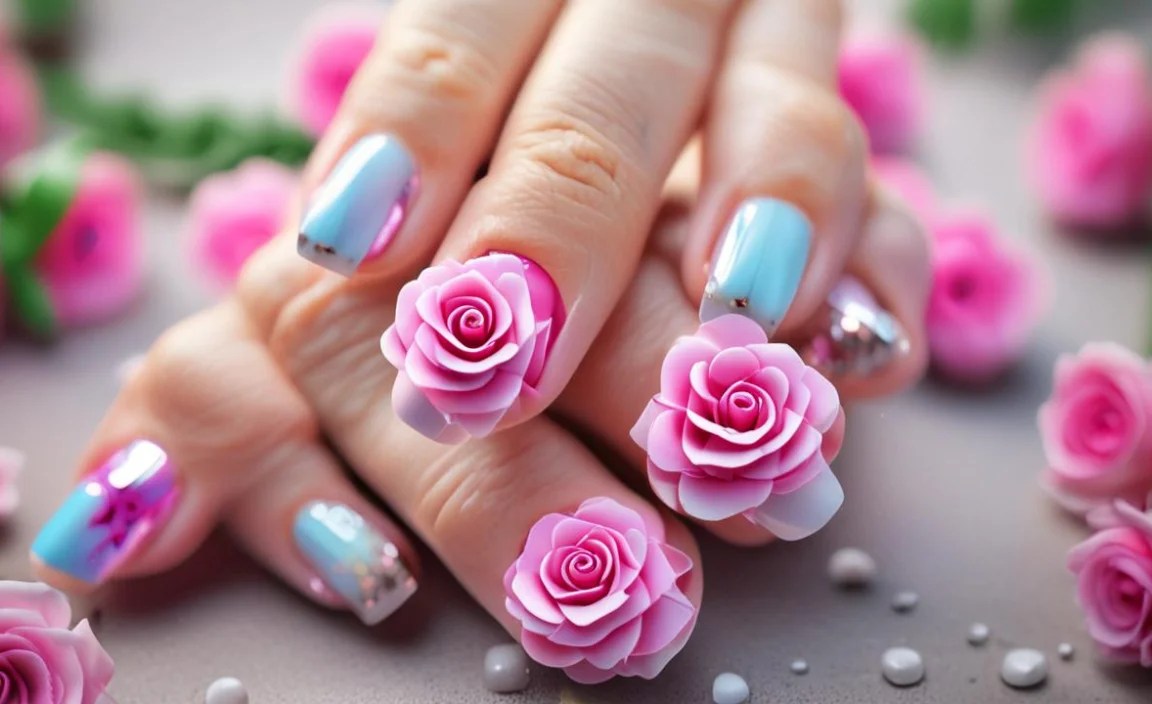
The Rose Petal Technique
This involves using your brush to ‘pull’ and ‘twist’ a single bead of acrylic to create overlapping, curved petals, mimicking the look of a rose. It requires more control but yields stunning results.
Combining Colors
Don’t be afraid to mix and match colors! You can create ombre petals by blending two acrylic colors together before sculpting, or use a different color for the edges of petals.
Different Flower Types
Beyond simple daisies, try sculpting:
- Tulips: Use curved, elongated petals.
- Lilies: Create long, pointed petals that curve backward.
- Orchids: These require more detailed shaping and often multiple distinct petal shapes.
Adding Leaves and Vines
Use green acrylic to sculpt simple leaf shapes or thin, wiggly lines for vines to complement your flowers, creating a complete floral scene.
Flower Placement Strategies
- Accent Nail: Place one large, elaborate flower on an accent nail (e.g., ring finger).
- All-Over Design: Scatter smaller flowers across all nails for a busy, vibrant look.
- Minimalist Approach: A single, small flower strategically placed on one or two nails can be very chic.
- French Tip Accent: Have a 3D flower peeking out from the smile line of a French manicure.
Creating Flowers Separately
For easier application and more precise placement, sculpt your 3D flowers on a palette or flat surface first. Once they are fully hardened, carefully pick them up with tweezers and adhere them to the nail using a strong nail glue or gel adhesive, then seal with a top coat.
Tips for Achieving Effortless Beauty
Even with the best tools and techniques, a few pro tips can make a world of difference in achieving that coveted ‘effortless beauty.’ Here’s how to make your 3D acrylic flower nails shine:
Master the Acrylic Bead
The consistency of your acrylic bead is everything. Practice getting the right ratio of liquid to powder. Too wet, and it will be soupy and uncontrollable. Too dry, and it will set too quickly and be difficult to shape. A perfect bead is smooth, pliable, and has a nice sheen.
Clean Your Brush Frequently
This is non-negotiable! Residual acrylic on your brush will harden and ruin your bristles. Rinse your brush in monomer, then wipe it clean on a lint-free wipe after every bead or every few strokes. Don’t let acrylic dry on your brush. Properly cleaning and storing your acrylic brush, like rinsing with acetone-free polish remover, can help extend its life.
Work at a Comfortable Pace
Don’t rush! Acrylic has a working time before it sets. Get comfortable with the speed at which it hardens so you can shape your petals effectively. Work on one petal at a time, or a section of the flower, and allow it to set slightly before moving to the next if needed.
Use the Right Amount of Product
For delicate petals, use smaller beads of acrylic. For stronger bases or larger flowers, you might need slightly bigger beads. Don’t overload the nail with acrylic, as this can make the design bulky and prone to lifting.
Consider the Nail Shape and Length
A large, elaborate flower might be best suited for longer, stiletto nails, while smaller, delicate flowers can look lovely on shorter, squoval nails. Ensure the size and style of your 3D flower complements the overall nail shape.
Practice on Nail Tips First
Before applying to a client or your own nails, grab some practice nail tips. This allows you to experiment with different designs, techniques, and color combinations without the pressure of a finished manicure. It’s a low-risk way to build confidence and skill.
Proper Top Coat Application
Make sure to seal the entire 3D flower. Cap all the edges to prevent snagging and peeling. A good quality, non-wipe top coat will give a beautiful glossy finish without leaving a sticky residue.
Maintain Your Tools
Clean your acrylic brush thoroughly after each use. You can use a brush cleaner solution or acetone (use sparingly and with caution as it can dry out natural bristles). Store your brush correctly, with bristles facing up if possible, to maintain its shape.
Comparing Acrylic vs. Gel for 3D Flowers

While we’ve focused on acrylic, it’s worth noting that 3D flowers can also be created with hard gel or builder gel. Each has its pros and cons:
- Workability
Can be slightly more forgiving for beginners due to slower setting if you’re careful. Offers a distinct sculpting feel.Often requires more precise application as it sets under the lamp. Can be very smooth and self-leveling.
| Feature | Acrylic | Hard Gel / Builder Gel |
|---|---|---|
| Setting Method | Self-curing (chemical reaction) | UV/LED lamp curing |
| Durability & Strength | Very strong and durable when applied correctly. | Strong and flexible, excellent for natural nail overlays and extensions. |
