Learn how to create stunning Victorian-inspired nail art at home! This guide offers simple, step-by-step tutorials, essential tool recommendations, and tips to achieve elegant, vintage-style manicures perfect for any occasion. Unleash your inner artist and transform your nails into miniature masterpieces.
Hello, nail art lovers! Are you dreaming of a manicure that whispers tales of elegance and a bygone era? Victorian-inspired nail art is making a beautiful comeback, bringing with it a sense of timeless sophistication. These designs, often featuring delicate details, rich colors, and classic motifs, can seem a bit intricate at first glance. But don’t worry, even if you’re new to DIY nail art, achieving these stunning looks is totally within your reach!
Think lace patterns, intricate floral swirls, and deep, moody jewel tones. Victorian style is all about refined beauty and attention to detail. It’s perfect for adding a touch of unique flair to your everyday look or for a special occasion. We’re going to break down exactly how to get that gorgeous, vintage vibe on your fingertips, step by easy step. Get ready to feel inspired and empowered to create some truly beautiful nail art!
Why Victorian Nails are So Enchanting

Victorian-inspired nail art isn’t just a trend; it’s a statement. It draws from an era known for its opulence, intricate craftsmanship, and romantic aesthetics. This style offers a refreshing alternative to hyper-modern or minimalist trends, tapping into a desire for something classic and a little bit dramatic.
The allure lies in the details: the delicate filigree, the deep, saturated colors, and the subtle nod to historical artistry. It’s a way to express a sophisticated and individual style that stands out. Imagine tiny painted flowers, elegant scrolled lines, or the rich sheen of burgundy and emerald – these elements evoke a sense of old-world charm that’s both captivating and incredibly chic.
The beauty of Victorian nail art is its versatility. While it can be grand and ornate, it can also be simplified to a single accent nail or a specific color palette that hints at the era’s elegance without being over-the-top. This adaptability makes it perfect for anyone looking to add a touch of vintage glamour to their personal style.
Essential Tools for Your Victorian Nail Art Journey

Before we dive into the fun part – creating the designs – let’s gather our tools. Having the right equipment makes all the difference between a frustrating attempt and a beautiful, successful manicure. Here’s a simple breakdown of what you’ll need for your Victorian-inspired nail art adventures:
The Must-Haves: Your Starter Kit
- Base Coat: Protects your natural nails and helps your polish last longer. Look for one that smooths ridges if your nails aren’t perfectly even.
- Top Coat: Seals your design, adds shine, and prevents chipping. A good quality quick-dry top coat is a lifesaver!
- Nail Polish Colors: Think rich jewel tones (emerald green, deep sapphire, ruby red, amethyst purple), classic black, creamy ivories, and soft pastels. Metallic accents in gold or silver are also fantastic.
- Fine-Tipped Brushes: These are your best friends for delicate lines and details. A set with various thin tips (e.g., liner brushes, detail brushes) is ideal.
- Dotting Tools: Perfect for creating perfect little dots, floral centers, or repeating patterns. They come in various tip sizes.
- Toothpicks or Orange Stick: Useful for small touch-ups, cleaning up edges, or picking up tiny embellishments.
- Nail Polish Remover & Cotton Pads/Balls: For quick cleanups and mistakes.
- Tweezers: Especially handy if you plan to use small gems or studs.
Optional Additions for Extra Flair
- Stencils or Nail Vinyls: For perfect geometric shapes or lace patterns, especially helpful for beginners.
- Nail Gems, Rhinestones, or Studs: To add a touch of sparkle and dimension, reminiscent of Victorian jewelry.
- Stamping Plates: If you love intricate patterns, stampers can transfer complex designs with ease. Companies like What’s Up Nails offer a wide variety of detailed stamping plates perfect for this aesthetic.
- Dotting Gel or 3D Gel: To create raised textures and embellishments.
It might seem like a lot, but you can start with the basics and gradually add more tools as you explore different designs. The key is to have those fine brushes and dotting tools ready for detailed work!
Mastering the Victorian Color Palette
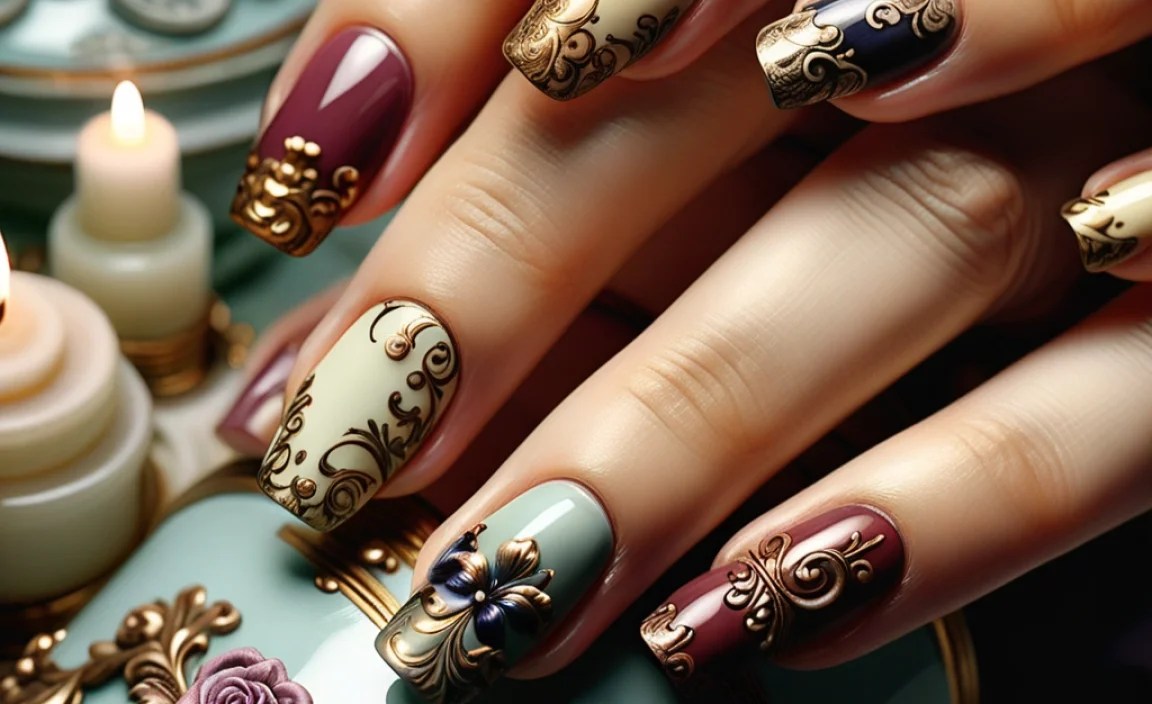
The colors you choose are crucial in capturing the essence of Victorian-inspired nail art. This era favored rich, deep, and often muted tones, reflecting the fabrics and gemstones popular at the time.
Here’s a guide to the quintessential Victorian color palette:
| Color Family | Victorian Inspiration | Examples |
|---|---|---|
| Deep Jewel Tones | Think of luxurious velvet drapes, ornate stained glass, and precious gemstones. | Emerald Green, Sapphire Blue, Amethyst Purple, Ruby Red, Deep Teal |
| Muted Earth Tones | Reflecting the natural dyes and materials of the period. | Burgundy, Deep Plum, Chocolate Brown, Dusty Rose, Olive Green |
| Classic Neutrals | For a sophisticated and understated look, or as a base for detailed designs. | Ivory, Cream, Soft Grey, Black, Muted Gold |
| Metallic Accents | Adding a touch of opulence and shine, like antique gold or brass. | Antique Gold, Brass, Rose Gold, Dark Silver |
When creating your Victorian nail art, don’t be afraid to combine these colors. A deep green base with gold filigree, or a burgundy nail with ivory floral details, are classic pairings.
Beginner-Friendly Victorian Nail Art Tutorials
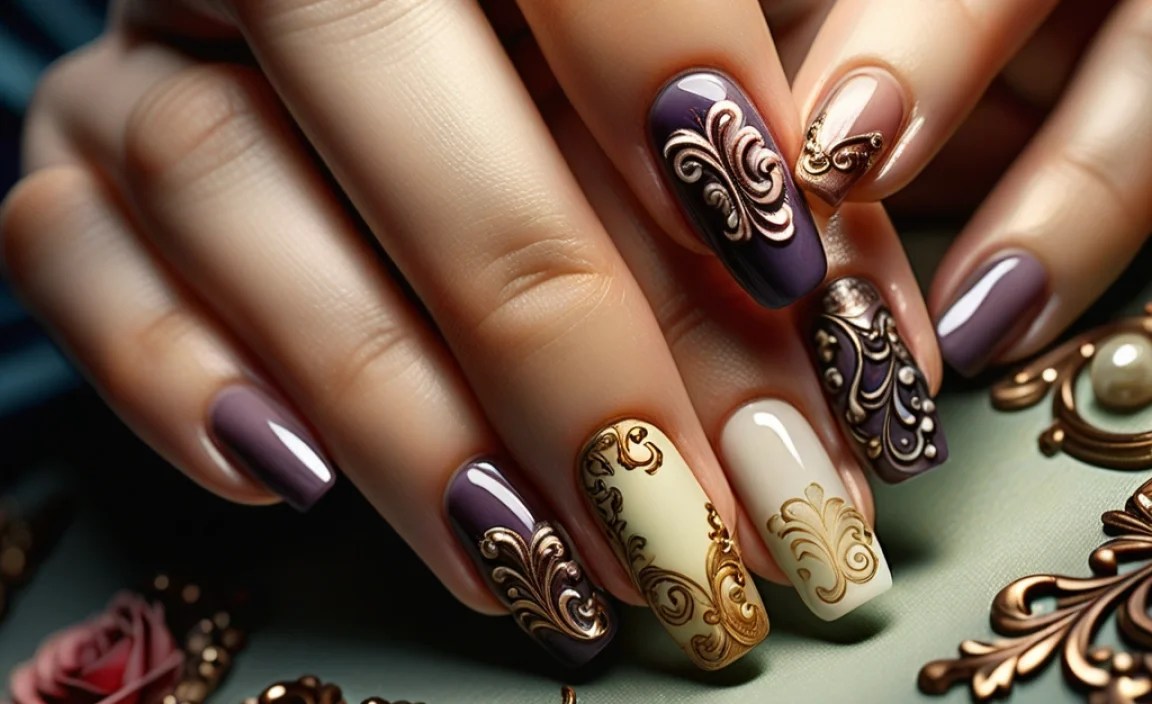
Ready to get your hands (and nails!) dirty? These tutorials are designed for beginners, focusing on achievable techniques that deliver stunning Victorian results.
Tutorial 1: Delicate Floral Accents
This design is perfect for adding a touch of Victorian romance to your nails. It focuses on small, intricate floral elements, which were very popular in the Victorian era.
What you’ll need:
- Base coat
- A neutral or deep jewel-toned polish (e.g., cream, deep red, navy)
- A fine-tipped detail brush
- White or pale pink polish for details
- Black or dark brown polish for outlines (optional)
- Top coat
Steps:
- Prep Your Nails: Start with clean, dry nails. Apply your base coat and let it dry completely.
- Apply Base Color: Paint your nails with your chosen neutral or deep jewel tone. Apply two thin coats for even coverage and allow them to dry thoroughly. This is key for detailed work!
- Create the Flower: Using your fine-tipped brush and white or pale pink polish, carefully paint small floral shapes. Think simple, five-petal flowers or tiny rosebuds. You can create a cluster of these on one or two accent nails, or scatter them across all nails.
- Add tiny centers: With a dotting tool or the very tip of your brush, add a tiny dot in the center of each flower using a darker color (like a muted gold, black, or a slightly darker pink/red depending on your flower color).
- Outline (Optional): For extra definition, very lightly outline the petals or add delicate stems and leaves with a fine brush and black or dark brown polish. This step can be skipped if you prefer a softer look.
- Seal the Deal: Once your design is completely dry, apply a generous layer of top coat to protect your beautiful artwork and add a beautiful shine.
This design is charmingly subtle and incredibly elegant. It’s a wonderful way to practice fine detail work without feeling overwhelmed.
Tutorial 2: Elegant Lace Effect
Lace was a symbol of status and beauty during the Victorian times, and a lace-inspired nail art design can instantly elevate your manicure. This can be achieved in a few ways, but let’s focus on a simple brush technique.
What you’ll need:
- Base coat
- A classic color polish (e.g., black, deep red, ivory, or a sheer nude)
- A fine-tipped liner brush
- White or ivory polish for the lace detail
- Top coat
Steps:
- Prep and Base: Apply base coat, then apply two thin coats of your chosen classic polish. Let it dry completely.
- Start the Lace Pattern: Dip your fine liner brush into the white or ivory polish. On an accent nail (or all nails, if you’re feeling brave!), start by drawing a curved or V-shaped line at the tip of your nail, mimicking the edge of lace.
- Add Swirls and Dots: From this initial line, begin to draw delicate swirls and loops. Think of elegant, flowing lines. Use the tip of your brush to create small dots within the swirls or at the intersections to add depth and detail, like you see in real lace.
- Create a “Netting” Effect (Optional): For a more intricate look, you can lightly draw a few cross-hatched lines or a very fine grid pattern in the background of your lace design before adding the outer swirls. This is advanced, so don’t worry if you skip it!
- Refine and Perfect: Look at your design. Are there any gaps you want to fill with tiny dots or short lines? Add them carefully. The beauty of lace is its intricacy, so don’t be afraid to add small details.
- Seal your Lace: Once satisfied and everything is dry, apply your top coat carefully. Be gentle so you don’t smudge your delicate lace pattern.
For an even easier lace effect, consider using nail stamping plates with intricate lace designs. Companies like Born Pretty Store offer a vast array of beautiful, detailed lace plates perfect for this style.
Tutorial 3: Vintage Gemstone Accent Nail
Victorian jewelry was often ornate and featured beautiful gemstones. This tutorial focuses on creating a stunning accent nail with a faux gemstone or metallic embellishment.
What you’ll need:
- Base coat
- A deep, rich polish color (e.g., deep purple, emerald green, sapphire blue)
- A metallic polish (gold or antique brass)
- A fine-tipped brush or dotting tool
- Small nail gems, rhinestones, or tiny metallic studs
- Tweezers
- Top coat (consider a matte top coat for a different vintage feel if desired)
Steps:
- Prep and Polish: Prep nails and apply your base coat. Paint your accent nail with the deep, rich jewel tone. Let it dry thoroughly.
- Add Metallic Accents: Using your fine brush or a dotting tool, carefully paint thin lines or small decorative elements around the cuticle area or along the edges of the nail with the metallic polish. Think of ornate frames or small swirling patterns.
- Place Your “Gemstone”: Using tweezers, carefully pick up a nail gem or rhinestone that resembles a vintage gemstone. Apply a small dot of top coat or nail glue where you want to place it, then gently press the gem into the wet polish or glue.
- Add Smaller Details: You can add smaller metallic studs or tiny clear rhinestones around the main gem to mimic the setting of a real piece of jewelry.
- Reinforce and Seal: Gently apply a layer of top coat over the entire nail. Be careful not to drown the gem in too much polish, which can make it look less realistic. You can carefully “cap” the edges of the gem with your brush to help secure it.
- Consider a Matte Finish: For a truly vintage feel, after the gem is securely placed and you’ve applied top coat, you could gently dab a bit of matte top coat around the gem and metallic accents. This can make the metallic elements look more aged and subdued.
This accent nail provides a focal point that’s incredibly sophisticated and reminiscent of the era’s love for opulent accessories.
Advanced Techniques for the Enthusiast
Once you’ve mastered the basics, you might want to explore some more intricate Victorian-inspired nail art techniques. These require a bit more patience and practice, but the results are truly breathtaking.
French Manicure with a Twist
The classic French manicure can be given a Victorian makeover with subtle color changes and detailing.
Deep French Tips: Instead of white, use a deep color like burgundy, navy, or dark green for the tip.
Lace or Floral Accent French: Apply a French tip as usual, then on an accent nail, add a delicate lace pattern or a tiny floral motif to the tip or the base of the nail.
Metallic French: Use a metallic polish to create the smile line of your French manicure.
Victorian Filigree and Scrolls
This is the epitome of Victorian detail. It involves painting thin, intricate, swirling patterns that resemble wrought iron or fine jewelry.
Tools: You’ll need very fine liner brushes and a steady hand.
Colors: Black, gold, silver, or deep reds and blues on a contrasting base are stunning.
Technique: Practice drawing single scrolls and connecting them into flowing patterns. Start with simple shapes and build complexity. Look at Victorian architectural details or jewelry for inspiration. According to the Metropolitan Museum of Art’s blog on Victorian dress, textiles of the era often featured very intricate patterns, mirroring what we can achieve on nails.
Stamping Mastery
If freehand isn’t your forte, stamping plates offer a fantastic way to achieve incredibly detailed Victorian designs.
Plate Selection: Look for plates with Victorian motifs like baroque swirls, ornate frames, intricate floral patterns, and lace elements. Brands like Moyou London and Bundle Monster (now Maniology) have themed collections.
Stamping Polishes: Use highly pigmented, opaque stamping polishes for the best results. Metallics work exceptionally well for Victorian designs.
* Practice: Stamping takes a little practice to get the polish pickup and transfer just right, but once you do, you can achieve complex designs quickly and consistently.
Caring for Your Victorian Masterpiece
Once you’ve invested time and creativity into your Victorian-inspired nail art, you’ll want it to last! Proper nail care is essential not only for the longevity of your design but also for healthy, beautiful nails.
- Wear Gloves: When doing chores, washing dishes, or anything involving prolonged water exposure or harsh chemicals, wear rubber gloves. Water and soap can break down top coats and polish, leading to chipping.
- Moisturize: Keep your cuticles and hands hydrated. Dry skin can make even the most beautiful nail art look less polished. Use a good cuticle oil daily and a rich hand cream regularly.
- Avoid Using Nails as Tools: Resist the urge to pick, scrape, or pry with your fingernails. This can damage the polish and your natural nail underneath.
- Touch-Ups: If you notice a small chip or worn edge, you can sometimes save the design with a tiny dab of top coat, or carefully repaint a small detail if needed.
- Gentle Removal: When it’s time to remove your art, use a good quality nail polish remover and soak a cotton pad, pressing it onto the nail for a few seconds before wiping. Avoid aggressive scrubbing. For glitter or layered designs, specialized glitter removers can be very helpful.
Taking these simple steps will help preserve your intricate Victorian designs and keep your nails looking their best for longer.
FAQ: Your Victorian Nail Art Questions Answered
Q1: Can I really do Victorian nail art if I’m a beginner?
Absolutely! This guide focuses on simple techniques like delicate floral accents and easy lace effects that are perfect for beginners. You don’t need to be a pro artist to achieve beautiful, vintage-inspired looks. Start simple, and you’ll be amazed at what you can do!
Q2: What are the best polish colors for Victorian nails?
Think rich, deep, and classic! Jewel tones like emerald green, sapphire blue, amethyst purple, and ruby red are fantastic. Also consider deep burgundy, black, ivory.
