Spooky cobweb nail art is an essential and stunning way to add a touch of Halloween magic to your look. This beginner-friendly guide will show you exactly how to create this popular design with essential tools and simple steps, making your nails perfectly bewitching for the season!
Halloween is just around the corner, and you’re looking for that perfect spooky touch to complete your festive vibe. Nail art is a fantastic way to express your inner ghoulish spirit, and spooky cobweb nail art is an absolute classic! It can sometimes feel a little daunting to try intricate designs, especially if you’re just starting out, leaving you frustrated with patchy lines or tangled webs. But don’t you worry! Creating hauntingly beautiful cobweb nails is totally achievable, and I’m here to walk you through every simple step. Get ready to transform your fingertips into a miniature masterpiece that’s both chic and spooky. Later, we’ll cover everything from the must-have tools to easy fixes for common snags, ensuring your nail art game is strong!
Essential Tools for Your Spooky Cobweb Manicure

Getting your spooky cobweb nail art just right is all about having the right tools. Don’t worry if you don’t have a professional kit; you can create amazing designs with just a few key items. Think of these as your magic wand and potion bottles – they’ll help you conjure up some seriously spellbinding nails!
Nail Polishes
You’ll need two main colors:
- Base Coat: This sets the tone for your spooky scene. Classic black or a deep, dark shade like navy, midnight blue, or even a dark emerald green works wonderfully. It’s the night sky for your webs!
- Web Polish: This is the star of your cobweb! White is the most popular choice for its high contrast, making the webs pop. However, don’t be afraid to experiment with silver, metallic gray, a ghostly pale green, or even a vibrant blood red for a more dramatic effect.
Application Tools
How you apply the web is crucial. Here are your best friends:
- Fine-Tip Detail Brush: This is arguably the most important tool for precise cobweb lines. Look for brushes specifically designed for nail art, with very thin, sharp synthetic bristles. They allow for controlled, delicate strokes. You can find these online or at beauty supply stores. Many sources, like NailPro magazine, offer great advice on selecting the right brushes for different nail art techniques.
- Dotting Tool: If you don’t have a detail brush, a dotting tool with a fine tip can work. You’ll use the tip to create dots that you then drag out into web lines. It’s a slightly different technique but can yield great results.
- Toothpick or Straight Pin: In a pinch, a sharpened toothpick or a straight pin can be used for drawing fine lines. Be gentle and steady!
Finishing Touches
To make your art last and look polished:
- Base Coat (for nail health): Always start with a clear base coat to protect your natural nails from staining, especially if you’re using dark polishes.
- Top Coat: A good quality top coat is essential to seal your design, add shine, and prevent chipping. A quick-dry top coat can be a lifesaver if you’re short on time.
Creating Stunning Spooky Cobweb Nail Art: A Beginner’s Guide
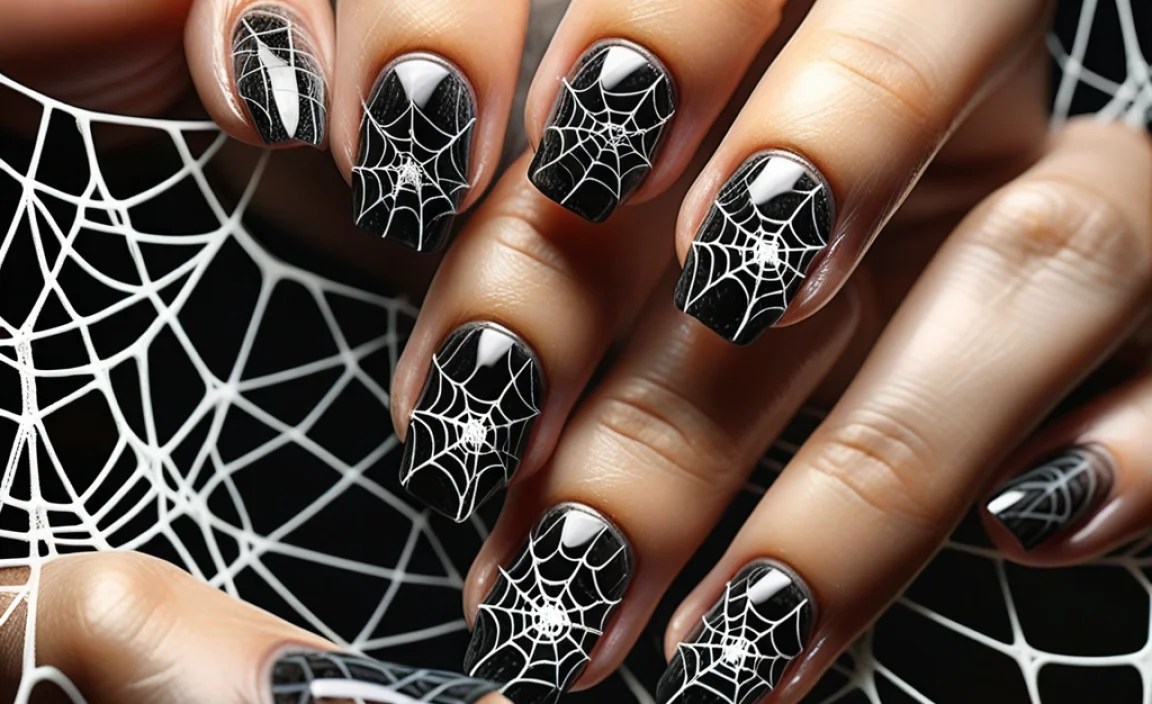
Now for the fun part! Making spooky cobweb nail art is totally doable, even if you’ve never picked up a detail brush before. We’ll break it down into simple, manageable steps. Remember, practice makes perfect, and even a slightly wobbly web has its own charm!
Step 1: Prepare Your Canvas (Your Nails!)
Just like any great art project, a good foundation is key. This means prepping your nails:
- Clean and Dry: Ensure your nails are clean, dry, and free from any old polish or oily residue.
- Shape and Buff: File your nails to your desired shape and gently buff the surface for a smooth finish.
- Apply Base Coat: Apply a clear base coat. This protects your nails and helps your polish adhere better and last longer. Let it dry completely.
Step 2: Lay Down the Spooky Base Coat
This is where you set the mood. Choose your dark, dramatic color (black, deep blue, dark purple) and apply one or two thin coats to each nail. Ensure you get full, even coverage.
- Thin Coats are Key: Thin coats dry faster and create a smoother finish than one thick, gloopy layer.
- Dry Time: Allow the base color to dry completely. This is super important! A wet base will cause your web lines to smudge and drag, no matter how careful you are. Patience here saves a lot of frustration later.
Step 3: Crafting the Cobweb
This is the main event! You’ll use your fine-tip brush or dotting tool dipped in your contrasting web color (white or silver usually).
Here’s a simple method that works well:
- Start with the Center: On your nail, use your brush to draw a few straight or slightly curved lines radiating outwards from a central point. You can imagine this like spokes on a wheel, or lines from the center to the edges of your nail. Don’t worry about them being perfectly straight!
- Connect the Lines: Now, connect these “spokes” with short, curved horizontal lines. Start from one spoke, sweep gently to the next, creating a small curve as you go. Continue this all the way down your radiating lines. Aim for a delicate, wispy look.
- Build the Web: You can add more radiating lines or more connecting curves to create a denser or more elaborate web. If you make a small mistake, don’t sweat it! A tiny smudge can sometimes look like part of the spooky texture.
Pro Tip: Practice drawing straight lines and curves on a piece of paper or foil before you go onto your nail. This helps you get a feel for the polish flow and brush control.
Step 4: Add Details (Optional but Fun!)
Want to take your cobweb nails from spooky to scary? Here are some ideas:
- Extra Lines: Add a few more random, thin lines to make the web look more intricate or broken, like an old, neglected web.
- “Dewdrops”: Use the tip of your dotting tool to place tiny dots of a shimmering silver or iridescent polish along the web lines. These look like dew or tiny spider eggs!
- Glitter: A light dusting of fine holographic or silver glitter over the web can add a magical shimmer. Apply it while the web polish is still slightly wet.
- Mini Spiders: If you’re feeling adventurous, use a dotting tool and black or brown polish to create tiny dots for a spider body and legs.
Step 5: Seal Your Spooky Masterpiece
Once all your cobweb art is completely dry (and we mean completely dry!), it’s time to lock it in with a top coat.
- Gentle Application: Apply a generous amount of your clear top coat, but be gentle! Use a light touch to avoid smudging your delicate web design.
- Cap the Edges: For extra durability, use your top coat to “cap” the free edge of your nail. This means running the brush along the very tip of your nail.
- Let it Dry: Allow your top coat to dry thoroughly. A quick-dry top coat is a great option here.
And there you have it – your stunning spooky cobweb nail art!
Troubleshooting Common Cobweb Nail Art Problems
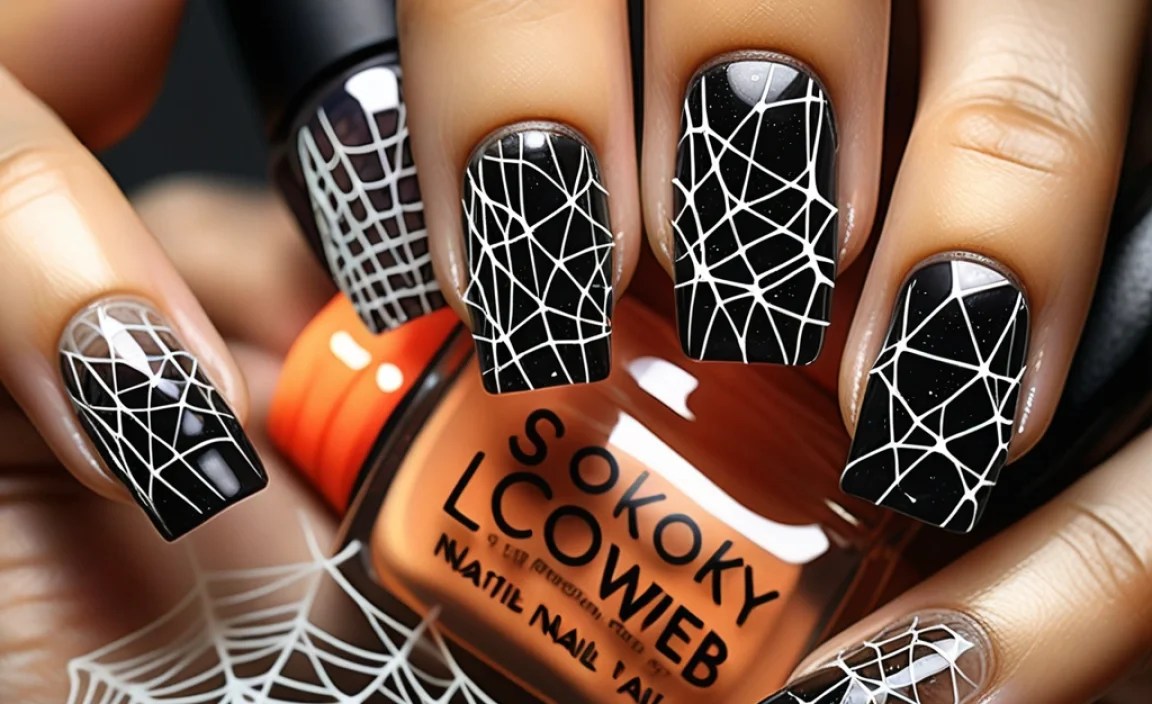
Even seasoned nail artists run into a snag now and then! If your cobweb design isn’t coming out quite as planned, don’t get discouraged. Here are some common issues and how to fix them, so you can get back to creating frightfully delightful nails.
Problem: My web lines are smudging and dragging!
Cause: This usually means your base color isn’t dry enough, or you’re using too much polish on your brush.
Solution:
- Patience is a Virtue: Always let your base color dry COMPLETELY. If you’re unsure, give it an extra 5-10 minutes. You can also use a quick-dry spray or fan to speed things up.
- Less is More: Dip just the very tip of your detail brush or dotting tool into the polish. Gently wipe any excess off on the edge of the bottle or a lint-free wipe before touching your nail.
- Clean Your Brush: If you’re using a lot of polish, your brush might be too saturated. Make sure to wipe it clean and reload with a smaller amount.
Problem: My cobweb lines look thick and wobbly instead of delicate.
Cause: This often comes down to brush control and polish consistency.
Solution:
- Use the Right Brush: Ensure you’re using a true fine-tip detail brush with synthetic bristles that hold a fine point. Synthetic brushes are better for control than natural ones for this type of art.
- Light Touch: Apply very light pressure when drawing your lines. Let the brush glide rather than pressing down.
- Thinning Polish (Carefully): If your polish is too thick and gloopy, it will be hard to get fine lines. Very cautiously add a drop of nail polish thinner (not remover, which can break down the polish) to your polish pot. Never use acetone-based remover to thin polish, as it will ruin the formula. You can learn more about nail polish formulation and thinning from resources like Chemical & Engineering News, which can give you insight into what makes a polish suitable for art.
Problem: My web color isn’t opaque enough on the dark base.
Cause: Some lighter polishes, especially white, can be a bit streaky.
Solution:
- Two Thin Coats for the Web: Just like your base color, apply your web polish in two thin coats. Let the first coat dry slightly before applying the second.
- Consider a White “Stamping” Polish: Dedicated white nail art polishes or stamping polishes are often more opaque and designed for crisp lines.
- Use a White Base: For an extreme contrast, you could even paint a thin white layer where your cobweb design will be, let it dry, and then draw the cobwebs on top of that with your darker polish. This is more advanced but effective.
Problem: My top coat smudged my web!
Cause: The web design wasn’t completely dry when the top coat was applied.
Solution:
- Wait, Wait, Waiiiit! This is the most common culprit. Ensure your web design is bone dry before even thinking about the top coat. If one nail is still slightly tacky, move to another and come back to it.
- Gentle Flooding: Instead of brushing firmly, try to “flood” the nail with the top coat. Apply a good-sized bead of top coat to the center of your nail and let it naturally flow to cover the rest of the nail. Use minimal brush strokes.
Problem: My cobwebs look too simple or flat.
Cause: Lack of dimension.
Solution:
- Add a Shadow: With an extremely thin brush and a very diluted dark color (like a sheer black or gray), you can add subtle shadows to one side of your web lines to give them depth.
- 3D Effect: Try using a gel polish for your web color. Apply the gel, cure it, apply the web design with gel as well, and then top coat. Gel polishes are often thicker and can give a slightly raised effect.
- Layering: Try drawing a slightly messier, more broken cobweb design underneath a cleaner, more defined one.
Fun Variations for Spooky Cobweb Nail Art
Once you’ve mastered the basic spooky cobweb nail art, why not play around with different styles? Halloween is all about creativity and having fun, so let’s explore some exciting variations that will make your nails truly stand out!
The Cobweb Gradient
Combine the cobweb effect with a trendy gradient!
- How-to:
- Start with a gradient base. This could be a sunset orange-to-purple blend, a spooky purple-to-black fade, or even a classic black-to-gray.
- Once your gradient is dry, apply your cobweb design over the top using white or silver polish. The webs will pop against the blended colors, creating an ethereal, atmospheric look.
Metallic Webs
Go for glam-or-ghoul with metallic finishes!
- How-to:
- Use a metallic polish for your base color – think chrome, gold, or rose gold.
- Then, create your cobweb design using a contrasting metallic or a standard white/black. A silver cobweb on a gold base, or a black cobweb on a shimmering chrome, looks incredibly chic and festive.
The Partial Cobweb
You don’t need to cover the whole nail!
- How-to:
- Paint your nails in your desired base color(s).
- Instead of drawing webs across the entire nail, draw them starting from one corner, extending from the cuticle, or just a few delicate strands dripping down one side. This creates a more abstract and subtle spooky vibe.
Frequently Asked Questions About Spooky Cobweb Nail Art
What are the essential tools for spooky cobweb nail art?
For spooky cobweb nail art, you’ll primarily need a dark base polish (black or deep gray is popular), a contrasting polish for the webs (white, silver, or even a spooky green), and a fine-tipped detail brush or a dotting tool. You might also want a quick-dry top coat to seal your design.
Is spooky cobweb nail art difficult for beginners?
Not at all! While intricate designs can look complex, the basic cobweb pattern of lines and connecting curves is surprisingly simple to learn. With a steady hand and a little practice, any beginner can achieve a stunning spooky cobweb effect.
How long does cobweb nail art typically last?
With a good base coat, careful application, and a quality top coat, your spooky cobweb nail art can last anywhere from 5 to 10 days. This depends on your daily activities and how well your nails hold polish in general.
Can I use regular nail polish for cobweb designs?
Yes! Regular nail polishes work perfectly fine for cobweb designs. You just need to ensure you have a polish that flows well for thin lines, which is where the fine detail brush comes in handy.
What are some common mistakes when doing cobweb nail art?
Common mistakes include using too much polish on the brush (leading to thick, messy lines), not letting the base coat dry fully (causing drag marks), or rushing the web-drawing process. Patience is key!
Can I make cobweb nail art even spookier?
Absolutely! You can add glitter, tiny rhinestones as “dewdrops” on the web, or even incorporate other Halloween elements like tiny bats or ghosts peeking out from behind the webs. Think layering different spooky textures and colors!
