Seal your stunning foil nail art with a quality top coat designed for it. Apply thin, even layers, curing each one thoroughly under a UV/LED lamp for a durable, chip-resistant finish that keeps your metallic manicure looking fabulous.
Foil nail art is such a showstopper! The way it catches the light is truly magical. But sometimes, after a day or two, you might notice your beautiful foil designs losing their shine or starting to peel. It’s a common frustration, especially when you’ve put so much effort into creating that dazzling look. Don’t worry, though! Keeping your foil art flawless is totally achievable with the right sealing techniques. We’re going to walk through exactly how to lock in that gleam and make your foil manicures last. Get ready to keep your nails looking salon-fresh for longer!
Why Sealing Foil Nail Art Matters

Imagine spending time carefully applying vibrant foil to create an eye-catching design, only to have it start lifting or dulling within days. That’s where sealing comes in! Sealing your foil nail art is the crucial final step that transforms a temporary design into a durable, long-lasting manicure. Without proper sealing, your gorgeous foil can become vulnerable to:
Chipping and Peeling: Everyday activities can snag the edges of the foil, leading to unsightly chips.
Loss of Shine: The metallic luster can quickly diminish as the foil is exposed to wear and tear.
Fading or Discoloration: Some foils can be sensitive to environmental factors if not protected.
Transfer: In some cases, the foil design might rub off onto clothing or skin.
Proper sealing creates a protective barrier, safeguarding your intricate designs and ensuring they maintain their brilliance and integrity. It’s the secret to making your foil nail art truly shine for weeks, not just days.
Understanding Foil Nail Art and Sealants

Foil nail art typically involves transferring a thin, metallic layer of color or design onto the nail surface. This is usually done using a special adhesive. Because foil is so thin and delicate, it needs a specific kind of protection to adhere well and stay put.
When we talk about sealing, we’re generally referring to applying a top coat. However, not all top coats are created equal, especially when it comes to foil. The best sealants for foil nail art are those that offer:
Good Adhesion: They need to bond well to both the nail polish underneath and the foil itself.
Non-Yellowing Properties: Some top coats can yellow over time, which would ruin the crisp, metallic look of the foil.
Durability: They should be tough enough to withstand daily wear without scratching or dulling.
A Smooth Finish: A smooth top coat helps enhance the mirror-like finish of the foil.
Types of Sealants for Foil Nail Art
The world of nail top coats can seem a bit overwhelming, but for foil art, a few key types stand out:
Gel Top Coats: These are the most popular and effective for sealing foil. They are cured under a UV or LED lamp, creating a hard, durable, and glossy finish that’s highly chip-resistant. They work exceptionally well with nail foils.
Regular Nail Polish Top Coats: While some high-quality regular top coats can work, they are generally less durable than gel. They air dry and may not provide the same level of protection or longevity for foil art. If using these, look for quick-dry formulas.
Specialty Foil Top Coats: Some brands offer top coats specifically formulated for foil application. These often have excellent adhesion and a formula that won’t smudge or lift the foil.
Key takeaway: For the most professional and long-lasting results, a UV/LED curable gel top coat is your best bet for sealing foil nail art.
Essential Tools and Materials
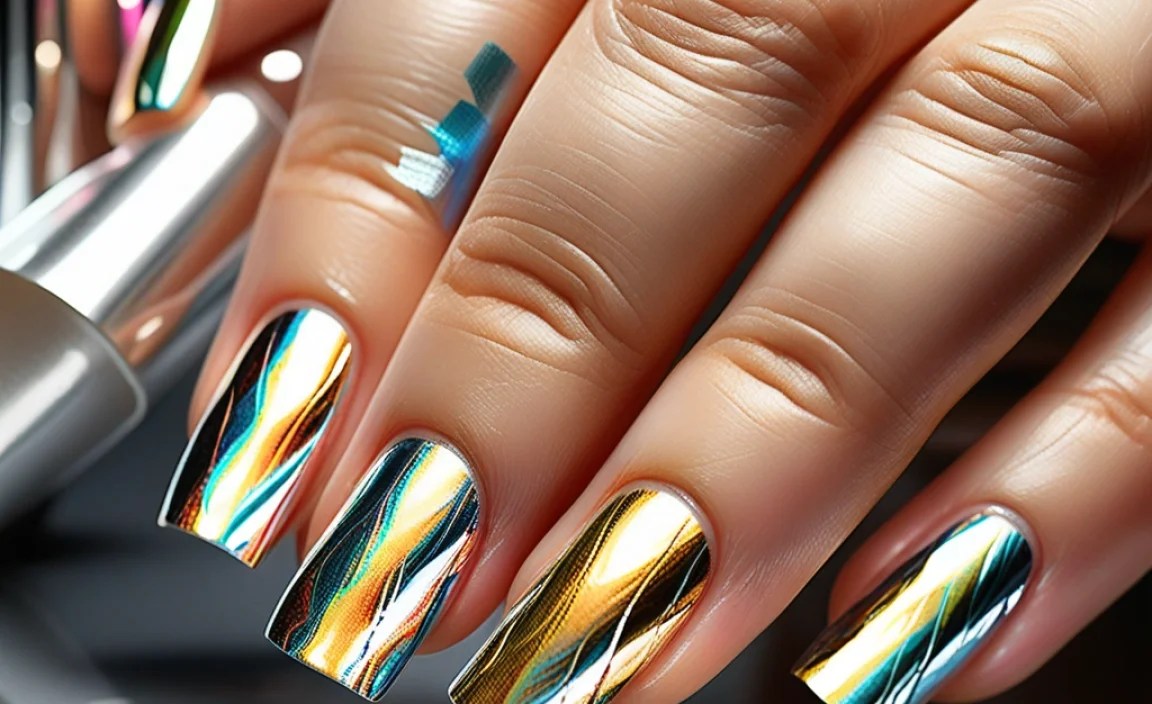
Before you dive into sealing your fabulous foil nail art, let’s gather everything you’ll need. Having your supplies ready makes the process smooth and stress-free, helping you achieve those perfect, shiny results.
Here’s a checklist of essentials:
Your Finished Foil Nail Art: This is, of course, the star of the show! Ensure your foil is applied and any excess is gently removed.
Nail Cleanser/Isopropyl Alcohol: To ensure the nail surface is free from oils and dust before sealing.
Lint-Free Wipes: Crucial for cleaning the nail without leaving fabric fibers behind.
Your Chosen Top Coat: As discussed, a good quality gel top coat is highly recommended for durability and shine. If using a gel top coat, you’ll also need:
UV/LED Nail Lamp: An essential tool for curing gel polish. Ensure it’s powerful enough for your chosen gel products.
Cuticle Pusher/Orange Stick: For gently tidying around the nail edges if needed before top coating.
Fine-grit buffer (optional): To lightly smooth any rough edges on the natural nail or base coat before applying the top coat, ensuring a flawless finish.
Let’s break down some of these key items:
Nail Cleanser/Isopropyl Alcohol
This is super important for preparing your nails before sealing. Any oils from your fingertips or dust from filing can prevent the top coat from adhering properly. A quick swipe with a lint-free wipe dipped in nail cleanser or isopropyl alcohol (70% or higher) will remove these impurities. It also helps ensure that the foil has fully transferred to the nail, removing any loose particles.
Lint-Free Wipes
You might be thinking, “Can’t I just use a tissue?” Resist the urge! Tissues and cotton pads tend to leave behind tiny fibers that can get embedded in your wet top coat, giving your smooth, glassy finish a fuzzy, unprofessional look. Lint-free wipes are specifically designed to be smooth and gentle, leaving your nails perfectly clean and clear.
UV/LED Nail Lamp
If you choose to seal your foil art with gel top coat – which I highly recommend for longevity – a UV/LED lamp is non-negotiable. These lamps emit the correct type of light to cure (harden) gel polishes. They come in various sizes and power levels. For DIY users, a compact LED lamp is usually sufficient for at-home manicures. Always check the curing time recommended by your gel polish brand and your lamp’s specifications to ensure a full cure.
Step-by-Step Guide: How to Seal Foil Nail Art
Ready to lock in that sparkle? Follow these simple steps to ensure your foil nail art stays put and shines bright! We’ll cover the process for both gel and regular polish top coats, highlighting the gel method as the superior choice for longevity.
Method 1: Sealing with Gel Top Coat (Recommended)
This method provides the most durable and long-lasting results, keeping your foil art looking its best for weeks.
Step 1: Prepare Your Nails
Ensure your foil nail art is fully applied and adhered to your base polish. Gently brush away any loose foil particles with a soft brush. Cleanse each nail thoroughly with a lint-free wipe and nail cleanser or isopropyl alcohol to remove any oils or dust. If you have any foil transfer gel residue, gently wipe it away with the cleanser.
Step 2: Apply a Thin Layer of Gel Top Coat
This is a critical step: apply a VERY thin, even layer of your gel top coat over the entire nail, making sure to cap the free edge (paint the very tip of your nail). Avoid flooding your cuticles or sidewalls. A thick layer can lead to improper curing, bubbling, or smudging the foil. Think of it as painting a thin, protective shield.
Step 3: Cure Under the Lamp
Place your hand under your UV/LED lamp according to the manufacturer’s instructions for your gel top coat. Typical curing times are 30-60 seconds for LED lamps and 2-3 minutes for UV lamps. Ensure all nails are cured properly.
Step 4: Apply a Second Thin Layer of Gel Top Coat (Optional but Recommended)
For extra durability and a super glossy finish, apply another thin, even layer of gel top coat. Again, cap the free edge. This second layer provides an even more robust protective barrier for your foil art.
Step 5: Cure Again
Cure your nails under the UV/LED lamp for the recommended time again.
Step 6: Remove the Inhibition Layer (Sticky Layer)
After the final cure, gel top coats often leave behind a sticky “inhibition layer.” This is perfectly normal! Use a lint-free wipe saturated with nail cleanser or isopropyl alcohol to gently wipe away this sticky residue from each nail. This reveals the high-gloss, sealed finish.
Method 2: Sealing with Regular Nail Polish Top Coat
While less durable than gel, this method is an option if you don’t have a UV/LED lamp.
Step 1: Prepare Your Nails
Just like with gel, make sure your foil is well-applied, and brush away any loose bits. Cleanse your nails with a lint-free wipe and isopropyl alcohol to ensure a clean surface.
Step 2: Apply a Thin Layer of Regular Top Coat
Apply a thin, even layer of your favorite high-quality regular nail polish top coat. Again, cap the free edge. Be extra gentle, as some regular top coats can sometimes react with the foil underneath and cause smudging if applied too heavily or roughly.
Step 3: Air Dry Completely
Allow your nails to air dry completely. This can take significantly longer than gel curing, sometimes 10-15 minutes or more depending on the product and humidity. Resist the urge to touch them too soon, as this can easily smudge the design.
Step 4: Apply a Second Layer (Optional)
If you want added protection, you can apply a second thin layer of top coat once the first layer is fully dry. Be very gentle.
Step 5: Let It Set
Allow the second layer to air dry completely.
Important Note for Regular Top Coats: Be aware that regular top coats might not offer the same level of protection against smudging or wear as gel. They may also cause some foils to wrinkle or react slightly, so it’s always a good idea to test on a nail tip first.
Common Pitfalls and How to Avoid Them
Even with the best intentions, things can sometimes go sideways. Here are some common issues people face when sealing foil nail art and how you can prevent them.
Smudging or Smearing the Foil
The Problem: Applying the top coat too roughly or using a formula that reacts with the foil can smear or smudge the delicate design. This is especially common with regular nail polish top coats.
How to Avoid It:
Gentle Application: Always use a light touch when applying any top coat, especially the first layer. Let the brush do the work.
Thin Layers: Thicker coats are more prone to smudging and can hinder proper curing (with gels).
Test Your Top Coat: If using a regular polish top coat, consider doing a quick test on a nail tip or a piece of foil separate from your nail to see how it reacts.
Gel is Your Friend: Gel top coats are less likely to smudge the foil when applied correctly, as they are designed to be self-leveling and cure hard.
Top Coat Not Curing Properly (Gel Method)
The Problem: Your gel top coat remains sticky or soft after curing under the lamp, leading to a weak seal.
How to Avoid It:
Thin Layers: This is the biggest culprit! Thick layers of gel cannot cure all the way through.
Correct Lamp Power: Ensure your UV/LED lamp is functioning correctly and has adequate wattage. Older or weaker lamps might not cure effectively.
Follow Curing Times: Don’t rush the process. Adhere to the recommended curing times for your specific gel product.
Avoid Over-Filinng: If you’ve applied a thick base coat or color coat that needs to be cured before the top coat, ensure those layers are also properly cured.
Bubbles in the Top Coat
The Problem: Small, unsightly bubbles appear in your top coat, ruining the smooth finish.
How to Avoid It:
Avoid Shaking Gel Polish: Shaking gel bottles can introduce air bubbles. Instead, gently roll the bottle between your hands to mix.
Don’t Over-Brush: Excessive brushing of wet polish incorporates air. Apply smoothly and efficiently.
Work in Thin Coats: Thicker coats are more prone to trapping air.
Check Foil Adhesion: Sometimes, lifting foil can trap air that then gets sealed in. Ensure the foil is pressed down smoothly.
Foil Lifting at the Edges
The Problem: The edges of the foil design start to peel or lift away from the nail.
How to Avoid It:
Proper Nail Prep: Ensure your nails are clean and free of oils and dust.
Good Adhesive: Use a quality foil adhesive that creates a tacky surface suitable for foil transfer.
Cap the Free Edge: This is crucial! Always seal the very tip (free edge) of your nail with your top coat, whether it’s gel or regular polish. This “locks” the foil in place and prevents lifting from the edges.
Avoid Flooding Cuticles: If top coat gets on your skin, remove it before curing.
Pro Tips for a Flawless Foil Finish
Want to elevate your foil sealing game? Here are some insider tips from a nail enthusiast like me! These little tricks can make a big difference.
Always Cap the Free Edge: I can’t stress this enough! Painting the very tip of your nail with your top coat acts like a sealant, preventing the foil from lifting and protecting your manicure from chips. It’s a small step that greatly increases longevity.
Work in Segments: If you’re working on multiple nails, especially with gel, apply and cure one or two nails at a time. This prevents the gel from running into cuticles or sidewalls while you’re working on other nails.
Don’t Over-Apply Foil Adhesive: Too much adhesive can make the foil sticky and difficult to transfer cleanly, and excess can create lumps under the top coat. Use just enough to create a tacky surface.
Consider a Foil Glue Alternative for Durability: For an even stronger bond, especially if you find traditional foil adhesives sometimes lift, consider using a builder gel or a specialized foil transfer gel. These are typically cured under a lamp and create a robust base for foil adhesion, making sealing even more effective. You can find more information on builder gels from nail industry resources like NailPro Magazine.
Buff Smoothly: Before applying your top coat, ensure the underlying polish and foil are as smooth as possible. A light buffing can help smooth minor imperfections without damaging the foil.
Clean Your Brushes: If you notice your gel top coat brush getting stiff or pulling the foil after repeated use, clean it gently with a lint-free wipe and isopropyl alcohol.
Check Encapsulation: When applying gel top coat, sweep the brush gently over the foil-edged tip of the nail to “encapsulate” it. This creates a smooth transition and ensures the edge is well-sealed.
The “No-Wipe” Top Coat Debate
You might have seen “no-wipe” gel top coats advertised. These are fantastic because they don’t leave a sticky inhibition layer after curing, saving you the final cleaning step. However, when sealing foil, especially very delicate or holographic foils, I often find that a traditional gel top coat followed by a cleansing wipe gives a slightly sharper, brighter, and more robust finish. The final wipe can sometimes “activate” the shine of the foil more effectively. If you’re using a no-wipe top coat, ensure it’s of high quality and follow the curing instructions precisely. Some people find they work perfectly, while others prefer the assurance of an extra wipe down.
FAQ: Your Foil Sealing Questions Answered
Here are some common questions beginners have about sealing foil nail art.
Q1: Can I use any top coat for foil nail art?
While you can* try, it’s highly recommended to use a top coat specifically formulated for nail art or a good quality gel top coat for the best results. Regular top coats may not offer enough durability, can smudge the foil, or might react with the foil material, causing it to wrinkle or lose its shine. Gel top coats, when cured properly, provide a hard, protective layer.
Q2: Do I need a UV/LED lamp to seal foil nail art?
You only need a UV/LED lamp if you choose to use a gel top coat, which is the most durable option. If you’re using a regular air-drying top coat, no lamp is needed, but the finish will be less durable.
Q3: How many layers of top coat should I use?
For gel top coats, two thin layers are ideal for maximum durability and a beautiful shine. If using a regular top coat, one or two thin layers can be applied, but be cautious of over-application, which can lead to smudging.
Q4: What if my regular top coat smudges the foil?
This can happen! Try applying the top coat with a lighter touch, using very thin layers, and ensuring the foil adhesive is completely dry before applying. If smudging persists, it might be time to switch to a gel top coat and a UV/LED lamp, as they are less likely to cause this issue.
Q5: How do I prevent the foil from looking dull after sealing?
Ensure your top coat is applied evenly and that you are using a high-gloss formula. Curing gel top coats properly is key to achieving that mirror-like shine. Some foils are also more prone to becoming duller than others; choosing a high-quality foil can make a difference.
