Mastering the checkered pattern nail design is easier than you think! This guide breaks down the essential tools and simple steps to create this classic, stylish look effortlessly at home, perfect for any occasion. Get ready for chic nails in no time.
Hey nail lovers! Lisa Drew here, your go-to gal for all things nails. Ever see those super chic checkered nails and think, “Wow, that looks complicated”? You’re not alone! That classic pattern can seem a little intimidating, especially if you’re new to nail art. But guess what? It’s totally achievable with a few simple tricks and the right approach. We’re going to break it all down, step-by-step, so you can rock this timeless design yourself. Get ready to impress yourself (and everyone else!) with your fabulous new mani.
Why We Love the Checkered Pattern Nail Design
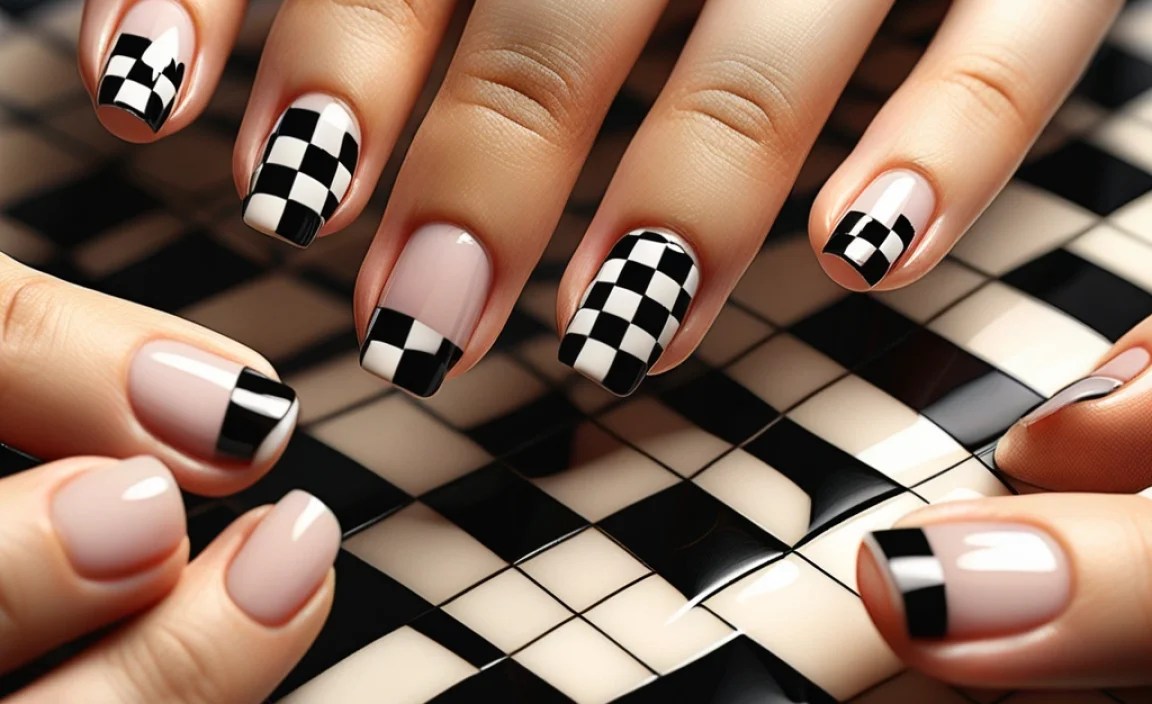
The checkered pattern, also known as plaid or gingham, is a true classic for a reason. It’s versatile, stylish, and adds a touch of playful sophistication to any outfit. Think of it as the little black dress of nail art – always in vogue, always elegant. Whether you opt for bold contrasting colors or subtle tonal shades, the checkered design instantly elevates your look. It’s a fantastic way to express your personal style, adding a pop of personality without being over the top. Plus, it’s surprisingly adaptable. You can go for full-on checkered nails, or just a single accent nail to add a hint of flair. It’s a trend that has stood the test of time, making it a reliable go-to for a polished and fashionable manicure.
Essential Tools for Your Checkered Mani
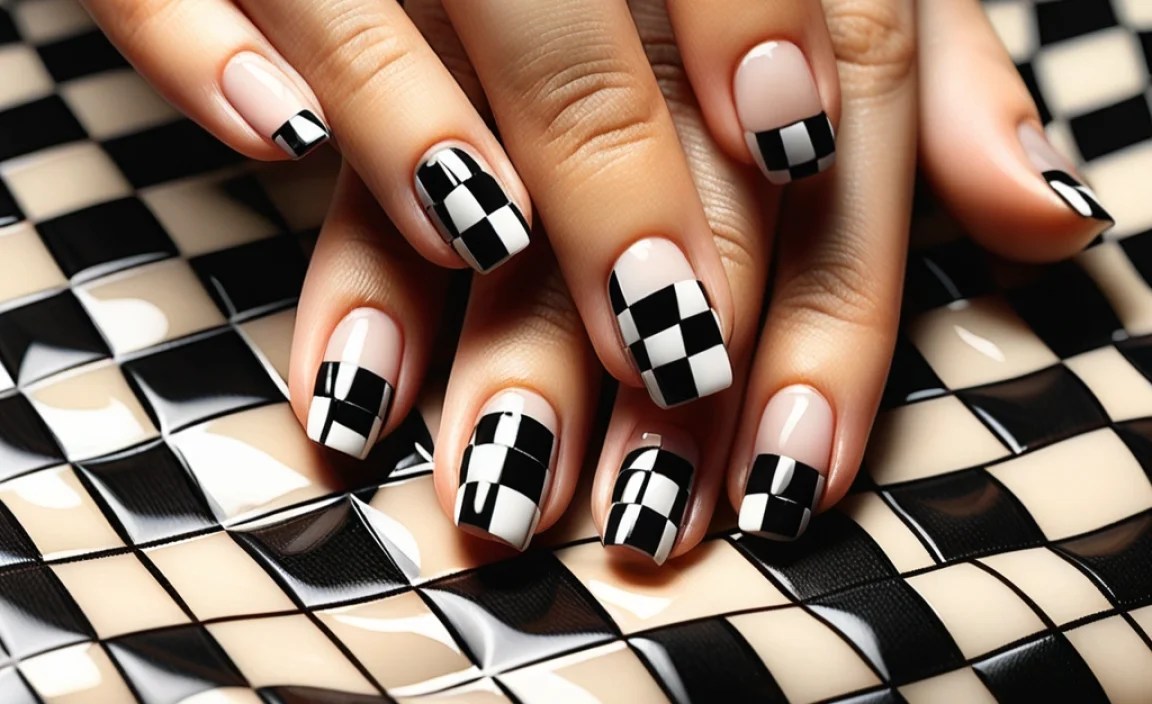
Before we dive into the step-by-step process, let’s gather our supplies. Having the right tools makes all the difference, turning a potentially frustrating attempt into a fun and successful nail art session. Don’t worry if you don’t have everything listed – we’ll talk about alternatives too!
The Must-Haves:
- Base Coat: This protects your natural nails from staining and helps your polish last longer.
- Top Coat: Seals your design and adds a glossy finish.
- Nail Polish: Your main colors for the checkered pattern. Think contrasting colors like black and white, or fun combos like pink and yellow.
- Thin Detail Brush or Nail Art Pen: This is your magic wand for drawing those crisp lines! A fine tip is key.
- Nail Polish Remover & Cotton Swabs: For cleaning up any little mistakes.
- Cuticle Oil: To nourish your nails and skin afterwards.
Helpful Extras:
- Dotting Tool: Can be used to create small dots that can sometimes fill in checks or add accents.
- Striping Tape or Thin Washi Tape: An alternative for creating straight lines if you’re not confident with a brush.
- Clean-up Brush: A small, flat brush dipped in remover to neaten edges.
- Gloves: To keep your fingers clean during the process.
For those looking for the best brushes, brands like: Fine-Line Painting Tools offer specialized brushes perfect for intricate designs. When choosing nail polish, opt for formulas that are opaque in one or two coats to ensure your checkered pattern stands out beautifully.
Step-by-Step Guide: Creating the Checkered Pattern
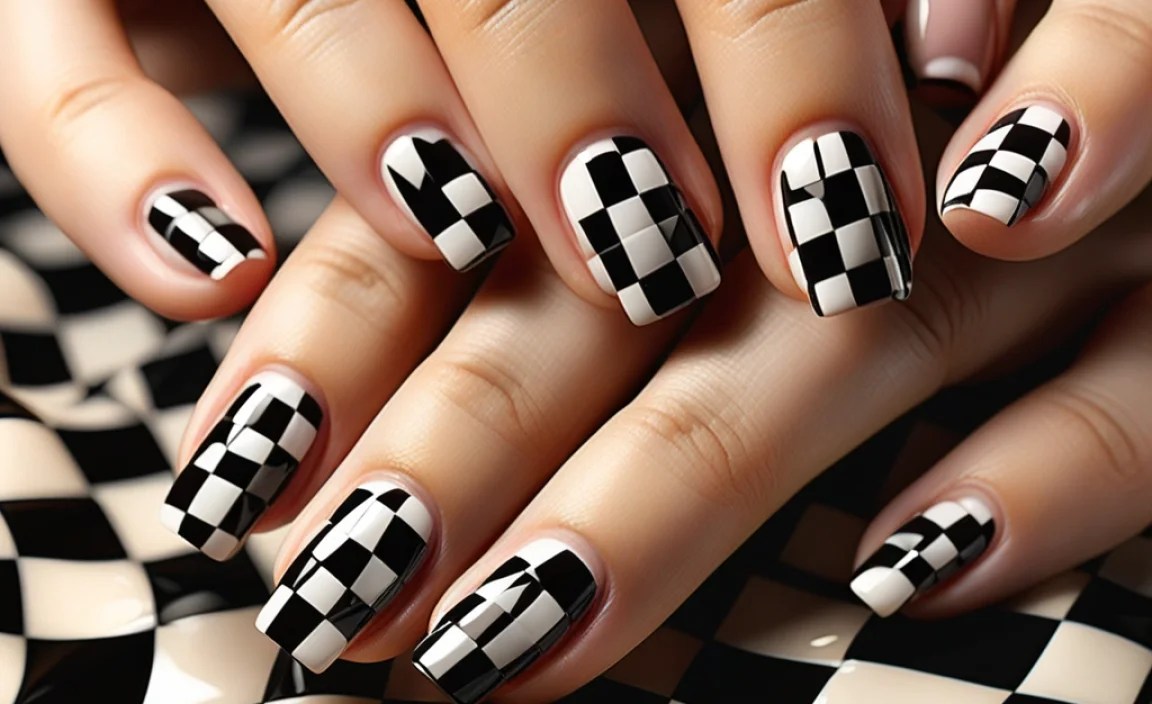
Ready to get creative? This guide is designed for ease, so take your time and enjoy the process. We’ll go through each step clearly.
Step 1: Prep Your Nails
Like any great masterpiece, we start with a clean and smooth canvas.
- Gently push back your cuticles.
- Shape your nails to your desired length and style.
- Apply a thin layer of your base coat and let it dry completely. This is vital for polish longevity and preventing stains!
Step 2: Apply Your Base Color
Choose one of your main colors for the background of your checkered pattern.
- Apply one or two thin coats of nail polish.
- Ensure each coat is completely dry before moving to the next step. Patience here prevents smudging later!
Step 3: Draw the First Set of Lines
Now for the fun part! Grab your thin detail brush or nail art pen and your contrasting color.
- Dip your brush into the polish (or use your pen) and wipe off any excess. You want just enough to draw a clean line.
- Carefully draw a series of parallel vertical lines across your nail. Aim for even spacing. Don’t worry if they aren’t perfectly straight – that’s part of the charm!
- Let these lines dry completely. This is crucial; applying the next set too soon will cause them to bleed.
Step 4: Draw the Second Set of Lines
This is where the checkered magic happens!
- Using your contrasting color again, draw a series of parallel horizontal lines across your nail.
- These lines should intersect the vertical lines you just drew.
- You’ve now created your first checks!
Step 5: Add Diagonal Lines (Optional for a Tartan Look)
For a more traditional tartan or plaid look, you can add diagonal lines to create a crisscross effect within the checks.
- Using a thinner brush and a third color (or the original contrasting color), carefully paint thin diagonal lines within some of your squares.
- This adds depth and complexity.
Step 6: Clean Up and Refine
Mistakes happen to everyone! This is where you tidy up.
- Dip a small brush or a lint-free cotton swab into nail polish remover.
- Carefully trace around the edges of your nail and your design to remove any stray polish. This makes your design look super neat and professional.
Step 7: Apply Top Coat
Seal the deal!
- Once all the polish is completely dry (give it at least 5-10 minutes), apply a generous layer of top coat.
- The top coat not only adds shine but also protects your beautiful checkered design from chipping.
- Let it dry thoroughly.
Step 8: Moisturize
Almost done!
- Apply a bit of cuticle oil around your nails and gently massage it in. This helps keep your nails and skin healthy and looking their best.
And there you have it! A stunning checkered pattern nail design, created by you!
Innovative Checkered Nail Design Variations
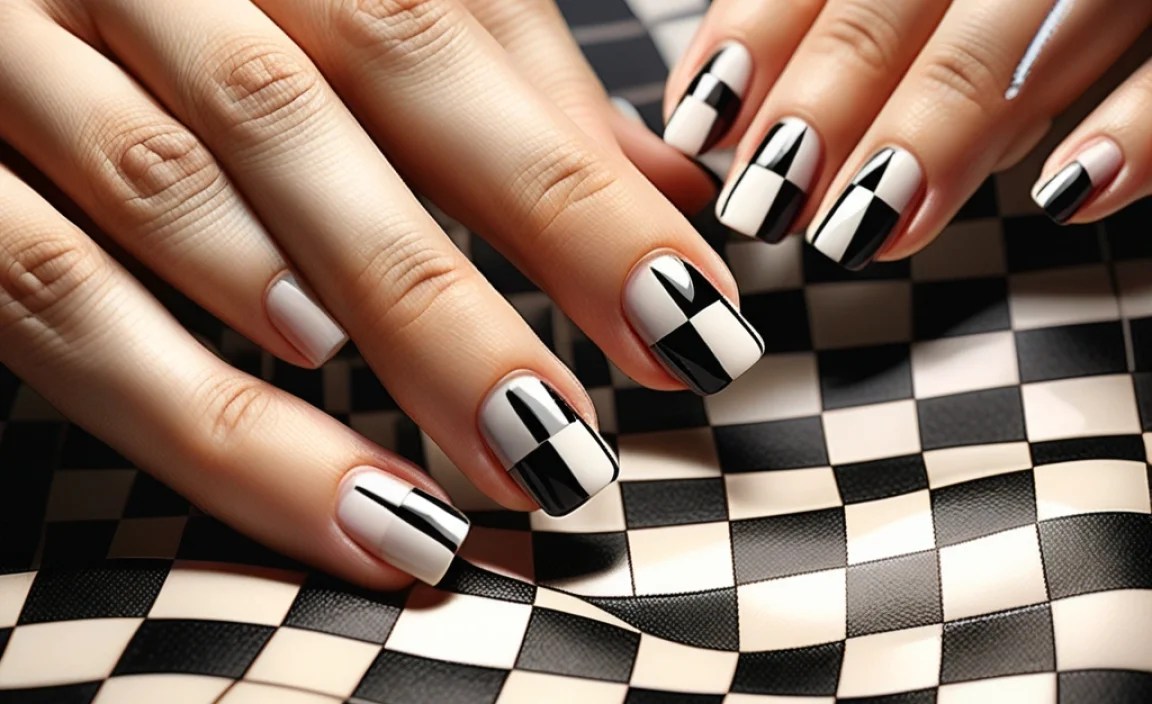
The classic checkered pattern is fantastic, but don’t be afraid to play and adapt it to your unique style! Here are some fun ideas to get your creativity flowing:
Color Play:
- Monochromatic Magic: Use different shades of the same color family (e.g., light blue, navy, sky blue) for a sophisticated, subtle checkered look.
- Pastel Dreams: Soft pastels create a sweet and delicate checkered design, perfect for spring and summer.
- Bold & Bright: Don’t shy away from vibrant, contrasting colors! Think electric blue and lime green, or hot pink and orange.
- Nude & Neutral: A subtle beige and white or a taupe and cream checkered pattern is chic and understated for everyday wear.
Pattern Placement:
- French Tip Checkers: Apply a solid color to the nail, then create a checkered pattern only on the free edge instead of a solid white tip.
- Half-and-Half: Divide your nail diagonally or vertically and do a different color or design on each half, with a checkered accent.
- Accent Nail Focus: Keep most of your nails a solid color and dedicate just one or two nails to the full checkered design for a pop of interest.
Texture & Finish:
- Matte vs. Glossy: Alternate between matte and glossy top coats for a dynamic finish. A matte base with glossy lines, or vice versa, can look incredibly sophisticated.
- Glitter Accents: Add a touch of sparkle by using a glitter polish for one of the line colors, or by adding glitter dots within the checks.
- Jelly Nails: Use sheer jelly polishes to create a translucent, almost stained-glass effect with your checkered pattern.
Remember, these are just starting points! The beauty of nail art is personalization. Mix and match these ideas, and don’t be afraid to experiment. Your nails are a fantastic canvas for self-expression!
The Best Tools for Effortless Lines: A Comparison
Getting those straight, clean lines for a checkered pattern is key. While a steady hand is helpful, the right tools can make a world of difference, especially for beginners. Here’s a look at some popular options:
| Tool | Description | Pros | Cons | Best For |
|---|---|---|---|---|
| Fine Detail Brush | A brush with very fine, tightly packed bristles. Available in various lengths and shapes. | Precise control, versatile for thin and slightly thicker lines, can be used with any nail polish. | Requires some practice to get consistently straight lines, needs to be cleaned thoroughly after each use. | Beginners looking to develop brush control, advanced artists for intricate details. |
| Nail Art Liner Pen | A pen with a fine applicator tip that dispenses polish or specialized ink. | Easy to hold and use like a regular pen, consistent line width, no dipping required. | Limited color selection unless using dual-ended pens with polish, can dry out if cap isn’t sealed properly. | Absolute beginners seeking the easiest way to draw lines, quick touch-ups. |
| Striping Tape / Washi Tape | Adhesive tape in various widths, often metallic or patterned. | Creates perfectly straight, crisp lines with minimal effort, foolproof for beginners. | Can lift polish if not applied and removed carefully, limited by tape width, may be tricky to apply on curved nails. | Beginners who struggle with freehand drawing, achieving a razor-sharp line. |
| Stampers & Plates | Metal plates with etched designs that can be stamped onto the nail using a stamper. | Offers intricate and flawless patterns quickly, great for complex designs. | Requires specific tools (stamper, scraper, stamping polish), can have a learning curve for proper stamping technique. | Those who want many designs with minimal freehand effort, replicating complex patterns. |
For beginners focusing on the checkered pattern, a good quality nail art liner pen or a set of fine detail brushes are excellent starting points. If you find freehand drawing challenging, striping tape is your best friend! Experimenting with these tools will help you find what feels most comfortable and effective for you.
Common Pitfalls and How to Avoid Them
Even with the best intentions, some hiccups can happen during your nail art journey. Don’t get discouraged! Most common issues are easily fixed with a little know-how. Here are a few things to watch out for and how to tackle them:
- Smudged Lines: This is the most common problem! The cure? Patience. Make sure each layer of polish, especially the background color and the first set of lines, is COMPLETELY dry before adding the next. You can also speed up drying time with a quick-dry top coat or by using the cold air drying method from a hairdryer held at a distance.
- Uneven Line Thickness: If your lines vary in thickness, try to control the amount of polish on your brush or pen. Wipe off excess polish on the rim of the bottle before applying. For brushes, experiment with lighter pressure for thinner lines and slightly more pressure for thicker ones.
- Wobbly Lines: A steady hand is a skill that improves with practice. Try bracing your pinky finger on the table or your other hand for support. When using a brush, imagine drawing the line in one smooth stroke rather than in short, choppy movements.
- Polish Lifting with Tape: If you use striping tape, ensure your base polish is fully cured. Apply the tape firmly to create a good seal. When removing, lift the tape slowly and carefully at an angle, rather than pulling straight up.
- “Blobby” Polish: Applying polish too thickly can lead to uneven drying and a messy look. Always aim for thin, even coats of polish. It’s better to apply two thin coats than one thick one.
- Chipped Edges: Ensure you’re using a good base and top coat. When applying polish, “cap” the free edge of your nail by running your brush lightly along the tip. This creates a seal that prevents chipping.
Remember, nail art is a journey. Every attempt teaches you something new. Embrace the imperfections, celebrate your progress, and most importantly, have fun with it!
Glossary of Nail Art Terms for Beginners
Confused by some of the lingo? Don’t worry! Here’s a quick guide to some common nail art terms you might encounter:
- Base Coat: A clear polish applied before color to protect the nail and help polish adhere.
- Top Coat: A clear polish applied over the color to seal the design, add shine, and prevent chipping.
- Cuticle Oil: Oil applied around the nail to moisturize and protect the skin.
- Free Edge: The part of your nail that extends beyond the fingertip (where you’d typically see a French tip).
- Art Brush/Detail Brush: A brush specifically designed for detailed nail art, usually with fine bristles.
- Dotting Tool: A tool with small metal balls on the ends, used for creating dots and swirling patterns.
- Encapsulate: To seal something (like glitter or art) within layers of acrylic or gel. (Less common for basic polish designs, but good to know!)
- Ombre: A gradient effect where one color smoothly transitions into another.
- Stamping Plate: A metal disc with etched designs that can be picked up with a stamper.
Understanding these basic terms will make following tutorials and discussing nail art much easier. Nail care itself has a rich vocabulary, and understanding terms like nail conditions and treatments can also be beneficial for overall nail health.
Frequently Asked Questions About Checkered Pattern Nail Designs
Q1: Can I do a checkered pattern with regular nail polish?
A: Absolutely! Regular nail polish works perfectly for checkered patterns. You just need a bit of patience for drying times between layers. Specialized nail art pens or fine brushes filled with regular polish are ideal.
Q2: How do I get my lines super straight and clean?
A: For the straightest lines, use a nail art liner pen or a fine detail brush with a good quality polish. Brace your hand for stability, and try to draw in one continuous motion. Alternatively, use striping tape – it’s a beginner’s best friend for perfectly straight lines!
Q3: What colors work best for a checkered pattern?
A: Classic combinations like black and white, or navy and white, are always chic. For a fun vibe, try bright contrasting colors like pink and yellow, or mint green and coral. Monochromatic shades also create a sophisticated look.
Q4: My lines always smudge! What am I doing wrong?
A: The most common reason for smudging is applying the next layer of polish before the previous one is completely dry. Make sure each coat of polish, especially the background and the first set of lines, is bone dry. This might take longer than you think!
