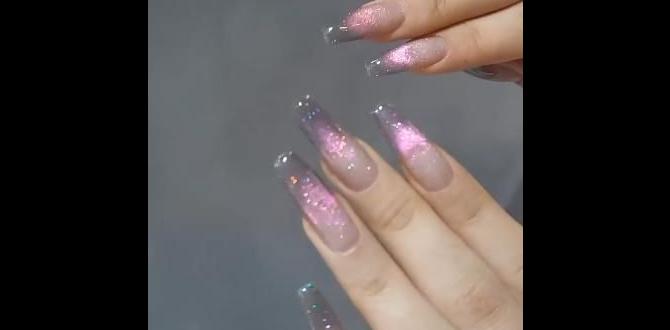
Learn how to create a stunning sunset gradient nail art design! This beginner-friendly guide breaks down the simple steps and essential tools to achieve a vibrant, blended look that mimics a beautiful sunset. Master this easy technique to elevate your manicure game!
Dreaming of nails that capture the magic of a sunset? That dreamy blend of warm oranges, fiery reds, and soft pinks can be yours! Many beginners feel intimidated by gradient nail art, thinking it’s complicated. But honestly, it’s one of the most forgiving and rewarding techniques to learn. With a few simple tools and a little patience, you’ll be painting sunsets on your fingertips in no time. Get ready to unlock your inner artist!
What is Sunset Gradient Nail Art?
Sunset gradient nail art is a nail design technique that mimics the beautiful, blended colors of a sunset. It involves layering and blending two or more nail polish colors together on the nail to create a smooth transition, much like the sky at dusk. The most popular sunset gradients feature warm tones like yellow, orange, pink, and sometimes a touch of purple or red. It’s a versatile design that can be adapted to any nail length and shape, offering a vibrant pop of color and a touch of artistry to your look.
Why is Sunset Gradient Nail Art a “Proven Essential”?
Versatility and Adaptability
The beauty of the sunset gradient is its incredible versatility. Whether you have short nails, long nails, acrylics, or natural nails, this design adapts beautifully. You can choose your favorite sunset hues, from soft pastels to bold neons, making it uniquely yours. It’s a look that can be as subtle or as dramatic as you like, fitting perfectly for casual days or special occasions. This adaptability makes it a go-to design for countless nail lovers.
Trend-Proof Appeal
While nail trends come and go, the natural beauty of a sunset is timeless. This translates to the nail art itself. A well-executed sunset gradient never truly goes out of style. It’s a classic for a reason, evoking feelings of warmth, relaxation, and beauty. When you master this technique, you’re investing in a skill that will remain relevant and admired for years to come.
Beginner-Friendly Technique
This might surprise you, but sunset gradient nail art is actually one of the easiest gradient techniques for beginners to master. Unlike intricate patterns, gradients rely on blending, which is quite forgiving. If your lines aren’t perfect, a little extra blending can often hide minor imperfections. This makes it a fantastic starting point for anyone looking to dip their toes into nail art without feeling overwhelmed. You’ll gain confidence quickly!
Cost-Effective Beauty
Visiting a salon for a custom gradient design can add up. Learning to do it yourself at home is a fantastic way to achieve salon-quality nails without the salon price tag. With a few basic nail polishes and simple tools, you can create stunning designs repeatedly. This makes it an essential skill for anyone who loves a stylish manicure but wants to be budget-savvy and creative.
Essential Tools for Your Sunset Gradient Masterpiece
Gathering the right tools is key to a seamless sunset gradient. Don’t worry, you probably have most of these on hand already, or they are very affordable to acquire!
- Base Coat: Prepares your nails and helps polish adhere.
- Top Coat: Seals your design and adds shine.
- Nail Polish Colors: Choose 2-4 colors that blend well together (e.g., yellow, orange, pink, red).
- Cosmetic Sponge or Makeup Sponge: This is your secret weapon for blending! A dense makeup sponge works best. You can cut a regular makeup sponge into smaller pieces.
- Small Scissors: For cutting your sponge if needed.
- Paper Towel or Palette: To dab excess polish off your sponge.
- Cuticle Guard or Latex Tape (Optional but Recommended): To protect your skin from polish and make cleanup easier.
- Nail Polish Remover and Cotton Swabs/Brushes: For cleaning up any mistakes around the cuticles.
- Small Brush or Old Eyeliner Brush (Optional): For precise cleanup.
Step-by-Step Guide: Creating Your Sunset Gradient Nail Art
Let’s dive into the fun part! Follow these simple steps to create your own breathtaking sunset gradient.
Step 1: Prep Your Nails
Just like any good painting, a clean canvas is important! Start by ensuring your nails are clean and dry. Push back your cuticles gently. You can then apply your favorite base coat. This protects your natural nails and gives your polish something to grip onto.
For extra protection and longevity, consider using a nail strengthener if your nails are prone to breaking. A good base coat helps prevent staining, especially with vibrant polishes common in sunset designs.
Step 2: Apply Cuticle Protection (Optional but Recommended!)
This step is a game-changer for beginners! Apply a liquid latex or balm around your cuticles. This creates a barrier so that when you sponge the polish on, excess color won’t stick to your skin. If you don’t have latex, you can use a thick balm like Vaseline, but be careful not to get polish on your actual nail bed.
Find out more about nail prep from the experts at the NHS, a reputable source for health and beauty advice.
Step 3: Prepare Your Sponge
Cut a makeup sponge into a few smaller pieces. You want a piece that’s easy to hold and apply to your nails. Slightly dampen the sponge with water and gently squeeze out any excess. This helps the polish transfer more smoothly and prevents the sponge from soaking up too much polish. Some people prefer to use a dry sponge – experiment to see what works best for you!
Step 4: Apply the First Color to the Sponge
This is where the magic begins! On your paper towel or palette, paint a stripe of your lightest color (usually yellow for a sunset). Next to it, paint a stripe of your next color (e.g., orange). If you’re using three colors, add the third next to that (e.g., pink).
If using a sponge, paint your chosen colors in parallel stripes directly onto the sponge’s surface. For a classic sunset, you might start with yellow at the “top” of the nail (near the cuticle) and blend into orange, then pink at the tip. The order is crucial for achieving the desired gradient effect.
Step 5: Transfer the Color to Your Nail
Gently dab the sponge onto your nail. Start at the base of your nail and roll or press the sponge downwards towards the tip. Don’t press too hard, you want to deposit the color, not smudge it. You should see the colors starting to blend. You might need to reapply polish to the sponge and repeat the dabbing process a few times to build up the color intensity and ensure a smooth transition.
Think of it like stippling or dabbing. The goal is to transfer the polish from the sponge to the nail. Overlapping the colors slightly on the sponge will help them blend before they even hit your nail. This technique is key to achieving that seamless look that makes sunset gradients so appealing.
Step 6: Blend and Build Intensity
Your first pass might look a little patchy, and that’s okay! The beauty of this technique is layering. Reapply polish to your sponge as needed. Continue dabbing onto your nail, focusing on areas that need more color or blending. You can gently buff the sponge across the lines between colors to help them meld together. The more you dab and blend, the smoother your gradient will become.
If one color seems to be overpowering another, try dabbing the sponge with a tiny bit of transparent polish on it first. This can help to sheer out the color deposit slightly and aid in blending. This subtle trick can make a big difference in achieving a smooth finish.
Step 7: Clean Up Your Mess
Once you’re happy with the blended colors, it’s time for cleanup. If you used a cuticle guard, carefully peel it away. If not, use a small brush (an old eyeliner brush works wonders!) dipped in nail polish remover to carefully clean up any polish that got onto your skin. Take your time with this step – clean edges make a huge difference in the final look!
For best results, use a brush with fine, tapered bristles. Dip it into nail polish remover, wipe off any excess on a paper towel, and then gently sweep it around your cuticle line and sidewalls. A steady hand is all you need!
Step 8: Add a Top Coat
The final touch! Once your gradient is dry, apply a generous layer of top coat. This will seal your design, smooth out any slight texture from the sponge application, and add incredible shine. A good top coat also helps your manicure last longer and prevent chipping.
Consider using a “quick dry” top coat if you’re in a hurry. For extra durability and a super smooth finish, some nail techs recommend applying a gel-like top coat for a professional look. Make sure the top coat is applied evenly to all areas of the nail, including over the tips, to lock in the design.
Tips for Achieving the Perfect Sunset Gradient
Here are some extra tips from Nailerguy to make your sunset gradient flawless:
- Start with Opaque Polishes: For the most vibrant sunset effect, use opaque nail polishes. Sheer polishes might require more layers and can sometimes look muddy when blended.
- Work Quickly: Nail polish can dry fast, especially on a sponge. Have all your colors ready and apply them to the sponge and then to your nail in quick succession.
- Don’t Over-Saturate the Sponge: Too much polish on the sponge can lead to gloopy application and messy edges.
- Experiment with Color Combos: While classic sunsets are warm, don’t be afraid to mix it up! Try blues and purples for a twilight sky, or even vibrant neons for a festival vibe.
- Use a Nail Palette: Instead of painting directly onto the sponge, try painting stripes onto a smooth surface like a plastic lid, foil, or a dedicated nail art palette. Then, just press the sponge onto the palette to pick up the colors.
- Keep Your Sponge Clean: Between nails, you might want to dab your sponge onto a clean part of your paper towel to remove excess polish, ensuring a fresh application each time.
- Practice Makes Perfect: Don’t get discouraged if your first attempt isn’t salon-perfect. The more you practice, the better you’ll become at blending and achieving smooth transitions.
Sunset Gradient Nail Art Design Variations
Once you master the basic sunset gradient, the creative possibilities are endless! Here are a few ideas to inspire you:
Ombre Sunset
Instead of distinct bands of color, an ombre sunset focuses on a smooth, single-color transition across each nail. This is achieved by carefully blending just two colors, often starting with yellow at the cuticle and fading to orange or pink at the tip.
Multi-Color Horizon
This variation uses 3-4 colors, layering them from cuticle to tip to truly mimic the dramatic shifts in a colorful sky. Think yellow at the base, transitioning to orange, then a vibrant pink, and maybe even a soft purple at the very tip.
Glitter Sunset
Add a touch of sparkle by applying a fine glitter top coat over your dried gradient. A holographic or gold glitter can really enhance the sunset feel, making your nails shimmer like the evening sky.
Accent Nail Sunset
Not ready for a full set? Try doing a gradient on just one or two accent nails and keeping the rest of your nails a solid complementary color (like white, nude, or black) for a sophisticated touch.
Reverse Gradient
Flip the script! Apply the gradient from the tip of your nail down to the cuticle, creating an inverted sunset effect. This can be a unique and eye-catching twist on the classic design.
Troubleshooting Common Sunset Gradient Issues
Even with practice, a few hiccups can happen. Here’s how to fix them:
| Problem | Solution |
|---|---|
| The colors aren’t blending smoothly. | Ensure you’re using enough pressure with the sponge, but not too much. Dab and roll gently. Reapplying polish to the sponge and doing a second or third pass often helps. Make sure your polish isn’t too thick or too thin. |
| There are harsh lines between colors. | The key is layering and blending! Reapply polish to the sponge and focus on the transition areas. A slightly damp sponge can sometimes help to blend borders better. You can also use a clean, slightly damp sponge to gently pat over the lines. |
| The color is too sheer or patchy. | This is usually a sign that you need another pass with the sponge. Reapply polish to the sponge and continue dabbing. Make sure your base colors have had a moment to set but aren’t fully dry before applying the next layer. |
| The polish applied unevenly. | Try to ensure your sponge is evenly saturated with polish in the desired stripes. Don’t let the polish dry on the sponge for too long. If it’s very uneven, you might need to carefully wipe it off with polish remover and start that nail again. |
| Too much polish got on my skin and it’s messy. | This is where cuticle protection is a lifesaver! If you didn’t use it, carefully clean up with a small brush dipped in nail polish remover. Be patient and work in small sections. A “clean-up brush” (a fine-tipped brush specifically for this) is highly recommended. |
Frequently Asked Questions About Sunset Gradient Nail Art
How do I make the colors blend seamlessly?
The trick to seamless blending is layering and gentle dabbing with your sponge. Apply your colors to the sponge, then dab onto the nail. Reapply polish to the sponge and repeat the dabbing process for each nail, paying extra attention to the transition zones between colors. A slightly damp sponge can also help.
What kind of sponge works best for gradient nails?
A dense makeup sponge is generally considered the best. You can cut a regular cosmetic sponge into smaller pieces. The density helps to deposit color evenly without absorbing too much polish. Some people also use slightly firmer sponges.
Can I use regular nail polish or do I need special polishes?
Regular nail polishes work perfectly fine for sunset gradient designs! You don’t need any special formulas, just polishes in colors that you love and that are opaque enough to show up well. A good quality base and top coat are always recommended, however.
How long does it take to do sunset gradient nails?
For beginners, expect to spend about 30-60 minutes per hand, depending on how quickly you work and how many touch-ups you need. Once you get the hang of it, you can often do a set in around 30 minutes.
What are the best color combinations for a sunset gradient?
Classic sunset colors include yellow, orange, pink, and red. You can also add a touch of purple for a deeper twilight feel. For a more modern twist, try blending blues and teals for a tropical sunset, or use pastels for a softer look. The possibilities are endless!
My nails have streaks, how do I fix that?
Streaks can happen if the polish isn’t applied evenly to the sponge or if you’re not dabbing with enough overlap. Reapply polish to your sponge and do another layer of dabbing on your nail, focusing on the streaky areas. A good top coat will also help smooth out minor imperfections.
Can I do this on short nails?
Absolutely! Sunset gradients look fantastic on all nail lengths, including short nails. You might just need to use smaller pieces of sponge and be more precise with your dabbing to fit the gradient onto the smaller surface area.
Conclusion
Mastering the sunset gradient nail art design is a fantastic achievement for any nail enthusiast, especially for beginners. It’s a technique that’s beautiful, accessible, and incredibly rewarding. You’ve learned the essential tools, the step-by-step process, and even some pro tips to troubleshoot any issues. Remember, practice is your best friend here; each set of nails you create will bring you closer to perfection. So, embrace the creativity, experiment with colors, and let your nails capture the warmth and beauty of a sunset. Happy polishing! Your stunning, personalized nail art journey starts now, and it’s easier than you think!