Quick Summary:
Combining two nail design styles is totally achievable and can create a unique, eye-catching look! The key is to choose complementary elements, balance visual weight, and use a cohesive color palette. This guide offers simple, step-by-step tips to help you blend different nail art trends with confidence, turning your manicures into personal masterpieces.
Ever looked at two gorgeous nail trends and wished you could have the best of both worlds on your fingertips? It’s a common creative dilemma! Maybe you love the sleek elegance of minimalist French tips but also adore the playful sparkle of glitter accents. Or perhaps the geometric precision of abstract art calls to you, but you also crave the organic beauty of floral designs. Trying to pick just one can feel like a tough choice, but what if you didn’t have to? Combining two nail design styles doesn’t have to be complicated or look messy. In fact, with a few smart strategies, you can craft stunning, personalized manicures that are uniquely yours. Get ready to unlock your inner nail artist and discover how to blend different looks seamlessly!
Why Combine Nail Design Styles?
Let’s be honest, the world of nail art is vast and ever-evolving. We’re constantly inspired by new trends, classic looks, and unique artistic expressions. Combining styles is your secret weapon for:
- Uniqueness: Stand out from the crowd with a manicure that nobody else has.
- Personalization: Tailor your nails to perfectly reflect your mood, outfit, or personality.
- Creativity: Push your artistic boundaries and explore new design possibilities.
- Versatility: Create looks that can transition from casual everyday wear to special occasions.
It’s all about expressing yourself and having fun with your style! And the good news? You don’t need to be a pro to achieve incredible results.
Getting Started: The Foundation
Before you even think about picking up a polish brush, a little preparation goes a long way. A solid foundation ensures your combined designs not only look good but also last. This part is crucial for any nail art, especially when layering different techniques.
Step 1: Nail Prep is Key
Just like any great painting, a good manicure starts with a clean canvas. For the best adhesion and longevity of your designs, proper nail prep is essential:
- Cleanse: Remove any old nail polish thoroughly with a good quality nail polish remover.
- Shape: File your nails to your desired shape. Whether you love a square, round, or almond shape, consistent shaping is important.
- Cuticle Care: Gently push back your cuticles. You can use an orangewood stick or a cuticle pusher. Avoid cutting them, as this can lead to damage and infection. For extra softness, apply a cuticle oil.
- Buff: Lightly buff the surface of your nails. This helps to remove any shine and creates a slightly rough surface, which allows the polish to grip better. Be gentle, you don’t want to thin your nails. You can learn more about nail care from the National Center for Complementary and Integrative Health, which offers general guidance on cosmetic products.
- Clean Again: Wipe down your nails with rubbing alcohol or a nail cleanser to remove any dust or oily residue.
Step 2: Choose Your Base Coat
A good base coat is your best friend. It protects your natural nails from staining (especially important with dark or vibrant colors) and provides a smooth surface for your polish and designs. Choose a base coat that suits your nail needs – perhaps one for strengthening, one for ridges, or a simple clear one.
Step 3: Select Your Color Palette
This is where the magic of combining styles really begins! Choosing a cohesive color palette is perhaps the most important tip for ensuring your combined designs look intentional and not chaotic.
- Complementary Colors: Think about colors that sit opposite each other on the color wheel (like blue and orange, or purple and yellow). They create a vibrant contrast.
- Analogous Colors: These are colors next to each other on the color wheel (like blue, teal, and green). They create a harmonious, blended look.
- Monochromatic: Using different shades and tints of a single color. This is a super easy way to ensure cohesion.
- Neutrals: Incorporating neutrals like white, black, grey, beige, or metallics can help tie bolder colors together.
- The Rule of Three: Often, sticking to no more than three main colors in your design, plus potentially a neutral, keeps things from becoming too busy.
For example, if you want to combine a floral design with a geometric pattern, you could use soft pastels for the florals and a crisp white or metallic gold for the geometric lines. The shared color palette will make the combination feel intentional.
Genius Strategies for Combining Styles
Now for the fun part! Here’s how to actually blend two distinct nail design styles without creating a jumbled mess. The secret lies in thoughtful application and visual balance.
Strategy 1: Focus on Different Nails
This is one of the simplest and most effective ways to combine styles. Assign one style to accent nails and the other to the majority of your nails.
- Example 1: French Tips + Glitter Accent
- Apply a solid color or a nude polish to all nails as your base.
- On most nails, create classic or colored French tips.
- On one or two accent nails (like the ring finger), apply a full coat of glitter polish or a more intricate design.
- Example 2: Geometric Shapes + Floral Accents
- On four fingers, paint half of the nail with a solid color and the other half with a different complementary color, creating a geometric split.
- On your ring finger, paint a small, delicate floral design.
This approach allows each style to have its moment without competing for attention.
Strategy 2: Layering Elements
This method involves using one style as the base and layering elements of the second style on top. This requires a bit more finesse but can yield stunning results.
- Example 1: Ombre + Stamping
- Create a beautiful ombre effect on all nails as your base design.
- Once the ombre is completely dry and sealed with a top coat, use nail stamping to add delicate patterns (like small dots, fine lines, or tiny motifs) over the ombre.
- Example 2: Solid Color Base + Delicate Detail
- Paint all nails a solid, chic color (e.g., a deep navy).
- On one or two accent nails, use a fine brush to paint a delicate image from a different style onto the solid background – think a single feather, a minimalist constellation, or a tiny abstract swirl.
Pro Tip: Ensure the base layer is completely dry and you’ve applied a good top coat before adding stamped or freehand details to prevent smudging. Using a quick-dry top coat can be a lifesaver here.
Strategy 3: Balance Visual Weight
When combining two distinct styles, it’s important to consider how “heavy” or “busy” each design appears. You don’t want one style to overpower the other.
- Pair a Bold with a Subtle: If one style is very intricate or uses bold colors (e.g., complex tribal patterns), pair it with a simpler, more muted style (e.g., a solid matte finish or subtle negative space design).
- Distribute Elements Evenly: If you’re using elements from both styles on the same nail, try to distribute them visually. For instance, don’t cram all the detailed elements into one corner.
- Use Negative Space: Negative space, where part of the nail is left bare or with just a clear coat, can be an excellent tool for breaking up busy designs and allowing elements to breathe. It provides a visual pause.
You can also use a table to help visualize how to balance different design types. Consider these pairings:
Balancing Design Styles: A Visual Guide
| Primary Style (Main Focus) | Secondary Style (Complementary) | Application Strategy | Visual Weight Balance |
|---|---|---|---|
| Detailed Floral Art | Minimalist Geometric Lines | Florals on accent nails; geometric lines on other nails OR delicate floral detail over geometric base. | Floral is detailed but might be smaller; geometry is precise and sharp. Balance through placement. |
| Bold Color Blocking | Subtle Glitter Accents | Color blocking on most nails; glitter applied to a specific section or accent nail. | Color blocking is visually strong; glitter adds sparkle. Glitter can be used sparingly to avoid overpowering. |
| Abstract Swirls | Solid Matte Finish | Swirls on accent nails; solid matte on the rest. OR Swirls covering only a portion of each nail. | Swirls are dynamic; matte is grounding. Matte finish helps contain the visual energy of the swirls. |
| French Tips with a Twist (e.g., colored tips) | Dotted or Star Constellations | Creative French tips on most nails; constellation pattern on accent nail(s). | French tips are structured; constellations add scattered detail. Ensure constellation size is appropriate. |
Strategy 4: Use Complementary Textures
Combining styles isn’t just about color and shape; texture can play a huge role! Think about pairing a glossy finish with a matte finish, or smooth polish with textured elements like glitter or small embellishments.
- Glossy & Matte: A classic combination that adds dimension. For example, a glossy solid color nail with a matte French tip, or matte geometric shapes over a glossy base.
- Smooth & Sparkly: Pair a smooth, opaque polish with a glitter top coat or a gradient glitter accent.
- 3D Elements: If you’re feeling bold, consider adding a small 3D charm or bead to an accent nail that complements the overall design. Keep it minimal to avoid looking cluttered.
The contrast in textures adds sophistication and catches the eye in a subtle yet impactful way.
Tools to Help You Combine Designs
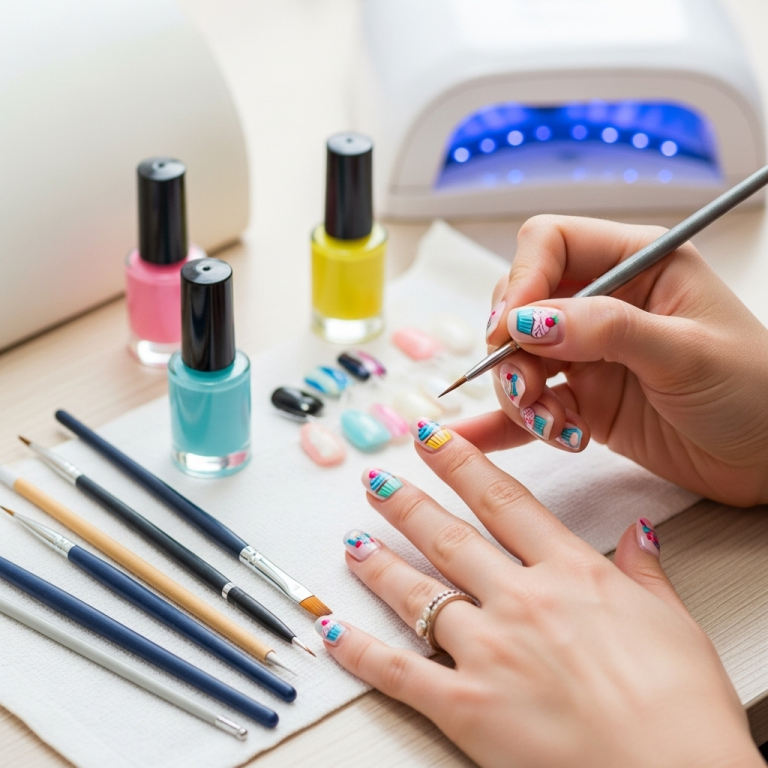
Having the right tools makes executing your combined designs much easier and more precise. Here are some essentials for any beginner looking to get creative:
Essential Tools for Combined Nail Art
- Fine-Tipped Brushes: For detailed lines, swirls, and small accents.
- Dotting Tools: Perfect for creating dots, small flowers, and patterns. They come in various tip sizes.
- Nail Stamping Plates & Stamper: For intricate patterns that are hard to freehand. A good stamper picks up the design cleanly. Check out resources on basic stamping techniques from makeup and beauty blogs that often cover nail stamping too.
- Thin Striping Tape: Ideal for creating crisp, clean lines for geometric designs or French tips.
- Clear Top Coat: Not just for shine, but to seal your designs and prevent smudging.
- Quick-Dry Top Coat: A lifesaver when layering different elements quickly.
- Nail Polish Remover & Clean-up Brush: A brush (like an old, clean eyeliner brush) dipped in remover is perfect for cleaning up edges and mistakes.
Don’t feel like you need every single item at once. Start with a couple of fine brushes and a good set of dotting tools – these are incredibly versatile for combining many styles!
Beginner-Friendly Combinations to Try
Ready to dive in? Here are a few foolproof combinations perfect for beginners. They offer a great balance of style and ease of execution.
Combination 1: The Chic Gradient & Dot Combo
- Style 1: Beautiful color gradient (ombre) on all nails.
- Style 2: Small, simple dots in a contrasting or complementary color.
- How-to:
- Apply your gradient (ombre) to all nails. Let it dry completely.
- Using a dotting tool, place small dots along the cuticle line or scattered across the nail.
- Seal with a top coat.
Combination 2: The Clean Half-Moon & Sparkle
- Style 1: Half-moon manicure (color or negative space).
- Style 2: Glitter accent.
- How-to:
- Paint your nails a solid color, or prep for negative space half-moons.
- Use striping tape or a brush to create a crisp half-moon shape at the base of the nail. Fill it with a glitter polish or a contrasting color.
- Alternatively, paint all nails solid and add a glitter accent to one or two nails.
- Seal with a top coat.
Combination 3: The Geometric Accent
- Style 1: Solid color base.
- Style 2: Simple geometric lines or shapes.
- How-to:
- Paint all nails a solid, chic color.
- Once dry, use a thin brush or striping tape to add a few clean geometric lines – perhaps a diagonal line across one or two nails, or simple triangles in the corner.
- Seal with a top coat.
These are just starting points! Feel free to experiment with your favorite colors and designs.
Troubleshooting Common Issues
Even with the best intentions, sometimes things don’t go perfectly. Here are some common problems and how to fix them:
- Smudging: This is most common when layering wet polish. Ensure each layer is completely dry before adding the next. Using a quick-dry top coat helps. If smudging occurs, try to gently reform the shape with your brush or clean-up brush dipped in remover before the polish fully sets.
- Messy Lines: For clean lines, use striping tape or a very fine brush. If your lines are wobbly, don’t fret! You can often clean them up with a small brush dipped in nail polish remover. Practice makes perfect!
- Designs Look Too Busy: This happens when there’s too much going on. Step back and look at your nail from afar. If it feels cluttered, simplify! Remove some elements or stick to combining on accent nails only. Remember the “rule of three” for colors.
- Polish Not Sticking/Peeling: This usually points back to nail prep. Make sure your nails were clean, dry, and free of oils. Ensure your base and top coats are fresh and your polish isn’t too old.
The beauty of nail art is its impermanence. If a design doesn’t quite work out, you can always remove it and try again! It’s a learning process.
FAQ: Your Nail Combination Questions Answered
Q1: Can I combine metallic and matte finishes?
Absolutely! This is a fantastic way to add dimension. Try a matte base with metallic French tips, or metallic accents on a matte nail. Just ensure both finishes are completely dry before applying a top coat.
Q2: How do I make sure the designs don’t clash?
The key is a cohesive color palette and balancing visual weight. Stick to colors that complement each other and ensure one design doesn’t visually overpower the other. Sometimes one style is best on a few accent nails while the other is on the main nails.
Q3: What’s the best way to combine glitter with other designs?
Glitter is versatile! You can use it as a full accent nail, create a glitter gradient, add a touch of glitter to the tips or bases, or overlay it sparingly onto another design. Remember to use a good top coat to smooth out any rough texture from the glitter.
Q4: I’m a complete beginner. Which combination should I start with?
Start simple! A solid color base with glitter on the ring finger, or a clean French tip with a few delicate dots on one nail are excellent starting points. Using striping tape for geometric lines is also very beginner-friendly for crisp edges.
Q5: How long should I wait between applying different design elements?
Always wait for the previous layer to be completely dry to the touch before applying the next. For sensitive designs like stamping or intricate freehand, waiting for the polish to set for a few minutes (or even longer if it’s a very thin polish) is best. A quick-dry top coat can speed up the drying time of your base colors.