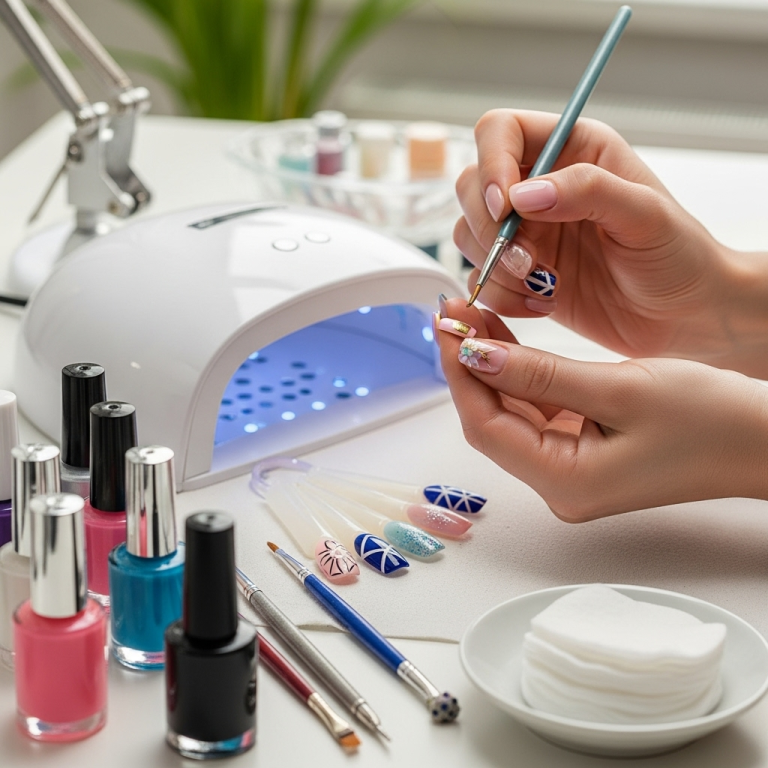
Can’t get your gel manicures to look salon-perfect at home? These expert gel polish nail design hacks will transform your DIY skills. Learn simple tricks for flawless application, long-lasting wear, and stunning designs, even if you’re a total beginner. Get ready for gorgeous, durable nails that impress!
Ever spend hours on your nails, only to have them chip after a day or two? Or maybe you dream of intricate nail art but feel completely overwhelmed? You’re not alone! Achieving that smooth, chip-free, and stylish gel manicure at home can feel like a secret club. But what if I told you it’s totally achievable with a few smart tricks? I’m Lisa Drew, and I’m here to share some game-changing gel polish nail design hacks that will make your DIY manicures look like they came straight from a high-end salon. Let’s turn those nail dreams into reality!
Gel Polish Nail Design Hacks: Your Ultimate Beginner’s Guide
Gel polish is amazing for its durability and glossy finish, but sometimes it can be a bit tricky to work with, especially when you’re just starting out. Don’t worry! With the right techniques and a few insider tips, you can master gel polish nail designs and create gorgeous looks that last. We’ll cover everything from prepping your nails perfectly to creating simple yet stunning designs.
Prep Like a Pro: The Foundation for Flawless Gel Nails
This is arguably the MOST important step for long-lasting gel polish. Skipping or rushing this will lead to lifting, chipping, and a manicure that just doesn’t stay put. Think of it as building a strong foundation for your nail art!
Why Nail Prep Matters for Gel Polish
- Removes Oils and Residue: Our nails have natural oils that can prevent gel polish from adhering properly. Thorough cleaning ensures a smooth, clean surface.
- Creates a Smooth Surface: Buffing gently can help fill in minor ridges and create better adhesion for the base coat.
- Improves Longevity: A well-prepped nail is key to a gel manicure that can last 2-3 weeks without chipping.
Essential Prep Steps:
- Cleanse Your Hands: Wash your hands thoroughly with soap and water. Make sure there’s no lotion or hand sanitizer residue left.
- Push Back Cuticles: Gently push back your cuticles using a cuticle pusher or an orange wood stick. Avoid cutting them, as this can lead to infection. Healthy cuticles are part of healthy nails! For more on cuticle care, check out the NHS guide on nail problems, which touches upon skin and nail health.
- Gently Buff the Nail Surface: Use a fine-grit nail file to gently buff the surface of your nails. This isn’t about removing length, but about creating a slightly matte finish to help the polish grip. A 240-grit or higher file is usually best for this.
- Shape Your Nails: File your nails to your desired shape.
- Wipe Away Dust: Use a lint-free wipe dampened with nail cleanser or isopropyl alcohol to remove any dust from buffing. Ensure the nail is completely dry and free from any oily residue.
- Apply a Dehydrator or Cleanser: This is a crucial step that many beginners miss! A nail dehydrator removes any remaining moisture from the nail plate, ensuring maximum adhesion. Follow with a nail cleanser or rubbing alcohol on a lint-free wipe for a final clean.
- Don’t Forget the Top and Edges: Make sure to swipe your base coat, color, and top coat around the tip of your nail and along the sidewalls. This “capping” technique seals the polish and prevents lifting.
Application Hacks for a Flawless Finish
Getting that smooth, even coat of gel polish is an art, but with these hacks, you’ll be a pro in no time. It’s all about patience and technique!
Hack 1: Thin Coats are Key
This is the golden rule of gel polish. Thick coats are more likely to wrinkle, not cure properly under the UV/LED lamp, and can be prone to lifting. Always apply gel polish in thin, even layers.
- How-to: Dip your brush into the polish, then wipe off almost all of the excess onto the bottle’s neck. You want just enough polish for a thin, sheer coat. You may need three coats to achieve full opacity, but each coat should be very thin.
Hack 2: Cap the Free Edge
Remember that thin layer of polish you’re applying? Make sure you run it along the very tip (the free edge) of your nail. This creates a seal that prevents chipping and lifting, extending the life of your manicure.
- How-to: After applying a thin coat of base, color, or top coat, gently brush a tiny bit along the very tip of your nail.
Hack 3: Avoid the Cuticle and Sidewalls
Getting polish too close to your skin or cuticles is a common mistake. Gel polish is not meant to adhere to skin. If it touches your skin and cures there, it will eventually lift and peel away from the nail, taking your whole manicure with it.
- How-to: Leave a tiny gap (about the width of a hair) between your polish color and your cuticle line and sidewalls. You can use a fine detail brush dipped in alcohol to clean up any errant polish before curing.
Hack 4: Cure Each Coat Properly
This is non-negotiable for gel polish. Each layer needs to be fully cured under a UV or LED lamp according to the manufacturer’s instructions. Don’t rush this step!
- How-to: Place your nail under the lamp and ensure you’re using the recommended curing time for each product (base coat, color, top coat). Most lamps have timers, so use them! It typically ranges from 30-60 seconds for LED lamps and 2-3 minutes for UV lamps.
Hack 5: The “Float” Method for Opaque Color
If you find your colored gel polish is streaky or not opaque enough even after two coats, try a slightly different application technique called “floating.”
- How-to: Apply your base coat as usual. For the colored polish, float (or gently lay) a thin coat onto the nail, starting at the cuticle area and lightly pulling down. Don’t apply too much pressure. This technique helps to spread the pigment evenly. You might still need two thin coats, but they should be more opaque.
Easy Gel Polish Nail Design Hacks for Beginners
Ready to add some flair? These are simple, effective design hacks that don’t require advanced artistry.
Hack 6: The Ombre Effect with Sponges
Ombre nails look super chic and are surprisingly easy to do with a makeup sponge.
- How-to:
- Apply your base coat and cure.
- Apply a thin, uncured layer of a light color (white or a nude works well) as your base.
- On a palette or piece of foil, paint two or three gel colors next to each other.
- Gently dab a makeup sponge (cut into a small piece) onto the polish combination, picking up the colors.
- Lightly dab the sponge onto the nail, starting from the cuticle and working your way up. Repeat until you achieve your desired blend. Make sure to cap the free edge!
- Cure under the lamp.
- Apply your top coat and cure.
Hack 7: French Tips with a Sticker or Stamper
Classic French tips can be tricky to freehand. Here’s how to get them perfect every time.
- Option A (Stickers):
- Apply your base coat, color, and cure.
- Apply a guide sticker (French tip sticker) where you want the white tip to begin.
- Paint over the sticker with your white gel polish.
- Cure.
- Carefully peel off the sticker.
- Apply your top coat and everything.
- Option B (Stamper):
- Apply your base coat, color, and cure.
- Using a stamping plate with a French tip design or a specialized French tip stamper, apply white gel polish to the stamper.
- Gently press the tip of your nail onto the stamper to transfer the white polish.
- Cure.
- Apply your top coat and cure.
Hack 8: Glitter Gradient
Add sparkle without the mess of loose glitter. A glitter gradient is perfect for a touch of glam.
- How-to:
- Apply your base coat and cure.
- Apply your first color coat (this will be the color at the cuticle) and cure.
- Apply a second thin coat of the same color, but only to about two-thirds of the nail, leaving the tips bare. Cure.
- Now, apply your glitter gel polish. Start applying it from the tip of the nail and sweep it upwards towards where the first color stops.
- Use a fine brush to help blend the glitter into the base color where they meet, creating a gradient effect.
- Cure.
- Apply a generous amount of top coat to encapsulate the glitter and ensure a smooth finish. Don’t forget to cap the edge!
- Cure.
Hack 9: Dotting Tool Designs
Dotting tools are incredibly versatile and make creating simple patterns a breeze.
- How-to:
- Apply your base coat, color, and cure.
- On a palette or foil, put a small amount of the gel polish you want to use for your design.
- Dip the tip of your dotting tool into the polish.
- Gently press the dot onto your nail. You can create simple polka dots, connect them to make lines or floral shapes, or even do subtle swirls.
- Cure.
- Apply your top coat and cure.
Looking for inspiration? Sites like Allure often showcase current trends and simple designs that are perfect for beginners using tools like dotting pens.
Hack 10: Marble Effect with a Thin Brush or Toothpick
Even intricate-looking marble can be simple with the right technique.
- How-to:
- Apply your base coat and cure.
- Apply your base color (e.g., white or nude) and cure.
- On a palette or foil, place a few small blobs of 2-3 contrasting gel polish colors.
- Use a fine detail brush or a toothpick to swirl the colors together on the palette.
- Gently transfer the swirled marble design onto your nail with the brush or toothpick, dabbing and swirling gently to create the pattern. Don’t overwork it!
- Cure immediately.
- Apply a generous top coat to smooth out the texture and seal the design. Cure.
Dealing with Common Gel Polish Problems
Even with hacks, sometimes things don’t go perfectly. Here’s how to fix some common gel polish woes.
Problem: Gel Polish is Wrinkling or Cracking
- Cause: This usually happens when the polish is applied too thickly or not cured long enough.
- Hack: Always apply in thin coats. If you notice a wrinkle, you may need to carefully remove it with a lint-free wipe and alcohol and reapply a thin layer. Ensure your lamp is working correctly and use the recommended cure time.
Problem: Smudged Color Before Curing
This can happen if you get polish on your skin. It’s easy to fix before it cures!
- Hack: Keep a fine detail brush or a clean-up brush dipped in isopropyl alcohol handy. Gently touch any polish that has smudged onto your skin or gotten too close to your cuticle line before you put your hand in the lamp.
Problem: Nails Lifting or Peeling
This is often due to insufficient prep or not capping the free edge.
- Hack: Go back to your prep routine! Ensure your nails are completely oil-free and dehydrated. Make sure to cap the free edge of every single layer – base, color, and top coat.
Problem: Gel Polish Not Curing on the Surface (Sticky Layer Remains)
This “sticky” layer is sometimes normal residual inhibition layer. Or it could be an actual under-cure if it’s excessively sticky.
- Hack: If it’s a normal, thin inhibition layer (this is common with many gel top coats), simply apply your next layer or wipe it off with alcohol after the final top coat has cured. If it’s very thick and gooey after the recommended cure time, your lamp might be too weak, the gel is too thick, or you need to cure for longer. Try moving your fingers around in the lamp or curing each finger individually if your lamp allows. For deeper understanding of UV/LED curing, this resource from the Nirvana Health blog offers insights into the science behind it.
Gel Polish Tools: What Beginners Really Need
You don’t need a whole arsenal of fancy tools to get started. Here are the essentials:
| Tool | Why You Need It | Beginner Tip |
|---|---|---|
| UV or LED Nail Lamp | Essential for curing gel polish. LED lamps are faster and more energy-efficient. | Ensure it has a timer and is powerful enough for gel polish (at least 36W for LED is recommended). |
| Gel Polish Base Coat | Protects your natural nail and helps the color adhere. | Always use a gel base coat specifically designed for gel polish. |
| Gel Polish Colors | The fun part! Choose a few shades you love. | Start with classic colors like red, nude, or black. |
| Gel Polish Top Coat | Seals the color, provides shine, and protects against chipping. Some are “no-wipe.” | A “no-wipe” top coat saves a step! Otherwise, you’ll need isopropyl alcohol to remove the sticky residue. |
| Nail Files (Fine Grit) | For shaping and gently buffing the nail surface. | Opt for 240-grit or higher to avoid damaging the natural nail. |
| Cuticle Pusher / Orange Wood Stick | To gently push back cuticles. | Be gentle! Healthy cuticles are important. |
| Lint-Free Wipes | For cleaning nails without leaving fibers. | Paper towels can leave lint, which will ruin a smooth gel finish. |
| Isopropyl Alcohol (90%+) or Nail Cleanser | To remove oils, residue, and the sticky inhibition layer. | Crucial for prep and final wipe-down. |
| Fine Detail Brush or Cleanup Brush | For cleaning up polish around the cuticle and sidewalls. | A small synthetic brush works perfectly. |
| Makeup Sponge (Optional) | For creating ombre effects. | Cut a small piece for easier application. |
| Dotting Tool (Optional) | For creating dots and simple designs. | Comes with various ball sizes for different dot effects. |
Advanced Gel Polish Design Hacks (Once You’re Comfortable!)
Once you’ve mastered the basics, you might be curious about taking your designs a step further. These hacks can elevate your skills:
Hack 11: The “One-Stroke” Technique for Simple Flowers
This gel polish hack uses a fine brush and a bit of color theory to create quick, attractive floral designs.
- How-to:
- Apply your base
- Apply your base